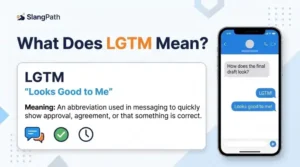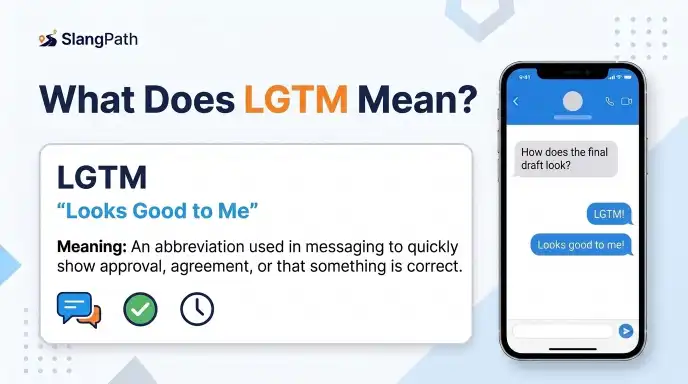
LGTM means “Looks Good to Me.” People use this abbreviation in text messages, online chats, and social media when they think something looks right, seems acceptable, or is ready to use. You may see it on WhatsApp, Snapchat, Instagram, TikTok, and in workplace conversations.
For example, if you send a friend a new photo and ask, “What do you think?” they might reply, “LGTM!” This means they think the photo looks good. Similarly, someone reviewing a document might use LGTM to show that they are happy with the current version.
LGTM is popular because it is short, simple, and easy to type. Instead of writing “Looks good to me,” people can use four letters to express approval or agreement.
If you have seen LGTM in a message and wondered what it means, the surrounding conversation can help you understand if the sender is approving a design, agreeing with a plan, or saying that something seems fine.
LGTM Meaning in Text
LGTM stands for “Looks Good to Me.” It is a common internet abbreviation that people use to show approval, agreement, or satisfaction with something they have seen or reviewed.
In everyday conversations, LGTM usually means that the sender thinks something is acceptable. They may like the way it looks, agree with a suggestion, or believe that something is ready for the next step.
For example:
- “I finished the presentation. LGTM?”
- “LGTM! You can send it now.”
- “Here’s the new logo. What do you think?”
- “LGTM, nice work!”
In the first example, the sender is asking someone to review a presentation. In the second, the reply shows approval. The other examples demonstrate how LGTM can be used when discussing creative work.
The abbreviation does not always mean something is perfect. It simply communicates that the person thinks it looks good or does not see a problem that needs to be fixed.
What Does LGTM Stand For?
Each letter in LGTM represents one word from the phrase “Looks Good to Me.”
- L = Looks
- G = Good
- T = To
- M = Me
When combined, these letters form the abbreviation LGTM.
The phrase expresses a personal judgment. When someone says “Looks Good to Me,” they are explaining that something appears acceptable from their point of view.
For instance, your friend might send you two birthday invitation designs and ask which one they should use. If you prefer the second design, you could reply, “LGTM!” to show that you approve of it.
The same abbreviation works when reviewing photos, checking a message before sending it, agreeing with a plan, or giving feedback on a project.
Is LGTM Slang or an Abbreviation?
LGTM is an internet abbreviation, more specifically an initialism. An initialism is formed from the first letters of a phrase, with the letters generally pronounced individually.
People often group LGTM with internet slang because it appears in informal messages, online discussions, and digital communities. However, it is also used in professional settings, so it is not limited to casual conversations between friends.
For example, a friend might use LGTM to approve your new profile picture. A colleague might use the same abbreviation to approve a presentation or review a change to a website.
Its meaning stays the same in both situations: the sender thinks the item looks acceptable.
What Does LGTM Mean in Everyday Conversations?
In everyday texting, LGTM commonly expresses approval, agreement, or reassurance.
Approval: Someone uses LGTM when they have reviewed something and think it is ready.
Example:
A: I updated the invitation. Does it look better now?
B: LGTM!
Here, B approves the updated invitation.
Agreement: LGTM can show that a suggestion or arrangement is acceptable.
Example:
A: Let’s meet at the café at 6 PM.
B: LGTM. See you there!
In this conversation, B agrees with the suggested plan.
Reassurance: Someone may use LGTM to let another person know that something appears fine.
Example:
A: Can you check this email before I send it?
B: LGTM. Go ahead.
The reply reassures A that the email looks acceptable. However, it does not necessarily mean every detail has been checked carefully.
Does LGTM Mean Something Is Perfect?
No. LGTM means “Looks Good to Me,” but it does not guarantee that something is flawless.
A person might use it because they like the overall result or believe that no major changes are needed. They may not have checked every small detail.
For example, if you share a school presentation with a friend, they might reply “LGTM” because the slides look organized and attractive. That does not automatically mean the facts, spelling, and formatting are all correct.
In professional conversations, the same distinction matters. If someone uses LGTM when reviewing a document or project, it usually indicates approval from their perspective. The depth of their review depends on the situation.
If you need detailed feedback, ask a specific question, such as, “Can you check the spelling and numbers before I submit this?”
Where People Use LGTM
LGTM appears in different types of digital conversations. Its meaning generally remains the same, but the context determines what the person is approving.
LGTM on TikTok
On TikTok, LGTM may appear in comments, direct messages, or conversations about videos and creative ideas.
For example:
A: I edited the video. Should I post it?
B: LGTM! Post it.
The reply means the video looks good to the sender and seems ready to publish.
People may also use LGTM when discussing captions, thumbnails, video edits, or content ideas. It provides quick feedback without requiring a long explanation.
LGTM on Snapchat
On Snapchat, friends might use LGTM when sharing pictures, outfits, or plans.
For example:
A: Does this picture look good for my profile?
B: LGTM!
Here, B is saying that the picture looks good to them.
It can also be used when agreeing with a plan. If someone suggests meeting at a particular place, a reply of LGTM can indicate that the arrangement is acceptable.
LGTM on Instagram
Instagram users may use LGTM in direct messages or conversations about photos, Reels, captions, and profile pictures.
For example:
A: Here’s my new profile picture. What do you think?
B: LGTM! It looks clean.
The abbreviation communicates approval. The additional comment gives more detail about what the person likes.
LGTM on WhatsApp
On WhatsApp, LGTM can appear in private messages and group chats. People may use it to approve an invitation, agree with a meeting time, or respond to a suggestion.
For example:
A: The dinner reservation is for 7 PM. Is that okay?
B: LGTM!
The reply shows that B is happy with the proposed arrangement.
LGTM in SMS Text Messages
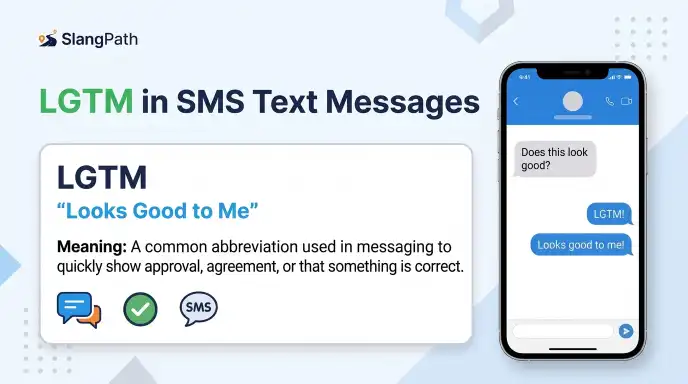
LGTM is also used in ordinary SMS messages. It does not require a social media account or a particular messaging app.
For example:
A: I changed the meeting place to the library. Does that work?
B: LGTM.
The sender is saying that the new location is acceptable. If the recipient is unfamiliar with texting abbreviations, writing “Looks good to me” in full may be clearer.
10 Real Chat Examples of LGTM
The easiest way to understand LGTM is to see how people use it in everyday conversations. The abbreviation can express approval, agreement, or a quick confirmation that something looks acceptable.
Here are 10 realistic examples showing how LGTM works in different situations.
Example 1: Approving a Picture
A: I took this picture yesterday. Do you think it looks good?
B: Yeah, LGTM!
A: Great, I’ll use it for my profile.
Meaning: B thinks the picture looks good and approves of using it as a profile photo.
Example 2: Choosing an Outfit
A: I’m thinking of wearing this outfit to the party.
B: LGTM. The colors go well together.
A: Thanks! I wasn’t sure about the jacket.
Meaning: B likes the outfit and thinks it is suitable for the occasion.
Example 3: Reviewing a School Project
A: I’ve finished the slides for our presentation. Can you check them?
B: LGTM. Everything looks organized.
A: Perfect. I’ll submit them tonight.
Meaning: B believes the presentation looks acceptable and is ready to submit. For important assignments, the students should still check the facts and instructions carefully.
Example 4: Agreeing on Weekend Plans
A: How about we meet at the mall around 4 PM?
B: LGTM!
A: Okay, I’ll message you when I leave.
Meaning: B agrees with the proposed plan and the meeting time.
Example 5: Approving an Instagram Caption
A: Here’s the caption for my new post: “Little moments, big memories.” Thoughts?
B: LGTM. It’s simple and sweet.
A: I’ll post it now.
Meaning: B likes the caption and thinks it is suitable for the post.
Example 6: Checking an Email
A: Can you read this email before I send it to the manager?
B: LGTM. The message is clear.
A: Thanks for checking!
Meaning: B thinks the email looks acceptable. In a professional situation, it is still important to verify that the information is accurate.
Example 7: Approving a New Design
A: I changed the background color and adjusted the font.
B: LGTM. The new version looks cleaner.
A: Nice! I’ll keep these changes.
Meaning: B approves of the revised design and prefers its updated appearance.
Example 8: Making Dinner Plans
A: I found a restaurant near the station. Should we book a table there?
B: LGTM. The location is convenient.
A: I’ll check the available times.
Meaning: B agrees that the restaurant seems like a good choice. The actual reservation still needs to be checked.
Example 9: Reviewing a Website Update
A: I’ve fixed the menu issue on the website. Can you review the update?
B: LGTM. The menu is working on my side.
A: Great, I’ll move on to the next task.
Meaning: B has reviewed the change and believes it looks acceptable. In technical work, a thorough review may require additional testing.
Example 10: Approving a Birthday Invitation
A: Here’s the final birthday invitation. Should I send it to everyone?
B: LGTM! The details are easy to read.
A: Awesome, sending it now.
Meaning: B approves of the invitation and thinks it is ready to share.
How to Reply When Someone Says LGTM
Your reply depends on what the person is approving.
You can thank them for complimenting your photo, confirm what happens next when they approve your plan, or acknowledge their feedback after they review your work.
You do not need to reply with another abbreviation. Simple, natural language works well.
Funny Replies to LGTM
If you are chatting with friends, a playful response can keep the conversation fun.
- “Finally, the approval I was waiting for 😂”
- “Officially approved by the expert!”
- “Good thing your standards are reasonable 😂”
- “That’s all the validation I needed!”
- “Excellent. My work here is done.”
- “I’ll take that as a five,star review 😂”
Example conversation:
A: I made a new profile picture. LGTM?
B: LGTM!
A: Finally, my personal design team approves 😂
These replies are best for informal conversations with people who understand your sense of humor. Avoid joking when someone is reviewing something serious or time,sensitive.
Casual Replies to LGTM
Casual responses are useful when someone approves your work or agrees with your suggestion.
- “Great, thanks!”
- “Awesome!”
- “Perfect.”
- “Cool, I’ll go ahead.”
- “Sounds good.”
- “Nice, thanks for checking.”
Example conversation:
A: Here’s the updated presentation.
B: LGTM.
A: Great, I’ll submit it now.
This type of exchange is short, clear, and natural.
Friendly Replies to LGTM
When someone takes the time to review your work, a friendly reply shows that you appreciate their help.
- “Thanks for taking a look!”
- “Glad you like it!”
- “Thanks for the feedback.”
- “I appreciate you checking it.”
- “Thanks! That helps a lot.”
- “Great, I’ll keep it this way.”
For example, if a friend reviews your invitation and says LGTM, you could respond, “Thanks for checking it. I’ll send it out now!”
This acknowledges their opinion without making the conversation unnecessarily long.
Neutral Replies to LGTM
Sometimes, you simply need to acknowledge the approval and move on.
- “Okay, thanks.”
- “Understood.”
- “Got it.”
- “I’ll proceed with this version.”
- “Thanks for confirming.”
- “I’ll make the final update.”
Neutral replies work well in professional conversations, group chats, and situations where you want to keep the exchange focused.
What If You Disagree With Someone’s LGTM?
If someone says LGTM about a design or plan that you still think needs work, you can explain your concern politely.
For example:
A: Here’s the final poster. LGTM?
B: The overall design looks good, but I think the date needs to be easier to read.
A: Good point. I’ll make it bigger.
This approach is helpful because LGTM is a personal assessment. One person’s approval does not mean that every detail is correct or that no improvements are possible.
Is LGTM Rude or Offensive?
No. LGTM is generally considered neutral and is not inherently rude or offensive. It simply means “Looks Good to Me.”
People use it to approve ideas, review work, agree with suggestions, and confirm that something appears acceptable. In most everyday conversations, the abbreviation has a positive or neutral meaning.
However, the tone depends on the situation. A short LGTM reply might seem friendly and efficient in one conversation but feel too brief in another.
Is LGTM Safe to Use With Friends?
Yes, LGTM is generally fine to use with friends. You can use it when reviewing photos, choosing outfits, discussing plans, or giving feedback on creative ideas.
For example:
A: Does this caption sound okay?
B: LGTM!
This is a normal, friendly exchange. If your friend does not know the abbreviation, you can explain that it means “Looks Good to Me.”
Is LGTM Appropriate at School?
LGTM can be useful in casual school group chats when students review presentations, share notes, or agree on project ideas.
For example:
A: I’ve finished my part of the group presentation. Is everything okay?
B: LGTM. Thanks!
However, if you are communicating with a teacher or writing a formal assignment, it is usually better to use complete sentences unless the abbreviation is appropriate for the situation.
Instead of writing “LGTM” in a formal email, you could say, “The presentation looks good to me.”
Can You Use LGTM at Work?
Yes. LGTM is commonly used in digital work conversations, especially when colleagues review documents, designs, proposed changes, or technical work.
For example:
“LGTM. You can move forward with the updated draft.”
It can make workplace communication faster, especially when a team is familiar with the abbreviation.
Still, LGTM should not replace a detailed review when accuracy, safety, compliance, or important decisions are involved. If you have not checked the relevant details, avoid implying that you have fully approved them.
Can LGTM Sound Dismissive?
Sometimes. Because LGTM is brief, a person might interpret it as rushed or impersonal if they expected detailed feedback.
For example, if someone spends hours preparing a major project and receives only “LGTM,” they might wish for a more thoughtful response.
The abbreviation itself is not rude. The issue is if the reply matches the situation and the level of feedback expected.
If you want to sound more encouraging, you can write, “LGTM! The layout is clear, and I really like the colors.” This gives approval and explains what works well.
Who Uses LGTM?
LGTM is used by people who communicate through texting, social media, online communities, and workplace messaging tools. It is not limited to one generation or a particular platform.
Do Gen Z Users Use LGTM?
Yes, Gen Z users may use LGTM in casual chats and online discussions, particularly when approving photos, captions, plans, or creative work.
However, it is not exclusive to Gen Z. The abbreviation is also familiar in technical and professional environments, where people use it to review work and communicate approval.
Do Millennials and Older Users Understand LGTM?
Many millennials and older internet users recognize LGTM, especially those who regularly use online messaging or work with digital tools.
Someone who rarely uses internet abbreviations may not immediately understand it. If you are unsure if the recipient knows the term, writing “Looks good to me” in full is a simple alternative.
Where Is LGTM Most Commonly Used?
LGTM can appear in several kinds of digital communication, including:
- Text messages and private chats
- Workplace messaging platforms
- Online discussions and forums
- Software development conversations
- Social media messages
- Document and design review discussions
Its use is particularly practical when someone wants to approve a change without writing a long response.
Is LGTM More Common in Professional Chats?
LGTM has a notable place in software development and other professional review processes. Developers may use it when reviewing a proposed code change, for example, to indicate that the change looks acceptable to them.
It is also used in ordinary conversations, but its professional use is one reason it is more than a typical social media expression.
The frequency of LGTM varies by community. It may be familiar in a technical team but less common in a casual group chat where people prefer phrases such as “Looks good” or “That’s fine.”
Origin of LGTM
LGTM developed as a shortened form of the phrase “Looks Good to Me.” It became associated with online communication because digital conversations often rely on quick, concise responses.
Unlike some slang terms that begin on one social media platform and spread through trends, LGTM is strongly associated with online collaboration and reviewing work.
How Did LGTM Become Popular?
As online forums, instant messaging, and collaborative tools became widely used, people adopted abbreviations that made common responses shorter.
LGTM was especially practical when someone needed to review a change and communicate that it appeared acceptable. Rather than writing a full explanation every time, they could use the abbreviation to give quick feedback.
The expression became particularly familiar in software development, where people review code changes and discuss if they are ready to be accepted.
Over time, the abbreviation also became useful in other situations, such as approving documents, designs, plans, and creative projects.
Is LGTM an Old or New Slang Term?
LGTM is not a newly invented social media abbreviation. It has been used in online and technical communication for many years.
Its continued use comes from its practical meaning: it is short, easy to recognize within familiar communities, and useful when a quick approval is enough.
Although texting habits and platforms change, abbreviations that solve a common communication need can remain in use for a long time.
Does LGTM Have One Known Inventor?
There is no widely established single inventor of LGTM. It is best understood as an abbreviation that developed through online communication and became established through repeated use.
The important point for modern readers is its widely recognized meaning: “Looks Good to Me.”
LGTM vs. Other Texting Abbreviations
LGTM is one of many abbreviations used in digital conversations. Some express approval, while others communicate agreement, uncertainty, or a temporary absence. Understanding the differences can help you interpret messages more accurately.
| Abbreviation | Meaning | Type | Usage | Popularity |
| LGTM | Looks Good to Me | Approval abbreviation | Approving something or giving feedback | Common in online and professional chats |
| IDK | I Don’t Know | Texting abbreviation | Expressing uncertainty | Widely recognized |
| IDC | I Don’t Care | Texting abbreviation | Expressing indifference | Widely recognized |
| IMO | In My Opinion | Opinion abbreviation | Sharing a personal viewpoint | Widely recognized |
| BRB | Be Right Back | Chat abbreviation | Saying you will return shortly | Widely recognized |
These abbreviations have different meanings and should not be used interchangeably.
For example, LGTM means you think something looks acceptable, while IMO introduces your personal opinion. IDK shows that you do not know something, and BRB tells someone that you will be away briefly.
LGTM vs. IMO
LGTM means “Looks Good to Me,” while IMO means “In My Opinion.”
Although both can communicate a personal viewpoint, they serve different purposes.
Example:
A: What do you think of this new logo?
B: LGTM!
Here, B approves of the logo.
Now consider this conversation:
A: Which logo do you prefer?
B: IMO, the blue one looks better.
In the second example, B is expressing a preference. LGTM focuses on approval, while IMO introduces an opinion.
LGTM vs. IDK
IDK stands for “I Don’t Know.” It is used when someone is uncertain or does not have an answer.
For example:
A: Is this the final version of the design?
B: IDK. Ask the designer.
By contrast, LGTM communicates that something looks acceptable to the sender.
If someone replies “LGTM” when you ask for feedback, they are generally indicating approval rather than uncertainty.
LGTM vs. IDC
IDC means “I Don’t Care.” It usually expresses indifference about a decision or subject.
For example:
A: Should we use the blue background or the white one?
B: IDC. Either is fine.
This is different from LGTM. If someone says “LGTM,” they are saying the option looks good to them. If they say “IDC,” they are indicating that they do not particularly care which option is selected.
IDC can sometimes sound dismissive, depending on the conversation, while LGTM is generally neutral or positive.
LGTM vs. BRB
BRB stands for “Be Right Back.” People use it when they need to step away from a conversation temporarily.
Example:
A: Can you check this poster?
B: LGTM! It looks great.
A: Thanks!
B: BRB, I need to answer the door.
LGTM gives approval, whereas BRB communicates a temporary absence.
Real,World Usage Example of LGTM
Imagine that you are preparing a birthday party for a close friend. You have designed an invitation with the party date, time, location, and a colorful background.
Before sending it to everyone, you share the invitation with your friend and ask if everything looks okay.
Your friend checks the design and replies:
“LGTM! The colors look great, and all the details are easy to read.”
You understand that your friend approves of the invitation. You can now move forward with sending it, although you should still double,check important details such as the date and address.
Another situation might involve a group project. You finish a presentation and share it with your classmates for feedback. One classmate replies, “LGTM. We can submit it.”
In both situations, LGTM is a quick way to communicate approval without writing a long response.
The abbreviation is especially useful when the sender has already reviewed something and wants to let the other person know that it appears ready.
Common Mistakes to Avoid When Using LGTM
Although LGTM is easy to understand once you know its meaning, a few mistakes can cause confusion.
Assuming LGTM Means Everything Is Perfect
LGTM means “Looks Good to Me,” not “This is completely perfect.”
Someone might approve a design without noticing a small spelling error. A colleague might approve a document’s layout without checking every fact.
If the task is important, make sure the necessary details are reviewed before treating LGTM as final approval.
Using LGTM Without Reviewing the Work
If someone asks you to review a document, design, or project, do not reply with LGTM unless you have looked at it enough to form an opinion.
A quick approval can be helpful, but it should reflect what you actually checked. If you need more time, you can say, “I’ll review it properly and get back to you.”
Thinking LGTM Is Only for Social Media
LGTM can appear on social platforms, but it is also used in professional and technical conversations.
It may be used to approve a photo in a private chat or to review a change in a software project. The meaning stays the same, even when the setting changes.
Using LGTM With Someone Who Does Not Understand It
Not everyone knows internet abbreviations. If you are messaging a teacher, client, colleague, or family member who may not recognize LGTM, writing “Looks good to me” in full can avoid confusion.
The goal of an abbreviation is to make communication easier. If it makes the message harder to understand, use the complete phrase instead.
Frequently Asked Questions
Q1: What Does LGTM Mean in Text Messages?
LGTM means “Looks Good to Me.” People use it in text messages to show that they approve of something, agree with a suggestion, or think something looks acceptable.
Q2: What Does LGTM Mean on TikTok?
On TikTok, LGTM usually means “Looks Good to Me.” Someone may use it in a comment or message to approve a video, caption, editing style, or content idea.
Q3: Is LGTM Slang?
LGTM is an internet abbreviation and initialism commonly associated with online slang. It stands for “Looks Good to Me” and is used in both casual and professional conversations.
Q4: Is LGTM Rude or Offensive?
No, LGTM is generally neutral and not offensive. However, a very short reply may seem impersonal in situations where someone expects detailed feedback.
Q5: How Should You Reply to LGTM?
You can reply with “Thanks!”, “Great, I’ll go ahead,” or “Glad you like it!” Choose a response that fits the conversation and what the person is approving.
Q6: What Does LGTM Mean at Work?
At work, LGTM usually indicates that a document, design, proposed change, or piece of work looks acceptable to the person reviewing it. It is especially common in technical and collaborative environments.
Q7: Does LGTM Mean Approved?
Usually, yes. LGTM often communicates approval, but it may not represent formal authorization. In a workplace, follow the required approval process when one exists.
Q8: Can I Use LGTM With Friends?
Yes. LGTM is suitable for casual conversations with friends when approving photos, outfits, captions, plans, or other ideas.
Q9: What Is the Difference Between LGTM and IMO?
LGTM means “Looks Good to Me” and generally expresses approval. IMO means “In My Opinion” and introduces a personal viewpoint.
Q10: What Should I Do If I Don’t Understand LGTM?
You can ask the sender what they mean or look at the surrounding message for clues. In most online conversations, LGTM stands for “Looks Good to Me.”
Conclusion
LGTM means “Looks Good to Me.” It is a common abbreviation used in text messages, online chats, social media, and professional conversations to express approval or agreement.
You might see it when someone reviews a photo, approves a design, agrees with a plan, or checks a document. Although it is generally friendly and neutral, the context determines how the message should be interpreted.
You can use LGTM in casual conversations and familiar workplace chats when a quick approval is enough. For formal communication or important decisions, writing the full phrase and providing clear feedback may be more appropriate.
Once you understand its meaning, recognizing LGTM in everyday digital conversations becomes simple.
Read More About !

Michael Brooks is a language writer at SlangPath with 7+ years of experience creating simple, practical content on English slang and everyday expressions.