LKK is an informal texting abbreviation used in online conversations, but its meaning can vary depending on the context.
LKK in text is an uncommon expression that can refer to something old,fashioned, outdated, or behind modern trends in Taiwanese slang. However, its meaning can change depending on the person, language, and conversation.
You may see LKK in social media comments, private messages, or group chats on TikTok, Snapchat, Instagram, and WhatsApp. Sometimes, people use unfamiliar combinations of letters to communicate quickly or make jokes with friends.
Unlike popular texting abbreviations such as LOL, IDK, and BRB, LKK does not have one universally accepted meaning in English online communication.
If someone sends you these three letters, you may wonder if they are teasing you, using regional slang, or making a typing mistake. Understanding the context can help you avoid confusion.
LKK Meaning in Text
LKK is an uncommon expression that has a documented meaning in Taiwanese slang. It is associated with something old,fashioned, outdated, or not connected with modern styles and trends.
People may use it when talking about traditional habits, older technology, clothing styles, or someone who does not follow current trends. Depending on the conversation, it can sound humorous, playful, or slightly critical.
For example, imagine someone showing their friends an old mobile phone. Another person might jokingly describe it as LKK because newer phones have more modern features.
Simple definition: LKK is a regional slang expression associated with being old,fashioned, outdated, or behind modern trends.
However, this definition is mainly connected to its Taiwanese usage. It should not be treated as the standard meaning of LKK in every English text message.
What Does LKK Stand For?
The regional expression is associated with Taiwanese Hokkien and is commonly written using the Roman letters LKK. It is linked to the expression Lau Ko Ko and forms such as 老硞硞.
The expression describes an old,fashioned appearance, attitude, or way of doing things. It can be used to tease someone who seems unfamiliar with newer ideas or modern technology.
For example, a person who still prefers an older phone, listens to older music, or avoids new social media trends might be jokingly described this way.
It is important to remember that LKK does not have a confirmed, universally accepted English phrase behind each letter. If someone uses it in an English conversation, the intended meaning may be different.
Is LKK Slang, an Acronym, or an Abbreviation?
LKK is best understood as a regional slang expression and initialism in its Taiwanese,language context.
An initialism is a shortened form made from the first letters or sounds of a longer expression. Many online communities use initialisms because they are quick to type and easy for familiar users to recognize.
However, LKK is not a widely established English acronym like IDK or BRB.
Here is how these terms differ:
- Slang: Informal language used in casual conversations and particular communities.
- Acronym: A shortened form created from initial letters and usually pronounced as a word.
- Initialism: A shortened form in which the individual letters are pronounced separately.
- Abbreviation: A shortened version of a word or phrase.
In its regional use, LKK fits the idea of an initialism connected to slang.
What Does LKK Mean in Everyday Conversations?
In everyday conversations, the intended meaning depends on the topic being discussed.
If two friends are talking about fashion, one might use LKK to joke about an old clothing style. If they are discussing technology, it could refer to an older device or someone who is unfamiliar with modern features.
Consider this conversation:
A: I still use my old laptop from school.
B: Really? That thing must be so old!
A: It works perfectly fine.
B: Haha, that’s a little LKK!
Here, the expression is being used playfully to describe something outdated.
It does not necessarily mean the sender dislikes the person. Friends sometimes use expressions like this to tease each other without intending to cause harm.
On the other hand, if someone sends only “LKK” without any explanation, it may be difficult to understand their intention. They could be using regional slang, personal shorthand, or an abbreviation that has a different meaning in their friend group.
Why Do People Use LKK?
People use short expressions for several reasons. They may want to make a conversation quicker, communicate a joke, or describe something without writing a complete sentence.
In its Taiwanese slang context, LKK can be useful when discussing something that feels old,fashioned.
For example, instead of writing a long comment about an outdated fashion trend, someone familiar with the expression might use LKK to communicate the idea briefly.
It can also make a conversation feel more informal between people who understand the same regional language.
However, unfamiliar abbreviations are not always helpful. If the receiver does not know the expression, a short message may create more questions than it answers.
Where Do People Use LKK?
LKK may appear in different digital communication spaces, including social media comments, private messages, and group conversations. However, it is not a standard abbreviation that has the same established meaning on every platform.
The platform can provide clues about the conversation, but the sender’s language and intended meaning are more important.
LKK on TikTok
TikTok is known for short videos, creative trends, fashion discussions, entertainment, and viral comments. Users regularly encounter unfamiliar expressions while watching videos or interacting with other accounts.
LKK may appear in discussions about old,fashioned clothing, traditional styles, older technology, or people who do not follow modern trends.
For example:
User 1: I found my old school uniform!
User 2: That style looks so old,fashioned.
User 1: It was popular back then!
User 2: Haha, a little LKK!
In this example, the expression could refer to an outdated style.
Some users may also encounter the letters without knowing their regional background. TikTok comments often include inside jokes and language from different cultures, so it is important not to assume that every comment has a universal meaning.
LKK on Snapchat
Snapchat conversations are usually informal. Friends share photographs, short videos, daily updates, and quick messages.
An expression such as LKK could appear when someone is joking about an old photograph, an outdated phone, or a traditional habit.
For example:
You: Look at my first smartphone.
Friend: Why does it look so old? 😂
You: It was my favorite phone!
Friend: Haha, that’s LKK!
The sender may be using the expression to tease you about owning an older device.
If you are unsure what your friend means, you can reply, “What does LKK mean here?” This keeps the conversation simple and avoids misunderstanding.
LKK on Instagram
Instagram is another place where people exchange informal language. Users communicate through comments, captions, Stories, and direct messages.
LKK might appear in conversations about fashion, photographs, hairstyles, or older trends.
For example:
A: I found my old fashion pictures.
B: Those outfits look completely different from today’s styles.
A: I actually loved wearing them.
B: Haha, a little LKK!
Here, the expression is connected to the older fashion style rather than being a serious criticism.
Instagram also brings together people from different countries and language backgrounds. Therefore, someone may understand LKK differently from another user.
LKK on WhatsApp
WhatsApp is commonly used for conversations with friends, family members, classmates, and colleagues.
People often create their own shortcuts in private chats. Some expressions are understood by everyone in a group, while others may confuse people who are not familiar with them.
For example:
A: My brother still uses his old computer.
B: Does it even work properly?
A: Yes, but it is very slow.
B: That’s a little LKK!
In this situation, the sender may be joking about the computer being outdated.
In a family or friends’ group, the same expression might be used casually. In a professional WhatsApp group, however, clear language is usually a better choice.
LKK in SMS and Regular Text Messages
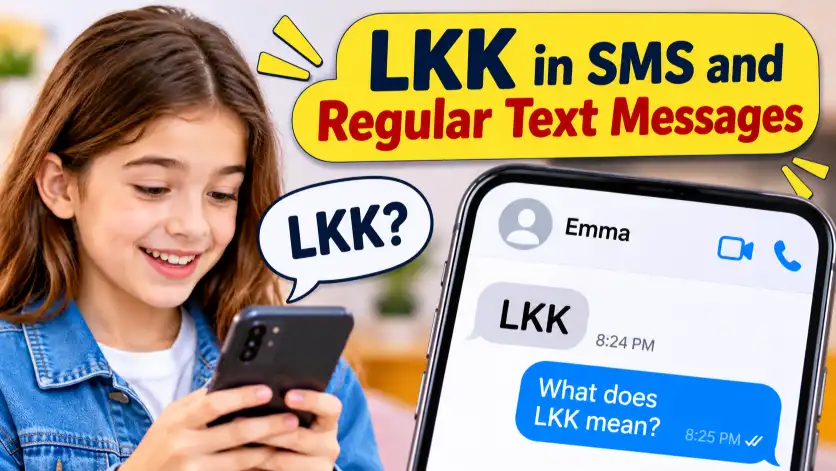
SMS messages are often short because people want to communicate quickly. This is one reason abbreviations and informal expressions became common in mobile texting.
However, LKK is not a widely recognized English SMS abbreviation.
A sender might use it because they know its Taiwanese meaning, have learned it from a friend, or use it as personal shorthand.
For example:
A: I don’t understand all these new phone features.
B: You should try learning them.
A: I prefer simple technology.
B: Haha, a little LKK!
The expression may suggest that someone prefers older or simpler technology.
If the sender is not familiar with the Taiwanese expression, their intended meaning could be something else. Reading the complete conversation is always more useful than guessing from three letters.
10 Real Chat Examples of LKK in Conversations
Understanding an unfamiliar texting expression becomes easier when you see how it might appear in normal conversations. LKK is associated with being old,fashioned or outdated in its Taiwanese slang usage.
The following examples show possible situations where someone might use the expression. They are illustrative examples, not proof that LKK is a common English texting abbreviation.
1. Talking About an Old Phone
A: Why are you still using that old phone?
B: It works perfectly fine.
A: But everyone has newer models now.
B: I don’t need an expensive phone.
A: Haha, a little LKK!
In this conversation, the sender is joking about someone using older technology. The comment is casual rather than necessarily insulting.
2. Discussing Old Fashion Trends
A: Look at these clothes I wore five years ago.
B: Those styles look completely different now.
A: I actually loved that outfit.
B: Haha, it looks a little LKK today!
Here, LKK refers to an older fashion style. The friends are comparing past and present trends.
3. Talking About Technology
A: I don’t know how to use this new application.
B: It’s actually very simple.
A: I’m used to the older version.
B: Don’t be so LKK! 😂
The expression is used as a playful comment about someone who prefers older technology or struggles with newer tools.
4. Sharing an Old Photograph
A: I found my school pictures yesterday.
B: Show me!
A: Here is one from ten years ago.
B: Your hairstyle was so different!
A: Don’t laugh at me!
B: Haha, a little LKK!
This example shows how the expression might be used when friends look at old photographs and compare their previous appearance with their current style.
5. Discussing Music Preferences
A: I still listen to songs from the 1990s.
B: Really? Why don’t you listen to newer music?
A: I like the old songs better.
B: You’re so old,school!
A: That’s what makes my taste special.
In a Taiwanese,language conversation, LKK might be used to describe this preference for older music or styles.
6. Talking About Social Media Trends
A: Everyone is talking about the latest TikTok trend.
B: I haven’t even watched it.
A: You should check it out.
B: I don’t understand half of these trends.
A: Don’t be LKK!
The sender is teasing their friend for not following current online trends.
7. Discussing an Old Computer
A: My computer takes five minutes to start.
B: How old is it?
A: Almost twelve years old.
B: That’s really old!
A: But it still does the job.
B: Haha, definitely outdated!
This conversation shows a situation where LKK could describe an older device.
8. A Friendly Joke Between Friends
A: I still write my daily plans in a notebook.
B: Why don’t you use a planning app?
A: I enjoy writing things by hand.
B: That’s so old,school!
A: I like keeping things simple.
Here, the conversation is about personal habits. An expression like LKK could be used playfully if both friends understand it.
9. Talking About New Technology
A: Have you tried the new editing software?
B: Not yet.
A: Everyone in our class is using it.
B: I still prefer the older version.
A: You’re going to look LKK!
The joke is about someone who is comfortable with familiar technology and does not want to try something new.
10. Asking About an Unfamiliar Expression
A: Someone commented LKK on my picture.
B: What picture did you upload?
A: An old photo from school.
B: They might be referring to the old,fashioned style.
A: Oh, now I understand!
This example demonstrates why understanding the context is important before deciding what an unfamiliar abbreviation means.
How to Reply When Someone Says “LKK”
If someone sends you LKK, your response should depend on the conversation. You do not always need a special reply. Sometimes a simple laugh, friendly comment, or question is enough.
If the sender is joking about your old,fashioned style, you can respond playfully. If you do not understand the expression, asking for clarification is a better option.
Here are some natural replies you can use.
Funny Replies to LKK
Funny replies are suitable when you are talking with close friends who enjoy casual jokes. You can respond with humor without making the conversation uncomfortable.
Examples:
- “Old,school is the new cool!”
- “Classic never goes out of style!”
- “At least I’m original!”
- “Vintage is always special!”
- “I’m keeping my classic personality!”
- “Don’t judge my old,school taste!”
- “Being different is my style!”
- “Old things have their own charm!”
Example conversation:
A: That’s so LKK!
B: Classic never goes out of style! 😂
A: Haha, fair enough!
Casual Replies to LKK
Casual replies work well when you want to keep the conversation short and relaxed. They are useful for everyday messages with friends, classmates, and people you know.
Examples:
- “Haha, maybe!”
- “I guess so.”
- “That’s true!”
- “I still like it.”
- “Nothing wrong with that.”
- “Maybe I’m old,school.”
- “It works for me!”
- “I prefer the classic style.”
Example conversation:
A: Your phone is so LKK.
B: Haha, maybe, but I like it!
A: Fair enough.
Friendly Replies to LKK
Sometimes, someone uses LKK simply to tease you. A friendly response can keep the conversation positive and show that you are not taking the comment too seriously.
Examples:
- “Everyone has different tastes.”
- “Haha, thanks for the comment!”
- “I like things my own way.”
- “Maybe, but I’m happy with it.”
- “Old styles can still look good.”
- “I enjoy the simple things.”
- “That’s just my personal style.”
- “You might like it someday!”
Example conversation:
A: That outfit looks LKK.
B: Maybe, but I still love it!
A: That’s what matters!
Neutral Replies to LKK
Neutral replies are useful when you are not sure if the sender is joking or criticizing you.
They also help when you have never seen the expression before.
Examples:
- “What does LKK mean?”
- “Can you explain that?”
- “I’m not familiar with this expression.”
- “What are you referring to?”
- “Do you mean old,fashioned?”
- “Can you give me an example?”
- “I haven’t heard that word before.”
Example conversation:
A: You’re a little LKK.
B: What does LKK mean?
A: It’s a way of describing something old,fashioned.
B: Oh, now I get it!
Which Reply Should You Choose?
Think about your relationship with the sender before responding.
If you are chatting with a close friend, a funny reply may be appropriate. If you are speaking with someone you do not know well, a neutral question is safer.
There is no need to copy a reply just because someone uses unfamiliar slang. Your response should sound natural and match the situation.
Is LKK Rude or Offensive?
LKK is not automatically rude or offensive. Its tone depends on how someone uses it, who receives it, and what the conversation is about.
In its Taiwanese slang context, it can describe a person, style, or habit as old,fashioned or outdated. Between friends, it may be a harmless joke. However, the same expression can sound disrespectful if someone uses it to embarrass another person.
Can LKK Be Used as an Insult?
Yes, it can sound insulting in certain situations.
For example, imagine someone making fun of another person’s clothes, age, or lack of knowledge about technology. Calling that person LKK may make them feel uncomfortable.
The expression becomes more negative when it is used to criticize someone rather than make a friendly joke.
It is important to consider the sender’s tone and the relationship between the people involved.
Is LKK Safe to Use With Friends?
It can be acceptable in casual conversations when both people understand the expression and are comfortable with the joke.
For example, two friends might laugh about an old phone or an outdated fashion trend. In that situation, the expression may not cause any problem.
However, avoid using it to make someone feel embarrassed about their age, appearance, background, or personal choices.
Is LKK Appropriate at School?
Students often use informal expressions in group chats and conversations with classmates. However, not every student understands regional slang.
Using LKK among friends may be fine when everyone understands the intended meaning.
For school assignments, classroom presentations, and formal communication with teachers, it is better to use complete and clear English.
Can You Use LKK at Work?
Professional communication requires language that everyone can understand.
Avoid using unfamiliar abbreviations in business emails, reports, formal discussions, and messages to clients.
Even if you use the expression casually with coworkers, someone else might misunderstand it.
Writing “old,fashioned” or “outdated” is usually clearer and more appropriate in professional situations.
Who Uses LKK?
LKK is not a widely recognized English texting abbreviation, so it is difficult to identify one particular age group that uses it regularly. Its use is more closely connected to regional language, cultural background, and individual online communities.
People may encounter it through social media, private messages, or conversations with someone familiar with Taiwanese slang.
Teenagers and Young Adults
Teenagers and young adults often use informal expressions when communicating online. They may discover unfamiliar abbreviations through TikTok videos, Instagram comments, gaming chats, or conversations with friends.
Some may recognize LKK because they have seen it in regional online discussions. Others may have never encountered it before.
Younger users sometimes use older expressions as jokes, especially when discussing outdated technology, fashion, or habits.
Gen Z Usage
Gen Z is familiar with many short internet expressions, including:
- IDK – I Don’t Know
- TBH – To Be Honest
- IMO – In My Opinion
- FR – For Real
- NGL – Not Gonna Lie
LKK is different from these popular expressions because it does not have one established meaning in mainstream English texting.
A Gen Z user might recognize it through a cultural or regional conversation, but it should not be considered a common Gen Z abbreviation.
Older Internet Users
Older internet users may recognize regional expressions through their language background, personal experiences, or online communities.
Some people also prefer traditional communication styles and may use regional slang that younger users do not understand.
This is one reason why the same abbreviation can be familiar to one person but completely new to another.
Common Platforms Where LKK May Appear
LKK can potentially appear in different online spaces, including:
- TikTok: In comments about older trends or styles.
- Instagram: In captions, comments, and private messages.
- Snapchat: In casual conversations between friends.
- WhatsApp: In personal chats and group discussions.
- Facebook: In posts and discussions involving regional expressions.
- SMS: In informal messages between people who understand the term.
These are possible places to encounter the expression, not evidence of widespread usage on every platform.
How Popular Is LKK Online?
LKK is relatively uncommon as an English texting expression. It does not have the same general recognition as LOL, OMG, IDK, or BRB.
Its visibility depends on the community using it. Someone familiar with Taiwanese slang may understand it immediately, while an English,speaking user may need an explanation.
For this reason, it is better to describe LKK as a context,dependent regional expression rather than a mainstream internet abbreviation.
Origin of the Term LKK
The background of LKK is connected to regional language and informal communication. Unlike many popular English texting abbreviations, its documented meaning is associated with Taiwanese Hokkien.
Understanding this background helps explain why the expression may appear in online conversations about old,fashioned styles, traditional habits, or outdated technology.
Taiwanese Language Connection
LKK is associated with the Taiwanese Hokkien expression Lau Ko Ko, which is used to describe something old,fashioned or outdated.
The Roman letters LKK represent the sounds associated with this regional expression.
It can be used when someone wants to describe an older style, traditional approach, or person who seems behind modern trends.
For example, someone who prefers an older fashion style might jokingly be described as LKK in a conversation where the expression is understood.
Influence of Internet Culture
Internet culture has made it easier for regional expressions to travel between different communities.
People communicate through short comments, private messages, online groups, and social media posts. During these conversations, they sometimes use shortened forms of words and phrases.
Regional expressions can also become familiar to people outside their original language communities.
LKK is an example of how a local expression can be represented through Roman letters and used in informal digital communication.
Why Does LKK Have Different Interpretations?
Not every combination of three letters has one fixed meaning.
People sometimes create personal abbreviations for their friends, gaming groups, or online communities. The same letters can also appear in usernames, brand names, or unrelated technical terms.
This means that someone using LKK in an English conversation may not necessarily be referring to its Taiwanese slang meaning.
The topic of the conversation, the sender’s language, and the surrounding messages can help you understand the intended use.
Is the Exact Origin of LKK Known?
Its connection to Taiwanese Hokkien is documented, but that does not establish one exact date when the expression first appeared or became popular.
It is also important not to confuse its regional meaning with unrelated definitions that may appear on acronym websites.
When explaining LKK, the most accurate approach is to mention its documented Taiwanese usage while acknowledging that its meaning in individual messages can vary.
LKK vs. IDK, IDC, IMO, and BRB
LKK may look similar to other texting abbreviations because all five expressions use short combinations of letters.
However, their meanings and everyday uses are different. IDK, IDC, IMO, and BRB have widely recognized definitions in English messaging, while LKK is more dependent on regional language and context.
Here is a simple comparison.
| Term | Meaning | Type | Usage | Popularity |
| LKK | Regional meaning: old,fashioned or outdated | Regional slang/initialism | Cultural and informal conversations | Uncommon in English texting |
| IDK | I Don’t Know | Abbreviation | Expressing uncertainty | Very common |
| IDC | I Don’t Care | Abbreviation | Showing indifference | Very common |
| IMO | In My Opinion | Abbreviation | Sharing personal opinions | Common |
| BRB | Be Right Back | Abbreviation | Temporarily leaving a chat | Common |
LKK
LKK has a documented Taiwanese slang meaning associated with something outdated or old,fashioned.
Example:
A: I still use my old computer.
B: That’s a little LKK!
IDK
IDK means “I Don’t Know.” People use it when they do not have an answer or are unsure about something.
Example:
A: What time is the party?
B: IDK. I’ll ask someone.
IDC
IDC means “I Don’t Care.” It is used when someone wants to express that they do not have a particular preference or concern.
Example:
A: Should we watch a comedy or an action movie?
B: IDC. You can choose.
Depending on the situation, it can sometimes sound dismissive.
IMO
IMO means “In My Opinion.” It is commonly used before sharing a personal thought or preference.
Example:
A: Which design looks better?
B: IMO, the blue one looks nicer.
It helps show that someone is sharing an opinion rather than stating a fact.
BRB
BRB means “Be Right Back.” People use it when they need to leave a conversation for a short time.
Example:
A: Are you still online?
B: BRB. I need to answer the door.
These comparisons show why understanding an abbreviation is important. Some expressions have widely accepted meanings, while others require additional information.
Real,World Usage Example
Imagine two friends are sitting together during a break at school. One of them takes out an older smartphone and starts showing pictures from several years ago.
The other friend notices that the phone looks different from modern devices and makes a joke about its old design.
If both friends understand Taiwanese slang, one might use LKK to describe the older technology.
Their conversation could look like this:
Friend 1: Look at my old phone. I’ve had it for years!
Friend 2: Wow, that looks really old.
Friend 1: But it still works perfectly.
Friend 2: Haha, that’s a little LKK!
Friend 1: Maybe, but I don’t want to replace it yet.
Friend 2: Fair enough. If it works, keep it!
In this situation, LKK is used as a playful comment about something outdated. The conversation is friendly, and neither person is necessarily trying to insult the other.
Now imagine receiving the same three letters from someone you do not know very well. You might not understand if they are talking about your clothes, phone, habits, or something completely different.
That is why you should always consider the conversation before deciding what an unfamiliar abbreviation means.
Frequently Asked Questions
1. What does LKK mean in text messages?
LKK does not have one universally accepted English texting meaning. In Taiwanese slang, it describes someone or something as old,fashioned, outdated, or behind modern trends.
2. What does LKK mean on TikTok?
On TikTok, LKK may appear in conversations about older fashion, technology, or trends. Its Taiwanese slang meaning is associated with being old,fashioned.
3. Is LKK slang?
Yes, LKK has a documented regional slang use connected to Taiwanese Hokkien. However, it is not a widely recognized English texting abbreviation.
4. Is LKK rude or offensive?
Not necessarily. Friends may use it jokingly to describe something outdated. However, it can sound disrespectful when used to make fun of someone’s age, appearance, or habits.
5. How should you reply to LKK?
You can reply with something casual like “Haha, maybe!” or “Old,school is still cool!” If you do not understand the expression, simply ask, “What does LKK mean?”
Conclusion
LKK is an uncommon expression with a documented Taiwanese slang meaning related to being old,fashioned, outdated, or behind modern trends. It may appear in social media discussions, private messages, and informal conversations.
Unlike popular abbreviations such as IDK, IMO, and BRB, it does not have one universally accepted meaning in English texting.
You can use it casually when you understand its meaning and know that the other person is familiar with the expression. However, avoid using unfamiliar abbreviations in formal school or workplace communication.
The most important thing is to understand the context before interpreting or replying to LKK.
Read More About !

My name is Olivia Bennett.I am a language enthusiast and educational writer with a strong interest in contemporary English and digital communication. I enjoys making language learning engaging and accessible.