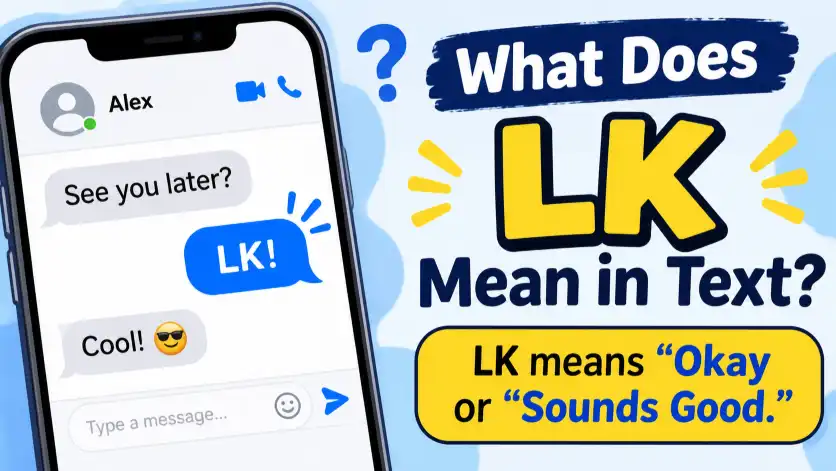
LK in text can mean “like” or “low,key,” depending on how someone uses it in a conversation. It is an informal texting shortcut that may appear when people share opinions, talk about their feelings, or communicate quickly with friends.
You might see it in TikTok comments, Snapchat messages, Instagram chats, WhatsApp conversations, and regular text messages.
If someone sends you a message containing LK, its meaning might not be immediately clear. For example, “I lk your outfit” may mean “I like your outfit.” However, “I’m lk excited” may suggest that someone is low,key excited about something.
This abbreviation is not as widely recognized as expressions such as IDK, LOL, and BRB. Different people may use it differently, and some readers may not understand it without additional context.
Understanding the sentence is the easiest way to identify the intended meaning. In this guide, we will explore its possible definitions, how it works in everyday conversations, and why people sometimes use it instead of writing complete words.
What Does LK Mean in Text?
LK is informal texting shorthand that may represent “like” or “low,key,” depending on the context. People sometimes use shortened expressions to make digital conversations quicker and more relaxed.
The word “like” is commonly used to express enjoyment, approval, or interest. Low,key, on the other hand, describes something subtle, understated, or not strongly emphasized.
Although these expressions have different meanings, both can be shortened to LK in certain informal conversations.
For example, consider these two messages:
- “I lk your new shoes.”
- “I’m lk excited about the weekend.”
The first message suggests that the sender likes someone’s shoes. The second suggests that the sender feels somewhat excited but is expressing that feeling casually.
This difference is important because reading LK without considering the complete sentence can lead to confusion.
What Does LK Stand For?
LK can stand for different expressions depending on the sender’s intention. Two possible interpretations are “like” and “low,key.”
When someone uses it for like, they are usually expressing a positive opinion about something. When they use it for low,key, they are describing a feeling, interest, or reaction in a less obvious way.
Here are some examples:
| Text message | Possible meaning |
| I lk your shoes. | I like your shoes. |
| I lk this movie. | I like this movie. |
| I’m lk tired. | I’m low,key tired. |
| I’m lk excited. | I’m low,key excited. |
| I lk want to go. | I low,key want to go. |
These examples demonstrate how the same two letters can communicate different ideas.
However, LK is not a standardized abbreviation with one fixed definition. Some people may use it as a personal shortcut, while others may not recognize it at all.
LK Meaning When Someone Is Talking About Something They Like
One possible use of LK is as a shortened version of the word “like.”
People use the word like in everyday conversations to express enjoyment, approval, or appreciation. In informal messages, someone might shorten it to LK when typing quickly.
For example, imagine your friend shares a photograph of a new car. You might reply:
“I lk your new car!”
The intended meaning is simple: you like the car and want to express your appreciation.
Here are some additional situations:
Talking about music:
“I lk this song. The beat is amazing.”
The sender enjoys the song and likes its sound.
Talking about fashion:
“I lk your new jacket.”
The sender thinks the jacket looks good.
Discussing a movie:
“I lk the ending of that movie.”
The sender enjoyed the ending.
Sharing an opinion:
“I lk your idea for the project.”
The sender agrees with or appreciates the suggestion.
Although these examples explain how LK might be used, writing “like” is more common and easier for most readers to understand. LK should not be treated as a standard replacement for the complete word.
LK Meaning When Someone Uses Low,Key
Another possible interpretation is “low,key.” This expression is frequently used in informal English, especially when someone wants to describe a feeling without making it sound too strong.
Low,key can mean:
- Somewhat or a little.
- Quietly or subtly.
- Without attracting too much attention.
- Having a feeling that is not openly emphasized.
For example:
“I’m lk nervous about my interview.”
This means the person is somewhat nervous but is expressing the feeling casually.
Consider a few more examples:
- “I’m lk excited for the holidays.”
- “I lk miss my old school.”
- “That restaurant is lk amazing.”
- “I lk want to buy those shoes.”
- “I’m lk interested in learning photography.”
In these situations, the sender is communicating a personal feeling or interest.
It is worth noting that people generally write “lowkey” or “low,key” rather than simply LK. The shortened form is less common and may not be understood by everyone.
Is LK Slang, an Acronym, or an Abbreviation?
LK is best understood as informal shorthand when someone uses it to represent like or low,key.
It is important to understand the difference between slang, acronyms, and abbreviations because these terms are not exactly the same.
Slang refers to informal words and expressions commonly used in particular communities or social situations.
An acronym is formed from the initial letters of a longer name or phrase. Some acronyms are pronounced as words, while others are spoken letter by letter.
An abbreviation is a shortened version of a word or expression.
For example:
- IDK means “I Don’t Know.”
- BRB means “Be Right Back.”
- IMO means “In My Opinion.”
- BTW means “By The Way.”
These are familiar texting shortcuts with recognizable meanings.
LK is different because its interpretation is less consistent. It may represent a shortened word or the first letters of a two,word expression.
Therefore, it is more accurate to describe LK as informal texting shorthand rather than a universally recognized acronym.
Why Does Context Matter When Understanding LK?
Context matters because the same abbreviation can have different meanings in different conversations.
If someone sends you “I lk this song,” the word like may make sense. However, if they write “I’m lk worried about tomorrow,” low,key is a more natural interpretation.
You can understand the difference by looking at the other words in the sentence.
Consider these examples:
Example 1:
A: What do you think about my new haircut?
B: I lk it!
Here, the sender is expressing approval.
Example 2:
A: Are you worried about your results?
B: I’m lk worried, honestly.
Here, the sender is describing a feeling.
Example 3:
A: Do you want to come to the party?
B: I lk want to, but I’m busy.
Here, low,key is a possible interpretation because the sender is expressing interest.
If neither interpretation makes sense, the sender may have made a typing mistake or may be using a personal abbreviation. Asking for clarification is better than guessing.
Why Do People Use LK in Text Messages?
People use informal abbreviations because digital conversations are often quick, relaxed, and less formal than traditional writing. When chatting with friends, they may prefer short expressions instead of typing complete words.
LK is one possible example of this habit, although it is not as widely recognized as many other texting abbreviations.
There are several reasons someone might use it.
1. To Save Time While Typing
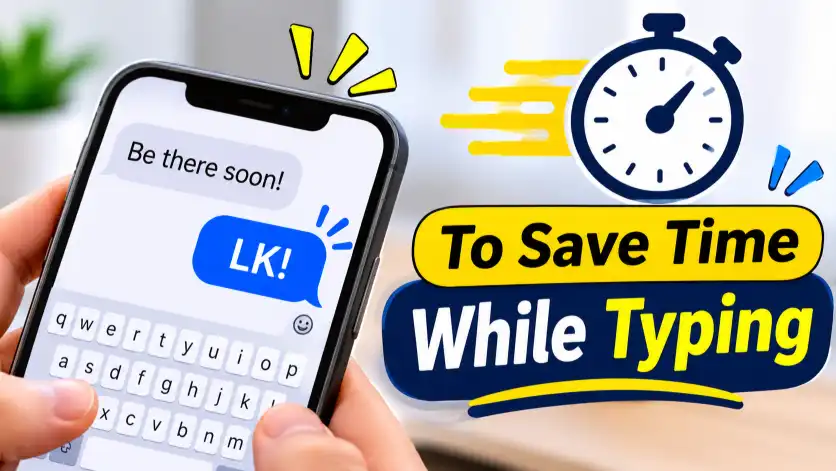
One reason people shorten words is to make their messages quicker to type.
When someone is having a fast conversation, they may not want to spend extra time writing every word. Shortened expressions can make typing feel easier, especially during casual conversations.
For example:
“I lk this one better.”
Instead of writing the complete word, the sender uses LK as a shortcut.
This type of writing is usually more suitable for informal conversations than professional communication.
2. To Make Messages Feel More Casual
Texting between friends usually has a relaxed style. People often use emojis, shortened words, and everyday expressions to make their messages sound natural.
For example:
“I’m lk excited about Saturday 😂”
This message communicates excitement in a casual way.
Similarly, someone might write:
“I lk miss those old days.”
The message sounds personal and informal rather than formal or carefully written.
However, not everyone uses the same texting style. Some people prefer complete words, while others regularly use abbreviations.
3. To Express Feelings Without Sounding Too Serious
When LK represents low,key, it can help someone describe an emotion without making it sound too strong.
For example:
“I’m lk disappointed about the result.”
The sender is expressing disappointment but keeping the tone understated.
Another example:
“I lk have a crush on someone.”
This can suggest that the sender has feelings for someone but does not want to express them too openly.
This type of expression is useful in casual conversations because it can make personal feelings sound less intense.
4. To Follow Internet Communication Habits
Social media has made informal expressions a regular part of digital communication.
People see abbreviations in comments, captions, private messages, gaming chats, and online communities. Over time, they may start using similar expressions in their own conversations.
For example, someone who frequently sees expressions such as IDK, IMO, TBH, and NGL may become comfortable using other shortened forms.
LK can appear in the same informal environment, although its meaning is not as widely established.
5. To Communicate in a Familiar Way With Friends
People often develop their own texting habits when communicating with close friends.
Some groups use particular abbreviations that make sense to everyone in that conversation. These shortcuts may not be familiar to people outside the group.
For example, two friends might regularly use LK when talking about songs, clothes, food, or personal interests.
Another person reading the same message might not understand it immediately.
This is why the meaning of an abbreviation can sometimes depend on the people communicating rather than the platform they are using.
Where Do People Use LK?
LK may appear across different social media platforms and messaging services. People use these spaces to share opinions, discuss personal interests, and communicate with friends.
However, the abbreviation does not have a separate official definition on every platform. Its meaning generally depends on the sentence and the sender’s intention.
1. LK Meaning on TikTok
TikTok is a popular platform for short videos, entertainment, trends, and online discussions. People communicate through video comments, captions, and direct messages.
You may come across LK when someone shares an opinion about a video or talks about something they enjoy.
For example:
- “I’m lk obsessed with this trend.”
- “This song is lk amazing.”
- “I lk want to try this challenge.”
- “I lk love her videos.”
- “That outfit is lk beautiful.”
In these examples, LK may represent low,key.
Someone might also use it to mean like when discussing a creator’s videos or a particular trend.
For example:
“I lk this creator’s content.”
The intended message is that the person likes the content.
TikTok users often communicate through short comments, so the surrounding conversation can help explain what an abbreviation means.
2. LK Meaning on Snapchat
Snapchat is commonly used for sharing pictures, short videos, stories, and private messages.
Since conversations on Snapchat are often informal, people may use abbreviations to communicate quickly.
Imagine your friend sends you a picture of a new outfit and asks what you think.
You might respond:
“Yeah, I lk it!”
Here, LK is intended to mean like.
Now consider another situation:
“I’m lk bored right now.”
In this example, LK may represent low,key, meaning the person is feeling somewhat bored.
You may also encounter it when friends discuss:
- Their favorite music.
- New clothes and fashion.
- Weekend plans.
- School activities.
- Movies and entertainment.
- Personal feelings.
Snapchat does not give LK one fixed meaning. Understanding the complete message is the best way to interpret it.
3. LK Meaning on Instagram
Instagram is another place where informal texting expressions may appear.
People communicate through comments, captions, stories, and direct messages. They often share photographs, videos, personal updates, and opinions.
For example:
“I lk your photography style.”
This means the sender likes the other person’s photography.
Another example:
“I’m lk thinking about buying this dress.”
Here, LK may represent low,key, suggesting that the person is somewhat interested in buying the dress.
You might also see the abbreviation in conversations about new profile pictures, Instagram reels, travel photographs, music, and fashion.
For example, someone may comment:
“This place is lk beautiful!”
The sender is expressing admiration in an understated way.
However, because LK is not a standard Instagram abbreviation, some users may interpret it differently.
4. LK Meaning on WhatsApp
WhatsApp is widely used for personal messages, family conversations, school groups, and everyday communication.
People often send short messages when discussing their plans, sharing updates, or asking questions.
For example:
A: Do you like this movie?
B: Yeah, I lk it.
In this conversation, LK means like.
Consider another example:
A: Are you excited about the trip?
B: I’m lk excited!
Here, the sender may be using LK to mean low,key.
You might encounter similar messages in group chats when people discuss their favorite restaurants, upcoming events, shopping plans, or weekend activities.
Because WhatsApp conversations involve people with different communication habits, it is better not to assume that everyone understands the same abbreviations.
5. LK Meaning in SMS Text Messages
Traditional SMS messages are another place where informal abbreviations can appear.
People sometimes shorten words when sending quick messages to friends, relatives, or other contacts.
For example:
A: Did you like the new restaurant?
B: Yes, I lk it. The food was great.
Here, the sender is expressing a positive opinion about the restaurant.
Another example:
A: Are you nervous about your interview?
B: I’m lk nervous, but I think I’ll be fine.
In this situation, LK may mean low,key.
Unlike social media platforms, traditional SMS does not have public comments or trending discussions. However, people still use informal language when sending personal messages.
The meaning of LK remains dependent on context rather than the messaging service.
Can LK Have Different Meanings in Different Conversations?
Yes. LK can be interpreted differently depending on the topic, the sender, and the sentence in which it appears.
This is one reason why short abbreviations sometimes create confusion in online conversations.
For example, imagine someone sends:
“I lk this place.”
If the conversation is about visiting a restaurant, the sender probably means that they like the place.
Now imagine someone writes:
“I’m lk interested in going there.”
In this case, low,key is a possible interpretation because the sender is describing a personal feeling.
There are also situations where LK may not represent either expression. It could be a typing mistake, a personal shortcut, initials, or part of a username.
How Can You Identify the Intended Meaning?
You can usually understand an unfamiliar abbreviation by following a few simple steps.
Look at the complete sentence. Do not interpret LK separately from the other words. The surrounding sentence often provides the strongest clue.
Consider the conversation topic. If someone is discussing a favorite song, like may be the intended meaning. If they are describing an emotion, low,key may make more sense.
Think about the sender’s texting habits. Some people regularly use unusual abbreviations, while others prefer standard spelling.
Ask if the meaning is unclear. A simple question can prevent an unnecessary misunderstanding.
For example:
“Hey, what do you mean by LK here?”
This is a natural way to ask for clarification without making the conversation awkward.
10 Real Chat Examples of LK in Text Messages
The best way to understand an unfamiliar texting abbreviation is to see how people use it in everyday conversations. LK may represent like or low,key, depending on the sentence and the topic being discussed.
The following examples show different situations where someone might use LK while chatting with friends, classmates, or people on social media.
Example 1: Talking About a New Song
A: Have you listened to the new song by that artist?
B: Yeah, I lk it so much!
A: The beat is amazing, right?
B: Definitely! I’ve been listening to it all morning.
Meaning: LK means like. The sender is expressing that they enjoy the song and find it interesting.
Example 2: Complimenting Someone’s Outfit
A: What do you think about my new outfit?
B: I lk your jacket!
A: Thanks! I wasn’t sure if it looked good.
B: It looks great. You should wear it more often.
Meaning: LK means like. The person is showing appreciation for the jacket and giving a positive opinion.
Example 3: Talking About an Upcoming Exam
A: Are you ready for tomorrow’s exam?
B: I’m lk nervous about it.
A: Don’t worry. You studied really hard.
B: I hope everything goes well.
Meaning: LK means low,key. The person is admitting that they feel somewhat nervous about the exam.
Example 4: Discussing a Movie
A: Did you enjoy the movie last night?
B: I lk loved the ending.
A: Same! That final scene was unexpected.
B: I wasn’t expecting that twist at all.
Meaning: LK may mean low,key. The sender is expressing a strong positive feeling in a casual, understated way.
Example 5: Sharing Vacation Pictures
A: I uploaded some pictures from my vacation.
B: I lk love the beach photos!
A: Thank you! The views were beautiful.
B: It looks like you had an amazing trip.
Meaning: LK is being used as informal shorthand for like or possibly low,key. The sender is expressing appreciation for the photographs.
Example 6: Talking About a Crush
A: Do you still like that person from your class?
B: I lk think they’re cute.
A: Haha, I knew something was going on!
B: Please don’t tell anyone.
Meaning: LK means low,key. The sender is subtly admitting that they find someone attractive.
Example 7: Making Weekend Plans
A: Do you want to go out this weekend?
B: I lk want to stay home.
A: That’s fine. We can watch a movie instead.
B: Perfect! I need some rest anyway.
Meaning: LK means low,key. The sender is expressing a preference to stay home without making a big deal about it.
Example 8: Reacting to a Funny Video
A: Did you watch the video I sent you?
B: Yes, I lk laughed so hard!
A: The ending was hilarious.
B: I watched it three times!
Meaning: LK may mean low,key. The sender is describing their reaction to something funny in a relaxed way.
Example 9: Discussing a New Restaurant
A: Have you tried that new pizza place?
B: No, but I lk want to try it.
A: We should go there on Saturday.
B: Sounds good. I’ve heard great things about it.
Meaning: LK means low,key. The sender is expressing some interest in visiting the restaurant.
Example 10: Asking for an Opinion About a Project
A: What do you think about this design?
B: I lk love the colors.
A: Should I use it for my school project?
B: Yes, it looks clean and attractive.
Meaning: LK may be intended as low,key or an informal shortening of like. The sender is expressing approval of the design.
These conversations demonstrate that LK is not always interpreted in exactly the same way. Reading the complete exchange makes it easier to understand the intended message.
How to Reply When Someone Says “LK”?
Your response depends on what the other person means by LK. If they are expressing that they like something, you can respond positively. If they are using low,key to describe a feeling, you can acknowledge what they are saying.
You do not need to use another abbreviation in every reply. A simple and natural response is often enough.
Here are different ways to respond in casual conversations.
1. Funny Replies to LK
If you are talking to a close friend, a funny reply can make the conversation more entertaining. These responses work especially well when the other person is joking or using informal language.
Here are some playful replies:
- “Only LK? I expected a full review!”
- “Haha, just say what you really mean!”
- “Low,key or high,key? Make up your mind!”
- “You’re keeping it mysterious today.”
- “Okay, now explain yourself!”
- “That’s a very interesting way to say it.”
- “I need the full explanation, not just two letters!”
- “Haha, I knew you would say that.”
Example conversation:
A: I’m lk obsessed with this song.
B: Only low,key? Sounds like high,key obsession to me!
A: Haha, maybe you’re right.
B: I knew it!
These replies are friendly and playful, so they are better suited to conversations with people you know well.
2. Casual Replies to LK
Casual replies are useful when you want to keep a conversation going without making it too serious.
You can use these responses:
- “Haha, same.”
- “Yeah, I get you.”
- “That’s fair.”
- “I know what you mean.”
- “Sounds good to me.”
- “Totally understandable.”
- “Yeah, that makes sense.”
- “I feel the same way.”
Example conversation:
A: I’m lk tired today.
B: Same, I need a break too.
A: This week has been exhausting.
B: Hopefully, the weekend helps.
This type of response feels natural in everyday texting.
3. Friendly Replies to LK
Friendly replies are useful when someone compliments something, shares an opinion, or tells you about their interests.
For example, if someone says they like your picture, you can respond with appreciation.
Here are some friendly replies:
- “Glad you like it!”
- “Thank you! That’s really sweet.”
- “I thought you might enjoy it.”
- “That’s so nice of you to say.”
- “We should try it together sometime.”
- “I’m happy you enjoyed it.”
- “Thanks for sharing your opinion!”
- “That means a lot.”
Example conversation:
A: I lk your new profile picture.
B: Thank you! That’s so sweet.
A: It looks really good.
B: Thanks again!
These responses help create a positive and comfortable conversation.
4. Neutral Replies to LK
Sometimes you may want to keep your response simple and straightforward. This is especially useful when you are talking to someone you do not know very well.
You can reply with:
- “Okay, got it.”
- “I understand.”
- “Thanks for letting me know.”
- “That’s interesting.”
- “Fair enough.”
- “I see what you mean.”
- “Alright, sounds good.”
- “Can you explain what you mean?”
Example conversation:
A: I’m lk interested in joining the event.
B: Okay, that’s good to know.
A: I just need to check my schedule.
B: No problem. Let me know when you decide.
Neutral replies help you continue the conversation without sounding overly excited or making assumptions.
5. What If You Don’t Understand What LK Means?
If someone sends LK and you cannot identify its meaning, you do not have to guess.
Sometimes the sender may be using a personal abbreviation that is unfamiliar to you. In that situation, asking a direct question is the easiest solution.
You can write:
- “What does LK mean here?”
- “Do you mean like or low,key?”
- “Can you explain that?”
- “I’m not sure I understand.”
- “What are you trying to say?”
For example:
A: I’m lk interested in that idea.
B: Do you mean low,key interested?
A: Yeah, exactly!
B: Got it!
Asking for clarification is completely normal. It helps prevent confusion and keeps the conversation clear.
Is LK Rude or Offensive?
LK is not generally considered a rude, insulting, or offensive expression. When used to represent like or low,key, it is usually harmless informal language.
People may use it when discussing their favorite things, expressing feelings, or sharing opinions with friends.
However, the tone of a message depends on the complete sentence. Even ordinary words can sound disrespectful when they are used sarcastically or in an unfriendly conversation.
Is LK a Bad Word?
No. LK is not a swear word or an inherently insulting expression.
For example:
- “I lk your new shoes.”
- “I’m lk excited for tomorrow.”
- “I lk this song.”
These are ordinary examples of informal communication.
There is generally no offensive meaning in these sentences.
However, if someone uses LK as part of a personal joke, username, or unfamiliar expression, its meaning may be different. Always consider the surrounding message.
Is LK Safe to Use With Friends?
Yes. You can use LK in casual conversations with friends if they understand what you mean.
For example, you might send:
“I’m lk excited about our plans!”
Or:
“I lk your new playlist.”
These messages are informal and friendly.
Still, using the complete expressions “low,key” and “like” can prevent confusion, particularly when talking to someone who is unfamiliar with the abbreviation.
Is LK Appropriate at School?
LK may be acceptable in casual messages between classmates, but it is not suitable for every school,related situation.
For example, using informal shorthand in a group chat with friends is different from using it in an assignment or an examination.
Consider these examples:
Informal message:
“I lk this topic.”
Better academic writing:
“I like this topic.”
Teachers generally expect complete words, correct spelling, and clear sentences in academic work.
For school assignments, essays, presentations, and formal discussions, writing the complete expression is the better choice.
Is LK Appropriate at Work?
LK is generally unnecessary in professional communication.
When messaging coworkers, managers, clients, or customers, clear language is more important than saving a few letters.
For example:
Instead of writing:
“I lk your suggestion.”
Write:
“I like your suggestion.”
Similarly, instead of:
“I’m lk interested in this project.”
Write:
“I’m somewhat interested in this project.”
The complete versions sound clearer and more professional.
Using standard language also reduces the possibility of misunderstanding, especially when communicating with people from different backgrounds.
Can LK Sound Rude in Certain Situations?
Although LK itself is not offensive, the surrounding message can affect how someone interprets it.
For example:
A: Do you like my new design?
B: I lk it, I guess.
The phrase “I guess” may make the response sound uncertain or unenthusiastic.
Another example:
A: Are you excited about the event?
B: I’m lk not interested.
The sender may be expressing a lack of interest in a casual way.
Therefore, it is not always the abbreviation that determines the tone. The complete message, punctuation, and relationship between the people also matter.
Who Uses This Term?
LK does not belong to one specific age group or online community. People who communicate through text messages and social media may encounter it, although not everyone uses or recognizes it.
Its usage depends on individual texting habits, familiarity with internet slang, and the communities in which people communicate.
Do Gen Z Users Use LK?
Gen Z is familiar with many forms of internet slang, shortened expressions, and casual digital communication.
Some younger users may use LK when expressing feelings or sharing opinions in private messages and social media conversations.
For example:
“I’m lk obsessed with this outfit.”
This message uses low,key to express an understated feeling.
Another example:
“I lk love this song.”
Here, the intended meaning may be like.
However, it would be inaccurate to suggest that all Gen Z users regularly use LK. Many prefer writing complete words or using more familiar abbreviations.
Do Millennials Use LK?
Millennials also use informal expressions when communicating online.
They may recognize LK from conversations, social media comments, or messages from friends.
Some might interpret it as a shortened form of like, while others may connect it with low,key.
Their understanding often depends on their personal communication habits rather than their age alone.
Do Teenagers Use LK?
Teenagers frequently communicate through messaging apps and social media platforms.
They may encounter abbreviations while discussing school, friendships, entertainment, music, and personal interests.
For example:
“I’m lk excited for the school trip.”
A teenager might use this expression to describe excitement without making the message sound overly serious.
However, teenagers also use many other expressions, and LK is not necessarily one of the most popular abbreviations among them.
Which Platforms Are Associated With LK?
You may encounter LK in different online spaces, including:
- TikTok: Comments, captions, and direct messages.
- Snapchat: Private conversations and story replies.
- Instagram: Comments, reels, and direct messages.
- WhatsApp: Personal messages and group chats.
- SMS: Regular text conversations.
- Discord: Informal discussions and community chats.
These platforms support quick digital communication, which is why shortened expressions sometimes appear in their conversations.
Is LK Commonly Used Online?
LK is less widely established than common texting abbreviations such as IDK, LOL, BRB, and IMO.
Some people may use it regularly, while others may rarely encounter it.
There is no reliable public measurement that establishes how frequently LK is used across different social media platforms.
It is therefore better to describe LK as an informal and context,dependent abbreviation rather than a universally popular internet expression.
Origin of the Term LK
The exact origin of LK as an internet abbreviation is not clearly established. Unlike popular expressions such as LOL and BRB, there is no widely accepted historical explanation confirming when people first started using LK in text messages.
Its possible meanings are connected to common English words and expressions that people sometimes shorten during informal conversations.
The development of texting culture, mobile messaging, and social media has encouraged people to create shorter versions of familiar words. LK may be one example of this communication habit.
How Did LK Become Associated With Like?
The word “like” has been part of everyday English for a long time. People use it to express enjoyment, approval, interest, and personal preferences.
As text messaging became more common, users started shortening words to make conversations quicker.
For example:
- “I like this song” may be shortened informally to “I lk this song.”
- “I like your style” may become “I lk your style.”
- “Do you like it?” may become “Do you lk it?”
These examples demonstrate a possible texting shortcut rather than a standard spelling rule.
Not everyone uses LK this way. Many people prefer writing “like” because it is clearer and more recognizable.
How Did LK Become Associated With Low,Key?
The expression “low,key” has a different background.
It originally described something quiet, understated, or not attracting much attention. Over time, it also became common in informal conversations as a way to express feelings or opinions without making them sound too strong.
For example:
“I’m low,key excited about the concert.”
This suggests that someone is excited but is expressing that feeling casually.
People may shorten the expression to its first letters when texting:
“I’m lk excited about the concert.”
Although this shortened version is possible, writing “lowkey” or “low,key” is more recognizable.
How Has Internet Culture Influenced LK?
Internet culture has made informal language an important part of digital communication.
People communicate through short comments, private messages, online communities, and mobile applications. These conversations often encourage quick and relaxed writing.
Many familiar expressions developed or became popular through this environment.
For example:
- LOL: Laughing Out Loud.
- IDK: I Don’t Know.
- BTW: By The Way.
- TBH: To Be Honest.
- BRB: Be Right Back.
These expressions show how people use shorter forms to communicate common ideas.
LK fits into the broader habit of shortening words, although its meaning is less standardized than these familiar abbreviations.
Is the Origin of LK Confirmed?
No single origin can be confidently assigned to every use of LK.
Different people may have started using the same letters independently. Some may use them as a shortcut for like, while others may use them for low,key.
There is also a possibility that LK appears as initials, a username, or a personal abbreviation in certain conversations.
For this reason, it is better to understand its meaning through context instead of assuming that it has one official origin.
LK vs. IDK, IDC, IMO, and BRB
LK is different from other familiar texting abbreviations because its meaning is not as consistent.
IDK, IDC, IMO, and BRB have widely recognized definitions. LK, however, may represent different expressions depending on the person using it.
Understanding these differences can help you follow online conversations without confusing one abbreviation with another.
| Term | Meaning | Type | Usage | Popularity |
| LK | Like / Low,key | Informal shorthand | Expressing liking or understated feelings | Less common |
| IDK | I Don’t Know | Initialism | Showing uncertainty | Very common |
| IDC | I Don’t Care | Initialism | Showing a lack of concern | Common |
| IMO | In My Opinion | Initialism | Sharing a personal opinion | Common |
| BRB | Be Right Back | Initialism | Temporarily leaving a conversation | Very common |
LK vs. IDK
LK may represent like or low,key, while IDK stands for “I Don’t Know.”
IDK is used when someone does not have an answer or is uncertain about something.
For example:
LK: “I lk this movie.”
IDK: “IDK which movie you’re talking about.”
The first message expresses a possible liking for something, while the second communicates uncertainty.
LK vs. IDC
IDC stands for “I Don’t Care.”
People use it when they want to express that something does not matter to them or that they are not concerned about a particular situation.
For example:
LK: “I lk your new shoes.”
IDC: “IDC what other people think.”
These abbreviations communicate different feelings. LK may express appreciation, while IDC communicates a lack of concern.
LK vs. IMO
IMO means “In My Opinion.”
It is commonly used before sharing a personal viewpoint or expressing an idea.
For example:
LK: “I lk this design.”
IMO: “IMO, this design looks better.”
LK may express liking, while IMO introduces an opinion.
LK vs. BRB
BRB stands for “Be Right Back.”
It is used when someone needs to leave a conversation temporarily but expects to return.
For example:
LK: “I lk this song.”
BRB: “BRB, someone is calling me.”
The first message expresses a possible preference, while the second tells someone that the sender will return shortly.
Which Abbreviation Should You Use?
The right abbreviation depends on what you want to communicate.
- Use IDK when you do not know something.
- Use IDC when you want to express that something does not matter to you.
- Use IMO when sharing your personal opinion.
- Use BRB when temporarily leaving a conversation.
- Use LK only when its intended meaning is clear to the person receiving your message.
If you are unsure if someone will understand LK, writing the complete word or expression is a better choice.
Real,World Usage Example of LK
Imagine two friends are discussing their plans for the weekend.
One friend discovers a new restaurant and shares a photograph of its interior. The other friend looks at the picture and replies:
“I lk this place. We should visit it sometime.”
In this situation, LK means like. The sender is expressing a positive opinion about the restaurant and suggesting that they visit it together.
Now consider a different situation.
Two classmates are talking about an upcoming school event.
A: Are you excited about the event?
B: I’m lk excited, but I haven’t decided what to wear.
Here, LK may mean low,key. The student is expressing some excitement without making it sound too strong.
These situations show why the surrounding conversation matters.
Another Example Between Friends
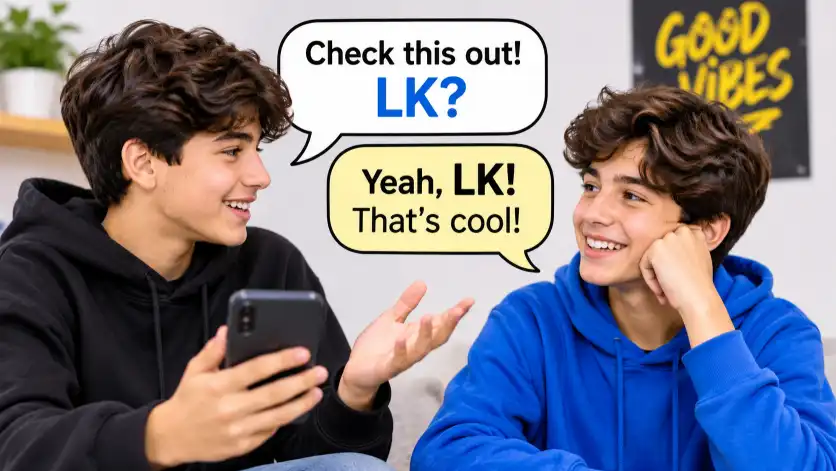
Imagine your friend sends you a message about a new hobby.
A: I’ve started learning photography.
B: That’s cool! Do you enjoy it?
A: Yeah, I lk love taking pictures.
B: You should share some of your work.
In this conversation, LK is used as informal shorthand for low,key or possibly like, depending on the sender’s intention.
Example in a Social Media Conversation
Someone uploads a picture of their vacation on Instagram.
A follower comments:
“I lk this location!”
The comment suggests that the person likes the location and appreciates the photograph.
Another follower might write:
“I’m lk jealous of this view.”
Here, LK may represent low,key, expressing a feeling of jealousy in a casual way.
Both examples show how the abbreviation can appear in different types of online conversations.
Frequently Asked Questions
1. What Does LK Mean in Text Messages?
LK can mean “like” or “low,key” in informal text messages. The intended meaning depends on the sentence and the conversation. Some people also use it as a personal texting shortcut.
2. What Does LK Mean on TikTok?
On TikTok, LK may represent like or low,key in comments and direct messages. For example, “I’m lk obsessed with this trend” expresses an understated feeling of excitement.
3. Is LK Slang?
LK is informal texting shorthand. It may represent like or low,key, but it does not have one universally accepted meaning across online conversations.
4. Is LK Rude or Offensive?
No, LK is not generally considered rude or offensive. It is usually a harmless abbreviation used in casual conversations with friends and other people online.
5. How Should You Reply to LK?
Your response depends on the context. You can say “Same,” “I know what you mean,” or “Glad you like it.” If you do not understand the message, ask the sender what LK means.
Q6. Does LK mean like in texting?
LK may be used as a short form of “like” in some conversations, but this is not a widely established texting abbreviation. The surrounding message helps clarify its meaning.
Q7. Does LK mean low-key in chat?
It can be interpreted as “low-key” in certain informal conversations. However, people more commonly write “lowkey” or “low-key” instead of shortening it to LK.
Q8. Is LK used on Snapchat and Instagram?
LK may appear in casual messages on Snapchat, Instagram, or other social platforms. Its meaning depends on the conversation, and it is not a standard abbreviation across these platforms.
Q9. Is LK the same as LOL or IDK?
No. LOL commonly means “laughing out loud,” while IDK means “I don’t know.” LK does not have one universally accepted meaning, so you need context to understand it.
Q10. How should I reply when someone sends LK?
If the meaning is unclear, ask a simple question such as “What do you mean by LK?” If the surrounding message makes the meaning obvious, respond naturally to what the person is saying.
Conclusion
LK is an informal texting abbreviation that may mean “like” or “low,key” depending on how someone uses it. People may use it in casual conversations, social media comments, and private messages when expressing opinions, interests, or feelings.
You might encounter it on TikTok, Snapchat, Instagram, WhatsApp, and other messaging platforms. However, it is not as widely recognized as common abbreviations such as IDK, LOL, and BRB.
The most important thing to remember is that context determines its intended meaning. If a message is unclear, asking the sender for an explanation is better than making assumptions.
LK is generally safe to use with friends, but writing complete words is a better choice for school assignments, professional conversations, and formal communication.
Read More About !

Michael Brooks is a language writer at SlangPath with 7+ years of experience creating simple, practical content on English slang and everyday expressions.