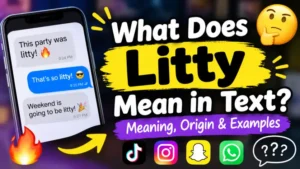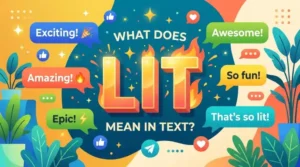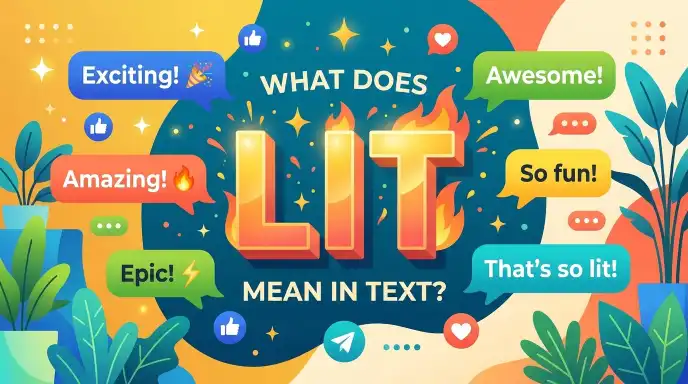
Lit in text means something is exciting, amazing, awesome, or really enjoyable. People use this slang word to describe experiences that make them feel excited, impressed, or happy. You can often see it in text messages, TikTok comments, Snapchat stories, Instagram captions, and online conversations.
For example, when someone texts you, “Last night’s party was lit,” they are saying they had an amazing time because the party was exciting, entertaining, and full of energy.
You may also see people use lit when talking about music, fashion, gaming, celebrations, holidays, or even someone’s achievements. It is a short and informal way to show approval without writing a long explanation.
Although the word has been around for a long time, its slang meaning became especially popular through music, youth culture, and social media. Today, many people understand it even if they do not regularly use it themselves.
In this article, you will learn what lit means in different conversations, how people use it on popular social platforms, and how to understand its meaning from the surrounding message.
Lit Meaning in Text
Lit is a casual slang word that people use to describe something exciting, impressive, enjoyable, or full of energy. When someone calls an event, song, activity, or experience lit, they usually show that they really like it.
In everyday texting, people often use lit to express a positive reaction. Instead of writing a full sentence like “That was an amazing experience,” they might simply say, “That was lit!”
For example, imagine your friend sends you pictures from a concert. You look at the pictures and notice a huge crowd, colorful lights, and an energetic performance. You might reply:
“Wow, that concert looks lit!”
Your message tells your friend that the event looks exciting and enjoyable.
The word can also describe something that has not happened yet. For instance, if your friends are planning a weekend trip, you might say, “This weekend is going to be lit.” You are expressing excitement about an upcoming experience.
What Does Lit Mean in Different Texting Situations?
The meaning of lit generally stays positive, but the exact idea depends on what people are discussing. It can describe excitement, quality, entertainment, or someone’s impressive work.
Here are some common situations where the word appears.
1. When Talking About a Party
When someone describes a party as lit, they usually mean it was exciting, entertaining, and enjoyable. It might have great music, dancing, interesting activities, or a lively atmosphere.
Example:
A: How was the birthday party yesterday?
B: It was lit! Everyone had an amazing time.
In this conversation, the speaker is saying that the birthday celebration was much more enjoyable than an ordinary gathering.
2. When Talking About Music
People frequently use lit to describe songs, albums, music videos, and live performances.
Example:
A: Have you listened to that new song?
B: Yes! The beat is so lit.
Here, the speaker likes the song and finds its music exciting or impressive.
It does not necessarily mean the song is loud. Someone can use lit simply because they enjoy the melody, lyrics, rhythm, or overall sound.
3. When Complimenting Someone’s Appearance
Lit can also work as a casual compliment. People may use it when they like someone’s outfit, hairstyle, shoes, or overall style.
Example:
A: I bought a new pair of sneakers today.
B: Those sneakers are lit!
The reply means the sneakers look really cool or attractive.
4. When Discussing Gaming
Online gaming communities often use energetic slang to react to exciting matches, impressive moves, and unexpected victories.
Example:
A: Did you see that final move?
B: Yeah, that was lit!
The speaker is showing excitement about the gameplay.
5. When Reacting to Good News
People also use lit to celebrate someone’s achievements, good news, or exciting moments.
Example:
A: I finally passed my driving test!
B: That’s lit! Congratulations!
In this situation, the word expresses happiness and approval. The speaker is excited about the other person’s success.
Do People Use Lit as a Slang Word, Acronym, or Abbreviation?
Lit is an informal slang word, not an acronym or abbreviation. People use it in everyday conversations and online messages to describe something exciting, amazing, or impressive. Unlike abbreviations such as IDK or BRB, lit has its own meaning and does not represent a group of words.
Lit is a slang word, not an acronym or abbreviation.
An acronym is formed using the first letters of several words. For example, LOL stands for “Laughing Out Loud,” while BRB means “Be Right Back.”
Lit is different because it is already an English word. People began using it with an additional informal meaning to describe something exciting, impressive, or enjoyable.
The word also has a traditional dictionary meaning. Lit is the past tense and past participle of the verb light.
For example:
- “She lit a candle before dinner.”
- “The street was lit with colorful decorations.”
- “He lit the fireplace on a cold evening.”
In these sentences, lit refers to producing light or making something bright.
However, when someone writes “That movie was lit,” they are not talking about brightness. They are using the informal slang meaning.
Understanding this difference is important because the same word can communicate different things depending on the sentence.
What Does Lit Mean in Casual Conversations?
In casual conversations, lit is generally a way to express excitement without sounding too formal.
People often choose it because it is short, familiar, and easy to include in everyday messages.
For example, compare these two sentences:
- “The concert was extremely enjoyable, and I had a wonderful experience.”
- “The concert was lit!”
Both communicate a positive reaction, but the second sounds more relaxed and informal.
This is why the word is common among friends, classmates, social media users, and people who enjoy casual online communication.
It can also help express enthusiasm when someone shares something interesting.
For example, if a friend tells you about an upcoming trip, you might reply, “That sounds lit!” You are showing that you think the plan sounds exciting.
Does Lit Always Have a Positive Meaning?
No. Although the most common modern texting meaning is positive, the word can have different interpretations in certain situations.
It is useful to understand these differences before deciding what someone means.
Lit meaning exciting or amazing: This is the familiar slang meaning.
Example: “The whole festival was lit.”
The person enjoyed the festival and found it exciting.
Lit meaning illuminated: This is the traditional English meaning.
Example: “The room was lit by candles.”
Here, lit describes a room that has light.
Lit meaning intoxicated: In some informal conversations, particularly when discussing nightlife or drinking, lit can mean drunk or under the influence of alcohol.
Example: “He got lit at the party.”
In this context, the speaker may be referring to intoxication rather than simply having fun.
The surrounding words provide important clues. If someone is describing a concert, song, or performance, the positive slang meaning is usually intended. If the conversation is about drinking or partying in a different sense, the interpretation may change.
Is Lit Still Used in Modern Texting?
Yes, lit remains a recognizable slang expression in modern English conversations. However, how frequently people use it depends on their age, location, social group, and personal communication style.
Some people use it regularly when reacting to music, celebrations, and social media posts. Others understand the word but prefer alternatives such as awesome, cool, amazing, or exciting.
It is also common to see lit used together with emojis.
For example:
- “That party was lit 🔥”
- “Your new car is lit!”
- “This playlist is lit 🔥”
- “Tonight is going to be lit!”
The fire emoji adds enthusiasm and supports the idea that something is impressive or exciting.
The expression does not need an emoji to make sense, though. A simple message such as “That was lit” communicates the same basic idea.
Where Do People Use Lit?
People use lit across different social media platforms, messaging applications, and online communities. The meaning is generally similar, but the type of conversation can influence how the word is understood.
Someone might use it to compliment a video on TikTok, react to a friend’s Instagram picture, discuss a party on Snapchat, or talk about an upcoming event in a WhatsApp group.
Understanding how it appears on individual platforms can make online conversations easier to follow.
Lit on TikTok
TikTok is one of the places where users encounter informal slang regularly. People use short expressions in video captions, comments, live streams, and replies.
Lit is often used when someone finds a video entertaining, impressive, or exciting.
For example, a creator might upload a dance video with a popular song. Viewers who enjoy the performance may leave comments such as:
- “This dance is lit!”
- “Your moves are amazing!”
- “That transition was lit.”
- “The music makes this video even better.”
- “This trend is actually lit.”
The word can also appear under gaming clips, comedy videos, fashion content, travel videos, and music performances.
Imagine someone uploads a video showing an exciting celebration with colorful decorations and energetic music. A viewer comments, “This looks lit!”
They are not necessarily saying they attended the celebration. They are simply expressing that the video makes the event look enjoyable.
TikTok users may also combine the word with emojis, especially the fire emoji, to make their reaction more expressive.
For example:
“Your latest video is lit 🔥”
This is a casual compliment that tells the creator their content made a strong impression.
Lit on Snapchat
Snapchat is another platform where lit appears in casual conversations. Users often share short videos, pictures, and stories about their daily activities.
The word can be used when reacting to someone’s snaps or discussing plans with friends.
For example:
A: Are you going to the concert tonight?
B: Yes! It’s going to be lit.
A: Have fun!
Here, lit expresses excitement about an upcoming event.
It can also be used after an event has finished.
For example:
“Last night was lit. We had so much fun!”
Someone might post this sentence alongside pictures from a birthday celebration, a family gathering, a music event, or a night out.
Snapchat conversations are often quick and informal, so short expressions like lit fit naturally into this style of communication.
Lit on Instagram
Instagram users may use lit in captions, comments, Reels, and direct messages.
It is often used to compliment someone’s photographs, clothing, music choices, creative content, or special celebrations.
For example:
- “Your birthday pictures are lit!”
- “This outfit is absolutely lit.”
- “That performance was amazing.”
- “The decorations look lit.”
- “Such a lit experience!”
The word can also appear in Instagram Stories when someone shares pictures from an exciting activity.
Suppose your friend uploads a photograph from a live music show. You might send a direct message saying:
“That concert looks lit! Who performed?”
This response does two things: it compliments the event and encourages your friend to continue the conversation.
On Instagram, lit is generally used as an informal expression of appreciation. It is not a special Instagram feature, hashtag, or platform,specific abbreviation.
Lit on WhatsApp
WhatsApp is commonly used for personal conversations, family groups, school discussions, and chats with friends. People may use lit when talking about exciting plans, sharing good news, or reacting to something enjoyable.
Unlike formal expressions, this slang word makes a message sound relaxed and friendly. It is especially useful when someone wants to show excitement without writing several sentences.
For example, imagine a group of friends is planning a weekend trip. One person shares pictures of a beautiful destination, and another replies:
“Wow, this place looks lit! I can’t wait to go.”
Here, the speaker means the destination looks exciting and the trip sounds enjoyable.
People may also use it after attending an event or experiencing something interesting.
Common WhatsApp examples:
- “Our weekend trip was lit!”
- “The wedding last night was amazing. So lit!”
- “That new restaurant looks lit.”
- “This group chat is getting lit.”
- “Can’t wait for Saturday. It’s going to be lit!”
The word can appear in individual messages as well as group conversations. Its meaning does not change simply because someone uses WhatsApp instead of another messaging application.
Lit in SMS Text Messages

Lit can also appear in ordinary SMS messages. People use it to describe something exciting, impressive, or enjoyable when communicating through their mobile phone’s regular messaging service.
For example:
A: How was your concert last night?
B: It was lit! The singer gave an amazing performance.
A: Lucky you! I wanted to go too.
B: Hopefully, we can go together next time.
In this conversation, lit describes the concert as an exciting experience.
Someone might also use the word when discussing a movie, school event, sports match, or weekend activity.
For example:
- “That movie was lit.”
- “The final match was so lit.”
- “Your birthday celebration looks lit.”
- “Today’s performance was amazing!”
There is no separate SMS definition for lit. It carries the same informal meaning in regular text messages as it does on social media.
3. Real Chat Examples of Lit
One of the easiest ways to understand internet slang is to see how people use it in everyday conversations.
Lit can appear in different situations. Sometimes it describes something that already happened, while other times it expresses excitement about something coming up.
The following examples show how the word fits naturally into different types of messages.
Example 1: Talking About a Birthday Party
A: How was your cousin’s birthday party last night?
B: It was lit! Everyone was dancing and enjoying the music.
A: I wish I could have joined you.
B: You missed a really good celebration!
Meaning: In this conversation, lit means the birthday party was exciting, entertaining, and enjoyable. The speaker had a great time and wants to express that feeling.
Example 2: Discussing a New Song
A: Have you listened to the new song everyone is talking about?
B: Yes! The beat is so lit.
A: I heard it yesterday. I really like the chorus.
B: Same here. I’ve played it several times already.
Meaning: Here, lit describes music that sounds impressive or enjoyable. The speaker likes the song and finds its rhythm exciting.
Example 3: Complimenting Someone’s Outfit
A: I’m wearing my new outfit to the party tonight.
B: Let me see a picture!
A: Here it is. What do you think?
B: That outfit is lit! You look amazing.
Meaning: The speaker is using lit as a compliment. It means the outfit looks stylish, attractive, or really cool.
Example 4: Making Weekend Plans
A: Do you have any plans for Saturday?
B: We’re going to a music festival with some friends.
A: That’s going to be lit!
B: I know! There will be live performances and food stalls too.
Meaning: Lit expresses excitement about a future event. The speaker expects the festival to be enjoyable.
Example 5: Reacting to a TikTok Video
A: Did you check out my new TikTok video?
B: Yes, I just watched it.
A: What did you think?
B: It was lit! The editing and music were perfect.
A: Thanks! I spent a lot of time making it.
Meaning: In this example, lit means the video is entertaining, impressive, or enjoyable to watch.
Example 6: Talking About a Sports Match
A: Did you watch the football match yesterday?
B: Of course! The last ten minutes were lit.
A: That final goal was unbelievable.
B: I couldn’t believe what I was watching!
Meaning: Lit describes an exciting part of the match. The speaker is expressing enthusiasm about the game.
Example 7: Discussing a Holiday
A: You’re back from your vacation. How was the trip?
B: It was absolutely lit! We visited beaches and explored the city.
A: That sounds wonderful. Did you take pictures?
B: So many! I’ll share them with you.
Meaning: The person uses lit to describe a holiday that was enjoyable and full of interesting experiences.
Example 8: Reacting to Good News
A: Guess what? I finally got accepted into my dream university!
B: That’s lit! Congratulations!
A: Thank you! I’ve been waiting for this moment.
B: You worked hard for it. You deserve it.
Meaning: Here, lit communicates excitement and happiness about someone’s achievement. It works as a positive reaction to good news.
Example 9: Talking About a Restaurant
A: Have you tried that new restaurant near the shopping mall?
B: Yes, I went there with my family yesterday.
A: How was the food?
B: It was lit! Their burgers were especially good.
A: Now I definitely want to visit.
Meaning: Lit means the food was delicious or impressive. The speaker is recommending the restaurant through a casual expression.
Example 10: Discussing an Upcoming School Event
A: Our school is organizing a music festival next Friday.
B: Really? That sounds lit!
A: There will be singing, dancing, and different performances.
B: I’m definitely going to attend.
Meaning: The speaker thinks the upcoming school festival sounds exciting and interesting.
What Do These Conversations Teach Us?
These examples show that lit is a flexible expression. It does not describe only parties or nightlife.
People can use it when discussing everyday activities, entertainment, personal achievements, music, fashion, and social events.
The important thing is to understand the surrounding conversation. When someone says “That was lit,” they are generally sharing a positive reaction. However, the word can have other meanings in specific contexts, so the complete sentence still matters.
4. How to Reply When Someone Says Lit
If someone uses lit in a message, you do not need to search for another slang expression to answer them. A simple, natural reply is usually enough.
Your response depends on the situation. You might want to agree with the person, show excitement, make them laugh, or simply acknowledge what they said.
For example, if someone tells you that a concert was lit, you could reply, “That sounds amazing!” If a friend compliments your outfit by saying it is lit, you could respond with “Thank you!”
Here are different types of replies you can use.
Funny Replies to Lit
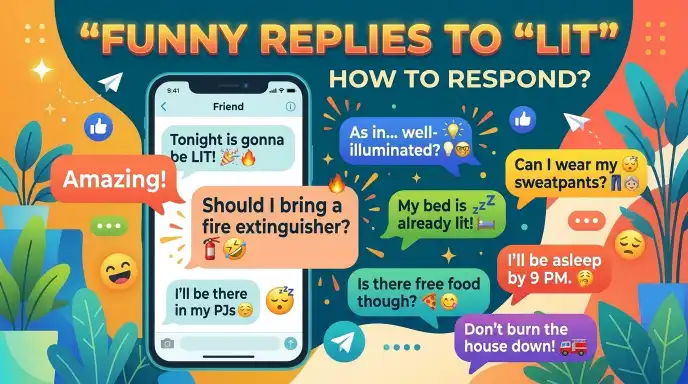
Funny replies are suitable when you are talking to close friends or people who enjoy playful conversations.
You can use humor to continue the discussion without making the response sound too serious.
Examples of funny replies:
- “Someone call the fire department!”
- “Too lit to handle!”
- “Save some excitement for me!”
- “I hope the neighbors survived!”
- “We clearly know how to have fun!”
- “The energy is out of control!”
- “Don’t forget to invite me next time!”
- “My excitement level is already 100%.”
Real conversation:
A: This party is going to be lit!
B: Someone call the fire department!
A: Haha, you better be ready!
B: I’m already excited!
In this conversation, the second person makes a playful reference to the word lit. The reply keeps the discussion funny and friendly.
Casual Replies to Lit
Casual replies are useful when you agree with someone but do not want to write a long message.
They work particularly well in everyday texting, social media comments, and conversations with friends.
Examples of casual replies:
- “Yeah, definitely!”
- “For real!”
- “Absolutely!”
- “I know, right?”
- “That’s awesome!”
- “So true!”
- “No doubt!”
- “Can’t disagree with that.”
- “Totally!”
- “Exactly!”
Real conversation:
A: That new song is lit.
B: For real! I’ve been listening to it all day.
A: The beat is so good.
B: That’s what I’m saying!
These replies show that both people share the same opinion about the music.
Friendly Replies to Lit
Sometimes someone uses lit while telling you about a happy experience or something they are excited about.
A friendly reply can show that you are interested and happy for them.
Examples of friendly replies:
- “Glad you had fun!”
- “That sounds amazing!”
- “Wish I could have joined!”
- “Looks like you had a great time.”
- “Hope you enjoy the next one too!”
- “That’s wonderful!”
- “Tell me more about it!”
- “I’m happy you enjoyed yourself.”
- “We should go together next time.”
- “That must have been an unforgettable experience!”
Real conversation:
A: Our weekend trip was lit!
B: Glad you had fun! Where did you go?
A: We visited a beautiful mountain area.
B: That sounds amazing. I would love to visit someday!
This type of response does more than acknowledge the message. It also encourages the other person to share more about their experience.
Neutral Replies to Lit
Not every conversation requires an excited or funny response. Sometimes you simply want to acknowledge what someone said.
Neutral replies are helpful when you do not have much to add or when you are talking to someone you do not know very well.
Examples of neutral replies:
- “Nice!”
- “Sounds good.”
- “That’s great.”
- “Good to hear.”
- “I see.”
- “Glad to hear that.”
- “Interesting!”
- “Okay, nice.”
- “That’s good to know.”
- “Sounds like a good time.”
Real conversation:
A: The concert was lit last night.
B: Nice! Sounds like a good time.
A: Yeah, the performance was really good.
B: Glad you enjoyed it.
The response is polite and natural without showing too much excitement.
What If You Don’t Understand Why Someone Said Lit?
If you are unsure what the other person means, you can ask a simple follow,up question.
For example:
A: Yesterday’s event was lit!
B: Really? What made it so exciting?
A: The music, performances, and whole atmosphere were amazing.
This is a good way to continue the conversation while learning more about what the other person enjoyed.
Which Reply Is Best for Different Situations?
| Situation | Suitable Reply |
| A friend praises your outfit | “Thank you! Glad you like it.” |
| Someone talks about an exciting party | “Sounds like you had a great time!” |
| A friend shares good news | “That’s awesome! Congratulations!” |
| Someone compliments your video | “Thanks! I appreciate it.” |
| A friend discusses a new song | “For real! It’s amazing.” |
| Someone describes a future plan | “That sounds exciting!” |
| You want to make a joke | “Someone call the fire department!” |
| You want a simple response | “Nice! Sounds good.” |
The best reply is the one that matches the tone of the conversation. You can use slang with friends, friendly language in personal chats, and more standard English in formal situations.
5. Is Lit Rude or Offensive?
No, lit is generally not considered rude, insulting, or offensive when used with its popular slang meaning. It is normally a positive expression that people use to show excitement, appreciation, or approval.
For example, if someone says, “Your performance was lit,” they are giving you a compliment. They mean your performance was impressive or enjoyable.
However, like many informal expressions, its meaning can change depending on the situation. In some conversations, lit can refer to intoxication rather than excitement. The surrounding words help explain what the speaker intends.
Is Lit Safe to Use With Friends?
Yes, lit is generally safe to use in casual conversations with friends, classmates, and people you know well.
It can make a conversation sound more relaxed and natural.
For example:
- “Your birthday party was lit!”
- “That new song is so lit.”
- “Our weekend trip is going to be lit.”
- “Your gaming skills are lit!”
These messages communicate positive feelings without being disrespectful.
You can also use the word when reacting to someone’s achievement or sharing excitement about an upcoming event.
However, remember that not everyone uses slang in the same way. Some people may understand the expression but prefer more traditional English words.
Is Lit Appropriate at School?
Lit can be appropriate in informal conversations between students. Friends may use it in text messages, group chats, or when discussing school activities.
For example:
“Yesterday’s sports competition was lit!”
This is a casual way to say that the competition was exciting.
However, it may not be the best choice for formal schoolwork. When writing essays, reports, presentations, or academic assignments, standard English is usually more appropriate.
Instead of:
“The science exhibition was lit.”
You could write:
“The science exhibition was impressive and enjoyable.”
Both sentences express a positive opinion, but the second one is more suitable for academic writing.
Is Lit Appropriate at Work?
The word can be acceptable in relaxed workplace conversations, especially when colleagues have a friendly relationship.
For example, after a company celebration, someone might say:
“The office party was lit!”
In a casual conversation, this sounds natural and positive.
However, professional emails, business reports, client communication, and formal meetings usually require more appropriate vocabulary.
You can use these alternatives instead:
- Excellent
- Impressive
- Outstanding
- Exciting
- Successful
- Fantastic
For example, instead of writing “The presentation was lit,” you could write “The presentation was excellent.”
The main point is to consider your audience. Slang works well in relaxed conversations, but standard English is generally a better choice in professional situations.
Can Lit Sound Disrespectful?
The word itself is not normally disrespectful, but the way someone uses it can affect how a message is received.
For example, if a person shares something serious and another person replies with “That’s lit,” the response may sound insensitive or inappropriate.
Similarly, using slang when someone expects a serious or professional answer may create confusion.
It is always better to consider the subject before choosing an informal expression.
6. Who Uses This Term?
Lit is understood by different age groups, although its use can vary between generations.
It is particularly associated with internet culture, music, entertainment, and casual communication. Younger social media users may encounter it frequently, while older users may recognize the word without using it regularly.
It is not limited to a particular age group, country, or online community.
Gen Z Usage
Gen Z users commonly recognize lit as an expression of excitement and approval.
They may use it when discussing music, fashion, parties, gaming, social media trends, and entertaining experiences.
For example:
- “This playlist is lit.”
- “That party was actually lit.”
- “Your new profile picture is lit.”
- “The final scene was so lit.”
For younger users, the expression can make a message sound energetic and informal.
It also appears in online comments where people want to react quickly to something impressive.
However, not every Gen Z user uses the word regularly. Personal communication habits and social groups influence slang preferences.
Millennials and Adults
Millennials and older adults may also understand and use lit, especially when communicating online or talking casually with younger people.
Some adults use it naturally when discussing music, entertainment, celebrations, or enjoyable experiences.
For example:
- “That concert was lit!”
- “The new restaurant looks lit.”
- “We had a lit weekend.”
- “Your presentation was impressive.”
Other adults may prefer expressions such as awesome, fantastic, amazing, or exciting.
The important difference is not necessarily age. It is how comfortable someone feels using informal internet language.
Teenagers and Students
Teenagers may encounter lit in conversations with friends, school group chats, online videos, gaming communities, and social media comments.
For example, students might use it when discussing:
- A school celebration
- A sports competition
- A music performance
- A fun classroom activity
- A weekend gathering
- A popular online video
It is a simple expression that can communicate excitement without requiring a long explanation.
Gaming and Online Communities
Lit is also recognizable in gaming communities.
Players may use it when reacting to impressive moves, exciting matches, successful missions, or entertaining gameplay.
For example:
A: Did you see that final move?
B: That was lit!
Here, the speaker is showing excitement about what happened during the game.
It can also appear in Discord conversations, live,stream comments, and online gaming discussions.
Where Is Lit Commonly Used?
The expression can appear across several digital platforms and everyday communication spaces.
| Platform | Common Usage |
| TikTok | Reacting to entertaining videos and trends |
| Complimenting photos, Reels, and outfits | |
| Snapchat | Discussing parties, stories, and plans |
| Casual conversations and group chats | |
| SMS | Short personal messages |
| Discord | Gaming discussions and community chats |
| YouTube | Comments about music and videos |
Lit is a recognizable part of informal English vocabulary. However, its popularity can vary over time as new expressions appear and people’s communication styles change.
7. Origin of the Term Lit
The word lit has existed in English for a long time, but its modern slang meaning developed through informal speech, music, and popular culture.
Originally, lit was the past tense and past participle of the verb light. It referred to something that had been illuminated or made bright.
Over time, people began using the word in a different way to describe exciting experiences and lively situations.
How Did Lit Develop Its Modern Meaning?
Lit: “That new song is lit!” (The song is amazing and full of energy.)
Something bright can attract attention, create energy, or make an environment feel lively. The informal use of lit developed into a way to describe experiences that people found exciting or impressive.
For example, someone might describe a lively celebration as lit because the atmosphere is energetic and enjoyable.
The modern slang meaning is not simply about physical light. It communicates enthusiasm and approval.
Influence of Music and Hip,Hop Culture
Music and hip,hop culture played an important role in spreading the expression.
The word became associated with energetic performances, nightlife, parties, and exciting social experiences.
People used it to describe music they enjoyed and events with a lively atmosphere.
As the expression appeared in popular music and everyday speech, more people became familiar with it.
It gradually moved beyond music,related conversations and became a general way to describe something impressive or enjoyable.
How Social Media Helped Popularize Lit
Social media helped spread lit across different age groups and online communities.
People began using it in:
- Instagram captions
- Snapchat stories
- TikTok comments
- YouTube discussions
- Facebook posts
- WhatsApp messages
- Gaming communities
Short,form content made informal expressions especially easy to share. A person could use one word to react to an entire video, photograph, performance, or event.
For example, someone watching a concert video might simply comment:
“Absolutely lit!”
The short response communicates excitement without requiring additional explanation.
Does Lit Have One Confirmed Origin?
The exact development of the modern slang meaning cannot be attributed to one specific person or a single social media platform.
The word developed through informal English and popular culture over time. Music, youth communication, and online communities all contributed to its wider recognition.
It is therefore more accurate to understand lit as an existing English word that gained an additional informal meaning rather than a newly invented internet abbreviation.
8. Lit vs. IDK vs. IDC vs. IMO vs. BRB
People sometimes see lit alongside common texting abbreviations and assume that all these expressions work in the same way.
However, they have different purposes.
Lit is commonly used to describe something exciting, amazing, or impressive, whereas IDK, IDC, IMO, and BRB are used to express uncertainty, personal opinions, feelings, or a short break from a conversation.
The following table explains their differences.
| Term | Meaning | Type | Usage | Popularity |
| Lit | Exciting, amazing, or awesome | Slang word | Describing something enjoyable | Widely recognized |
| IDK | I Don’t Know | Initialism | Showing uncertainty | Very common |
| IDC | I Don’t Care | Initialism | Expressing a lack of concern | Very common |
| IMO | In My Opinion | Initialism | Sharing a personal opinion | Common |
| BRB | Be Right Back | Initialism | Saying you will return shortly | Very common |
Lit vs. IDK: Understanding the Difference
Lit and IDK serve different purposes in everyday texting. People use Lit to show that something is exciting, fun, or impressive.
IDK means “I Don’t Know” and helps someone express uncertainty or admit that they do not have enough information to answer.
For example:
Lit: “That new song is lit!” (The song is amazing and full of energy.)- IDK: “IDK what time the concert starts.” (I don’t know when it starts.)
The main difference is that Lit expresses excitement or approval, whereas IDK expresses uncertainty or a lack of knowledge.
- Lit: Shows that something is exciting, amazing, or enjoyable.
- IDK: Shows uncertainty or a lack of knowledge.
Example:
- Person A: That party was lit!
- Person B: IDK, I haven’t been there.
In short, Lit describes a positive experience, while IDK communicates uncertainty.
Examples:
- “That concert was lit!” means the concert was amazing.
- “IDK what happened” means the speaker does not know what happened.
One describes a positive experience, while the other communicates uncertainty.
Lit vs. IDC
IDC means “I Don’t Care.”
People use it when they want to express that something does not matter to them or that they are not concerned about a particular situation.
For example:
- “That party was lit!” means the party was exciting.
- “IDC about the result” means the result does not matter to the speaker.
The tone of IDC can sometimes sound dismissive, depending on the conversation.
Lit vs. IMO
IMO stands for “In My Opinion.”
It is commonly used before someone shares a personal thought or judgment.
For example:
- “This movie is lit!” expresses excitement about the movie.
- “IMO, this movie is the best one” introduces a personal opinion.
Both can appear in the same conversation, but they serve different purposes.
Lit vs. BRB
BRB means “Be Right Back.”
It is used when someone needs to leave a conversation temporarily and plans to return.
For example:
- “That game was lit!” describes an exciting gaming experience.
- “BRB, I need to answer the door” tells someone the speaker will return shortly.
Understanding these differences helps you recognize the purpose of each expression in online conversations.
9. Real,World Usage Example
Imagine that a group of friends attends a music festival on Saturday evening.
The event has live performances, colorful lights, food stalls, and a large crowd enjoying the music. Everyone is taking pictures and recording short videos to share with friends.
After returning home, one friend sends a message to someone who could not attend.
Example conversation:
A: How was the music festival?
B: It was absolutely lit! The performances were amazing.
A: Which singer did you enjoy the most?
B: The last performer. The whole crowd was dancing!
A: Sounds like I missed a great event.
B: Definitely! You should come with us next time.
In this situation, lit describes the exciting atmosphere and enjoyable performances.
Here is another everyday example involving a school activity.
A student watches a video of a sports competition and sends a message to a classmate.
A: Did you watch the final match?
B: Yes, it was lit!
A: That last goal was unbelievable.
B: I know! Everyone was cheering.
Here, the word describes an exciting match rather than a party or music event.
These situations demonstrate that lit can fit into many different conversations. Its main purpose is to express excitement, enjoyment, or approval.
Frequently Asked Questions
Q1. What Does Lit Mean in Text Messages?
Lit means exciting, amazing, awesome, or enjoyable. People use it to describe something they really like, such as a party, song, event, or experience.
Q2. What Does Lit Mean on TikTok?
On TikTok, lit usually means a video, trend, performance, or piece of content is exciting, entertaining, or impressive.
Q3. Is Lit Slang?
Yes, lit is an informal slang expression. It is an existing English word that has developed an additional meaning in modern conversations.
Q4. Is Lit Rude or Offensive?
No, lit is generally a positive and friendly expression. However, it may sound too casual in professional communication or formal writing.
Q5. How Should You Reply to Lit?
You can reply with “That’s awesome,” “For real,” “I know, right?” or “Glad you enjoyed it.” Choose a response that matches the conversation.
Q6. Does Lit Mean Drunk?
Sometimes.
In some casual conversations, lit can also describe a person who is drunk or under the influence of alcohol.However, its common modern slang meaning is exciting or amazing. The surrounding conversation helps determine the intended meaning.
Q7. What Does Lit Mean From a Girl?
If a girl calls something lit, she usually means it is exciting, impressive, or enjoyable. The word itself does not have a special romantic meaning.
Q8. What Does Lit Mean From a Guy?
When a guy calls something lit, he usually means it is amazing, impressive, or really cool. For example, saying “Your new car is lit” is an informal way of showing admiration and giving a compliment.
Q9. What Is Another Word for Lit?
Common alternatives include awesome, amazing, exciting, fantastic, cool, impressive, and excellent. The best alternative depends on the situation.
Q10. Can I Use Lit in Formal Writing?
It is better to avoid lit in formal writing, academic assignments, and professional reports. Use words such as excellent, impressive, or exciting instead.
Conclusion
Lit is a popular slang word that usually means exciting, amazing, awesome, or enjoyable. People use it in text messages, social media comments, gaming chats, and everyday conversations to express positive feelings about something.
You may see it when someone talks about a great party, an impressive performance, a favorite song, a fun holiday, or an exciting experience.
The word is generally friendly and harmless when used with its common slang meaning. However, its interpretation can change in certain situations, so understanding the context is important.
If you are chatting with friends, using lit can make your messages sound relaxed and natural. For professional emails, academic assignments, and formal conversations, words such as excellent, impressive, and exciting are usually better choices.
Once you understand its meaning and common uses, recognizing lit in everyday online conversations becomes much easier.
Read More About !

Michael Brooks is a language writer at SlangPath with 7+ years of experience creating simple, practical content on English slang and everyday expressions.