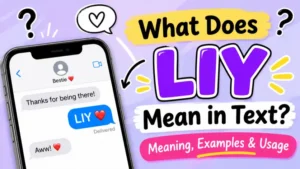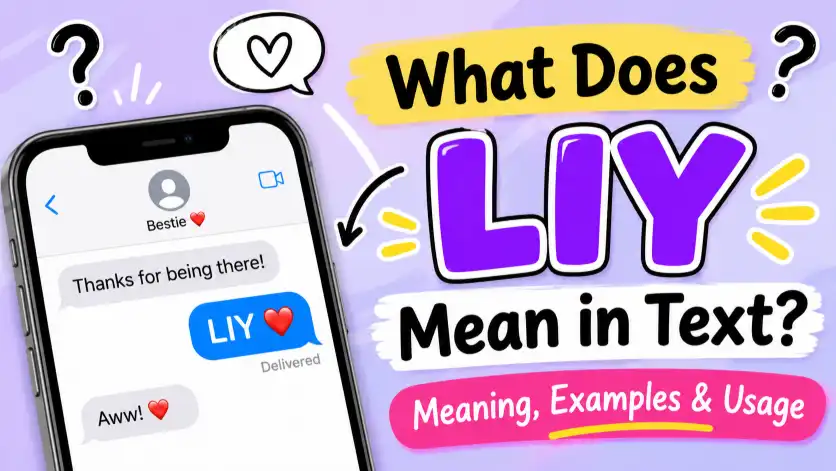
LIY in text may mean “Love You.” People may use this short expression to show affection, care, or appreciation in casual conversations. However, LIY is not a widely recognized texting abbreviation, so its exact meaning can depend on the person using it.
You might see LIY in private messages, Snapchat conversations, Instagram DMs, TikTok comments, or WhatsApp chats. Some people use it when talking to close friends, family members, or someone they care about.
Unlike common texting abbreviations such as ILY, LOL, and IDK, LIY is less familiar to many internet users. It may be a personal variation of other expressions that people use to communicate love and affection.
If someone sends you LIY, you may wonder if they are expressing friendship, romantic feelings, or simply being friendly. Understanding the surrounding conversation can help you identify what the sender means.
What Does LIY Mean in Text?
LIY may stand for “Love You” in informal text conversations. It is a short expression that someone may use to communicate affection, appreciation, friendship, or emotional closeness without typing a complete sentence.
For example, imagine that your best friend helps you prepare for an important exam. After thanking them, you might receive a message saying, “You’re welcome, LIY!” In this situation, the sender is using the expression to show that they care about you and appreciate your friendship.
Texting abbreviations allow people to communicate quickly without writing long messages. Instead of typing complete expressions, internet users sometimes shorten familiar words and phrases. LIY may be used in this way by someone who understands it as a personal or informal version of “Love You.”
However, it is important to understand that LIY is not as widely established as ILY or LY. Some people may recognize it immediately, while others might not know what it means. Its interpretation can also change according to the conversation.
What Does LIY Stand For?
LIY may stand for “Love You” when it appears in an affectionate conversation. The expression is generally intended to communicate positive feelings toward another person.
The sender might use it after receiving help, during a friendly conversation, or while ending a personal chat. It can make a short message feel warmer without requiring a lengthy explanation.
For example:
A: Thanks for always being there for me.
B: Of course! LIY.
A: You’re such a good friend!
Here, LIY adds an affectionate feeling to the conversation. The sender is showing appreciation and reminding the other person that their relationship matters.
There is no single official expansion of LIY that applies to every conversation. If you see these three letters in a different situation, the sender may have another meaning in mind.
Is LIY Slang, an Acronym, or an Abbreviation?
LIY is best described as an informal texting abbreviation when someone uses it to mean “Love You.” It is not a standard English word, and people generally would not use it in formal writing.
An abbreviation is a shortened form of a word or expression. An acronym is formed from the initial letters of a longer phrase and is usually pronounced as a word. An initialism is also formed from initial letters, but people pronounce each letter separately.
In everyday internet communication, people often use these terms loosely when discussing texting shortcuts.
Here are some familiar examples:
- ILY: I Love You.
- LY: Love You.
- LOL: Laughing Out Loud.
- IDK: I Don’t Know.
- BRB: Be Right Back.
- LIY: Sometimes used to mean Love You.
LIY fits into the informal language people use in digital conversations, although its meaning is less established than the other examples.
What Does LIY Mean in Everyday Conversations?
In everyday conversations, LIY may express different feelings depending on the relationship between the sender and receiver. It is generally associated with affection when used to mean “Love You.”
People may use it to make a message sound more personal, especially when speaking with someone they know well.
Here are some situations where someone might intend to use LIY:
1. Showing affection
A person may send LIY to communicate warm feelings toward a partner, close friend, or family member.
Example:
“Good night! LIY. See you tomorrow!”
2. Appreciating someone’s help
Someone may include the abbreviation after receiving support or assistance.
Example:
“Thanks for helping me today. LIY!”
3. Expressing friendship
Close friends may use affectionate expressions to show that they value their relationship.
Example:
“You’re always making me laugh. LIY, bestie!”
4. Ending a conversation
Some people like to finish their chats with a warm expression before saying goodbye.
Example:
“Talk to you later. Take care, LIY!”
5. Making a message feel personal
A short expression can add emotion to an otherwise simple message.
Example:
“Hope you have a wonderful day. LIY!”
These examples show how someone might use LIY to express positive feelings. However, the intended meaning should always be understood through context rather than the abbreviation alone.
LIY vs. ILY: Are They the Same?
LIY and ILY look similar, but they are not equally established in online communication.
ILY is a widely recognized texting abbreviation for “I Love You.” People commonly use it in personal messages, social media conversations, and chats with friends or romantic partners.
LIY may be used by some people to mean “Love You,” but it is less familiar and does not have one universally accepted definition.
Consider these examples:
- ILY: “Good night, ILY!” means “Good night, I Love You!”
- LY: “Thanks for everything, LY!” means “Thanks for everything, Love You!”
- LIY: “You’re always there for me, LIY!” may mean “You’re always there for me, Love You!”
The main difference is recognition. Most regular internet users are more likely to understand ILY than LIY.
If you want to avoid confusion, using ILY or writing the complete phrase “Love You” is usually a clearer option.
Is LIY Used for Romantic Feelings or Friendship?
LIY may communicate romantic affection, but it does not automatically mean that someone has romantic feelings for you.
The relationship between the people chatting plays an important role in understanding the message.
For example, a boyfriend or girlfriend might use an affectionate abbreviation while discussing their relationship. A close friend might use the same expression simply to show appreciation.
Consider these two situations.
Romantic conversation:
A: I wish I could spend more time with you.
B: Same here. LIY ❤️
In this situation, the message may express romantic affection because of the relationship and the surrounding conversation.
Friendly conversation:
A: Thanks for helping me with my project.
B: No problem! LIY, bestie.
Here, the expression is more likely to communicate friendship and appreciation.
Therefore, do not assume that someone is flirting just because they send LIY. Look at their other messages and consider how they normally communicate with you.
Why Do People Use LIY Instead of Writing Love You?
People often prefer short expressions because they make casual conversations quicker and easier. Typing a few letters can feel more convenient than writing a complete phrase, especially during fast conversations.
There are several possible reasons someone might use LIY:
- Convenience: Short expressions take less time to type.
- Casual communication: Abbreviations can make messages feel relaxed.
- Personal texting habits: Some people develop their own shortcuts.
- Emotional expression: A short message can still communicate affection.
- Online communication: Social media encourages quick replies and informal language.
For example, someone might send “LIY, talk tomorrow!” instead of writing “Love you, talk to you tomorrow!”
However, shorter does not always mean clearer. If the receiver does not recognize the abbreviation, the message may create confusion.
Can LIY Have Different Meanings?
Yes. LIY does not have one universally accepted meaning across all online conversations. Although some people may use it to mean “Love You,” another person might use the same letters as a personal abbreviation for something completely different.
The surrounding words can help you understand the intended message.
For example:
- If someone sends LIY after a caring message, they may mean “Love You.”
- If it appears in a discussion about learning something, the sender may intend a different expansion.
- If someone uses it regularly with friends, it may be part of their personal texting style.
Some abbreviation references also list alternative expansions, such as “Learn It Yourself.” These meanings are not necessarily common, but they demonstrate why context matters.
If you cannot understand a message, there is nothing wrong with asking the sender what they mean.
Where Do People Use LIY?
LIY may appear in different types of digital conversations, especially when people use informal language with friends, family members, or close contacts.
Social media platforms have made short messages an important part of everyday communication. People regularly use abbreviations, emojis, and shortened expressions to share their thoughts quickly.
However, LIY is not a confirmed trending abbreviation on any particular platform. Its use should be understood as informal rather than universally popular.
1. LIY on TikTok
TikTok is popular for short videos, entertainment, creator communities, and online discussions. Users communicate through comments, direct messages, captions, and video replies.
People often use short expressions when responding to someone they like or appreciate. LIY may appear in this type of conversation when a user wants to express affection.
For example:
A: Your videos always make my day!
B: Aww, LIY! ❤️
A: Keep posting. You’re amazing!
In this conversation, LIY may communicate appreciation and affection toward the other person.
You might also see the abbreviation in comments between friends who regularly interact on TikTok. However, not every viewer will understand it because ILY and LY are more recognizable expressions.
2. LIY on Snapchat
Snapchat is widely used for private conversations, pictures, short videos, and everyday updates. Friends often send quick messages throughout the day.
LIY may be used when someone wants to show affection after a conversation, share a sweet reaction, or end a chat on a positive note.
For example:
A: I had so much fun hanging out with you today!
B: Same here! We should go again.
A: Definitely. LIY ❤️
B: LIY too!
Here, the abbreviation adds a warm feeling to the conversation.
Snapchat conversations are often personal, so the sender’s relationship with the receiver can help explain the intended meaning.
3. LIY on Instagram
Instagram users communicate through direct messages, story replies, comments, and captions. Short expressions are sometimes used to make these interactions feel more natural.
Someone might write LIY when responding to a compliment, thanking a friend, or showing appreciation for someone’s support.
For example:
A: Your pictures look amazing!
B: Thank you so much! LIY!
A: You deserve all the compliments!
In this example, LIY may communicate affection and appreciation.
It can also appear in conversations between people who regularly interact through Instagram. However, the abbreviation is not an official Instagram term or a platform,specific feature.
4. LIY on WhatsApp
WhatsApp is commonly used for personal messages, family groups, and everyday communication. People often use informal abbreviations to make conversations quicker.
If someone uses LIY on WhatsApp, they may intend to express affection or care toward the person receiving the message.
For example:
A: Don’t forget to eat something before you leave.
B: Okay, I’ll remember.
A: Take care of yourself!
B: I will. LIY!
This example shows how the abbreviation may be used in a caring conversation between people who know each other well.
You may also see similar expressions in WhatsApp group chats, especially when friends or family members are sharing positive messages.
5. LIY in SMS Text Messages
Traditional SMS messages also include shortened expressions. People sometimes use abbreviations when sending quick updates or personal messages.
For example:
A: Have a safe journey. Message me when you arrive.
B: Sure, I’ll let you know.
A: Take care. LIY!
B: Thanks! Love you too.
In this conversation, LIY may be used as a short expression of affection.
However, if you are texting someone who is unfamiliar with internet slang, writing “Love You” is a better way to communicate clearly.
10 Real Chat Examples of LIY
Understanding an abbreviation becomes easier when you see how someone might use it in an everyday conversation. If a person uses LIY to mean “Love You,” it can appear in messages between close friends, family members, or romantic partners.
The following examples show different situations where someone might use this expression. Remember that these are illustrative conversations, and the sender’s intended meaning may vary.
Example 1: Between Close Friends
A: Thanks for helping me with my homework yesterday.
B: No problem! Happy to help.
A: I really appreciate you.
B: LIY, bestie!
Meaning: In this conversation, the sender uses LIY to express affection and appreciation toward a close friend. It makes the message sound warm and friendly.
Example 2: Between a Couple
A: I wish we could spend more time together.
B: Same here. I miss you so much.
A: Hopefully, we can meet this weekend.
B: Can’t wait! LIY ❤️
Meaning: Here, LIY may express romantic affection. The heart emoji and personal conversation help communicate the sender’s feelings.
Example 3: During a Birthday Conversation
A: Happy birthday! Hope your day is full of happiness.
B: Thank you so much!
A: You deserve the best.
B: Aww, LIY! Thanks for remembering.
Meaning: The sender uses LIY to show affection and appreciation after receiving a birthday wish.
Example 4: After Receiving Help
A: I sent you the notes from today’s class.
B: Thank you! I was looking everywhere for them.
A: Don’t worry. I had an extra copy.
B: You’re a lifesaver. LIY!
Meaning: In this situation, LIY adds a caring and appreciative tone to the conversation. The sender is thanking someone for being helpful.
Example 5: Between Siblings
A: Mom said you should come home early today.
B: Okay, I’ll be there soon.
A: Don’t forget to bring the groceries.
B: I won’t. LIY!
Meaning: The abbreviation may be used to express affection between family members. It does not necessarily have a romantic meaning.
Example 6: After Spending Time Together
A: Today was honestly amazing.
B: I had so much fun too!
A: We should plan another day out.
B: Definitely! LIY!
Meaning: The sender uses LIY to express friendship and appreciation after enjoying time together.
Example 7: Supporting a Friend
A: I’ve been feeling stressed about my exams.
B: Don’t worry. You’ll do great.
A: Thanks for always encouraging me.
B: Always here for you. LIY ❤️
Meaning: Here, LIY communicates care and emotional support. The sender wants their friend to feel appreciated.
Example 8: Ending a Conversation
A: I have to go now. Talk to you tomorrow?
B: Sure! Have a good night.
A: You too. LIY!
B: Good night!
Meaning: The sender uses LIY as a warm way to finish a personal conversation.
Example 9: Responding to a Compliment
A: You looked amazing in those pictures!
B: Aww, thank you!
A: Just telling the truth.
B: Haha, LIY!
Meaning: LIY is used as a friendly expression of affection after receiving a compliment.
Example 10: In a Group of Friends
A: Everyone made it home safely?
B: Yes, just got home.
C: Same here!
A: Great! I had such a wonderful time with everyone.
B: Same! LIY guys!
Meaning: In this example, the sender uses LIY to express affection toward a group of friends. The message creates a warm and positive feeling.
How to Reply When Someone Says LIY
If someone sends you LIY, your response depends on your relationship with that person and the tone of the conversation.
For example, if your best friend sends LIY, you might respond with a funny or affectionate message. If someone you do not know well uses it, a simple and polite response may be more appropriate.
You do not always need to use another abbreviation. A natural response is often enough to keep the conversation going.
1. Funny Replies to LIY
If the sender is a close friend who enjoys joking around, you can respond with humor. Funny replies make the conversation entertaining without making it too serious.
Here are some examples:
- “Only when you need something? 😂”
- “Aww, where is my treat?”
- “Say it again. I wasn’t ready! 😂”
- “I knew you couldn’t live without me!”
- “Okay, but I want pizza now.”
- “Finally, someone appreciates me!”
- “That’s the sweetest thing I’ve heard today.”
- “Love accepted! 😂”
Example conversation:
A: LIY!
B: Only because I’m amazing, right? 😂
A: Exactly!
B: I knew it!
These replies are suitable for people who already share a playful relationship. Avoid jokes that might make the other person uncomfortable.
2. Casual Replies to LIY
Sometimes, you do not need a funny or emotional response. A short and relaxed message can be enough.
Casual replies are useful when you want to acknowledge the message without changing the conversation’s direction.
Some examples include:
- “LIY too!”
- “Same here!”
- “Aww, thanks!”
- “You too!”
- “Much love!”
- “Haha, appreciate it!”
- “That’s sweet!”
- “Right back at you!”
Example conversation:
A: LIY!
B: LIY too!
A: Aww!
B: Talk to you later!
These responses are simple and natural for everyday texting.
3. Friendly Replies to LIY
If a close friend sends you LIY, you can respond with something warm and supportive. Friendly replies are especially useful when someone is showing appreciation or expressing care.
Here are some options:
- “Love you too, bestie!”
- “You’re an amazing friend!”
- “Always got your back!”
- “You’re the best!”
- “Sending you lots of love!”
- “So lucky to have you!”
- “You’re always there for me!”
- “Our friendship means a lot!”
Example conversation:
A: Thanks for always listening to me. LIY!
B: Love you too! I’m always here for you.
A: You’re the best!
B: Anytime, bestie!
This type of response shows appreciation and makes the conversation feel more personal.
4. Neutral Replies to LIY
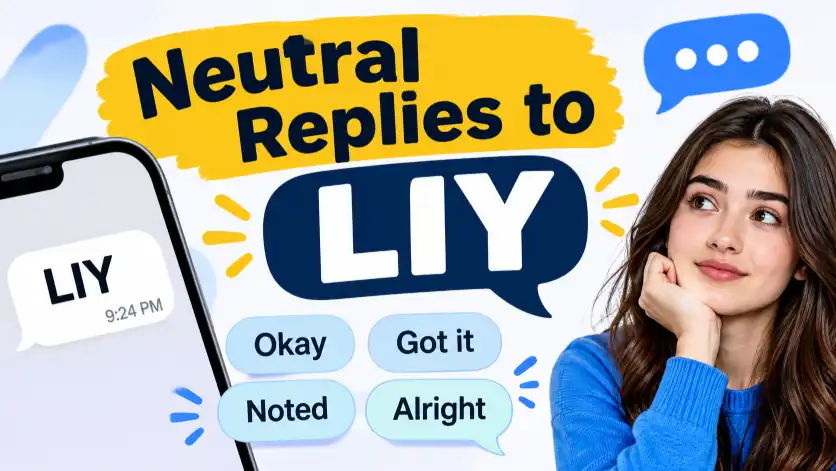
You might receive LIY from someone whose feelings or intentions you do not fully understand. In that situation, you can respond politely without returning the same expression.
Neutral replies help you acknowledge the message while keeping the conversation comfortable.
Some examples include:
- “That’s sweet of you!”
- “Thank you!”
- “I appreciate that.”
- “Take care!”
- “You’re very kind.”
- “Thanks for saying that.”
- “That’s nice to hear.”
- “What does LIY mean?”
Example conversation:
A: LIY!
B: That’s really sweet of you. Thank you!
A: You’re welcome!
This response is polite and friendly without suggesting anything beyond what you intend.
5. Can You Reply With ILY Instead of LIY?
Yes. If someone sends LIY and you understand it as “Love You,” replying with ILY is a natural option.
ILY is more widely recognized and usually means “I Love You.” You can also write the complete expression if you want to make your response clearer.
For example:
A: LIY ❤️
B: ILY too!
Or:
A: LIY!
B: Love you too!
Both responses communicate affection in a simple way.
6. What If You Do Not Understand LIY?
There is no reason to feel embarrassed if you do not recognize an unfamiliar abbreviation. Internet slang changes frequently, and not everyone uses the same expressions.
You can simply ask:
- “What does LIY mean?”
- “Is that short for something?”
- “I haven’t seen that abbreviation before.”
- “Can you explain what you mean?”
Asking for clarification is better than guessing and misunderstanding someone’s message.
Is LIY Rude or Offensive?
LIY is not generally considered rude or offensive when someone uses it to mean “Love You.” In that context, it is an affectionate expression that may communicate friendship, care, or appreciation.
However, because LIY is not a widely standardized abbreviation, its meaning can depend on the situation. You should consider the complete message before deciding how to interpret it.
Is LIY a Bad Word?
No, LIY is not normally understood as a bad word when used as “Love You.” It does not contain an insulting or disrespectful expression in that interpretation.
For example:
A: Thanks for helping me today.
B: Anytime! LIY.
This is a positive and friendly exchange. The sender is showing appreciation rather than trying to insult anyone.
However, if someone uses LIY with a different personal meaning, the interpretation could change. Context always matters when dealing with unfamiliar abbreviations.
Is LIY Safe to Use With Friends?
Yes, you can use LIY in casual conversations with friends if they understand what you mean.
Close friends often use informal language because they are comfortable communicating with each other. A short affectionate expression can make a conversation feel more personal.
For example:
A: Good luck with your interview tomorrow!
B: Thank you! LIY!
This is a friendly way to show appreciation.
Still, if your friend does not recognize LIY, using “Love You” or ILY may be easier.
Can LIY Be Misunderstood?
Yes. One possible problem with less familiar abbreviations is that different people may interpret the same letters differently.
For example, someone might think LIY is a typing mistake or confuse it with ILY.
This can happen when people are unfamiliar with a particular texting expression.
To avoid confusion, consider these simple tips:
- Use familiar abbreviations when chatting with new people.
- Consider the relationship before sending affectionate expressions.
- Avoid assuming that everyone understands internet slang.
- Write the complete phrase when the meaning is important.
- Ask for clarification when someone sends an unfamiliar abbreviation.
These small steps can make online conversations easier and prevent unnecessary misunderstandings.
Is LIY Appropriate at School?
LIY may be appropriate in casual conversations between classmates or friends.
Students sometimes use shortened expressions when chatting about homework, school activities, or personal matters.
For example:
A: Thanks for sharing your class notes.
B: No problem! LIY.
However, LIY is not suitable for formal assignments, school essays, or academic communication. Teachers generally expect students to use standard English in written work.
If you are writing to a teacher, use a complete and respectful sentence instead.
Is LIY Appropriate at Work?
LIY is generally better suited to personal conversations than professional communication.
In a workplace, people usually need clear and appropriate language. An unfamiliar abbreviation may confuse colleagues or make a message seem too informal.
For example, instead of writing:
“Thanks for your help with the report. LIY!”
You could write:
“Thank you for your help with the report. I really appreciate your support.”
The second message is clearer and more suitable for a professional environment.
Can LIY Sound Disrespectful in Some Situations?
The expression itself is not generally disrespectful when intended as “Love You.” However, the way it is used can affect how someone receives the message.
For instance, sending affectionate abbreviations to someone you barely know might feel unexpected or overly personal.
Similarly, using informal expressions during a serious conversation may make the other person feel that you are not taking the situation seriously.
The best approach is to consider the person’s comfort, your relationship, and the purpose of the conversation before using it.
Who Uses LIY?
LIY is an informal expression that some people may use in personal text conversations. It does not belong to one specific age group, country, or social media community.
People who are familiar with texting abbreviations may recognize it, especially if they have seen similar expressions such as ILY and LY.
However, LIY is not as widely recognized as many other internet abbreviations. Some users may understand it as “Love You,” while others may not know what the sender means.
Do Teenagers and Young Adults Use LIY?
Teenagers and young adults are familiar with many forms of internet slang because they regularly communicate through messaging apps and social media.
They often use short expressions to make conversations quicker and more casual. Common examples include LOL, IDK, IMO, ILY, and BRB.
LIY may also appear in conversations among younger users, but there is no reliable evidence that it is a particularly popular expression among teenagers.
For example:
A: Thanks for helping me with my presentation.
B: Anytime! LIY!
A: You’re the best!
This conversation shows how someone might use the abbreviation to express affection and appreciation.
Is LIY a Gen Z Expression?
Gen Z users have helped popularize many internet expressions through social media, messaging apps, and online communities.
They commonly use shortened words, abbreviations, and emojis when communicating with friends. These expressions allow them to share reactions and feelings without writing lengthy messages.
LIY may be used by individual Gen Z users, but it should not be considered a major or officially established Gen Z slang term.
More recognizable expressions include:
- ILY – I Love You.
- LOL – Laughing Out Loud.
- IDK – I Don’t Know.
- IDC – I Don’t Care.
- IMO – In My Opinion.
- BRB – Be Right Back.
These abbreviations have more established meanings and broader recognition in everyday digital communication.
Do Adults Use LIY?
Adults also use texting abbreviations, especially when communicating with family members, friends, and people they know well.
Some adults prefer complete expressions, while others enjoy using shorter forms because they are convenient.
For example, a parent might send a message saying:
“Take care of yourself. Love you!”
Another person might prefer a shorter expression such as “ILY.”
if someone uses LIY depends on their personal texting habits rather than their age alone.
Where Might You Encounter LIY?
If someone uses LIY to mean “Love You,” you might encounter it in different online environments.
Common places where informal abbreviations appear include:
- Private messages between friends.
- Family group conversations.
- Snapchat chats.
- Instagraam direct messages.
- TikTok comments.
- WhatsApp conversations.
- Online gaming chats.
- Traditional SMS messages.
These platforms support informal communication, but LIY is not necessarily common on all of them.
How Often Is LIY Used Online?
LIY appears to be less recognizable than established abbreviations such as ILY, LOL, and IDK. There is no reliable usage data that confirms how frequently people use it across social media platforms.
Some users may use it regularly as part of their personal texting style, while others may never encounter it.
This is common with internet slang. Certain expressions become widely recognized, while others remain limited to small online communities or individual conversations.
If you are writing a message for a general audience, ILY or “Love You” is a safer choice because more people understand it.
Origin of the Term LIY
The exact origin of LIY as an abbreviation for “Love You” is unclear. There is no widely accepted historical record confirming when people first started using these three letters with this meaning.
To understand how an expression like LIY might have developed, it helps to look at the history of internet language and the growth of text messaging.
How Did Short Texting Expressions Become Popular?
Texting abbreviations became popular as mobile phones and online messaging services developed.
In the early days of text messaging, typing long sentences could take time. Many mobile phones also had small keypads, so users often looked for quicker ways to communicate.
Shortened expressions made conversations faster and more convenient.
For example:
- LOL became a common way to express laughter.
- BRB helped users say they would return shortly.
- IDK became a quick way to communicate uncertainty.
- ILY became a familiar way to express affection.
- LY offered another short way to write “Love You.”
These expressions gradually became part of everyday digital communication.
How Might LIY Have Developed?
LIY may have developed as an informal variation of other affectionate abbreviations.
People sometimes create their own shortcuts based on expressions they already know. They may also change the letters or wording when communicating with friends.
For example, someone who regularly uses ILY or LY might use LIY as another personal way to express affection.
However, this is only a possible explanation. There is no confirmed evidence establishing this development as the actual origin of LIY.
Did Social Media Influence LIY?
Social media has played an important role in spreading internet slang.
Platforms such as Instagram, TikTok, Snapchat, and WhatsApp allow people to communicate quickly through comments, reactions, and private messages.
When users encounter unfamiliar expressions, they may start using them in their own conversations.
Some expressions become popular across different communities, while others remain less familiar.
LIY may appear in this type of informal online communication, but there is not enough evidence to identify a particular social media platform as its starting point.
Is There an Official Meaning or Origin of LIY?
No universally accepted origin has been established for LIY as “Love You.”
Different abbreviation references may provide different expansions. Some people may also use the letters as a personal shortcut.
This means you should not assume that every person who writes LIY intends the same thing.
The surrounding message, relationship, and conversation are more useful than relying on the letters alone.
LIY vs IDK vs IDC vs IMO vs BRB
Texting abbreviations help people communicate quickly, but their meanings can be very different.
Some expressions communicate emotions, while others share opinions, uncertainty, or information about what someone is doing.
The following comparison explains the differences between LIY, IDK, IDC, IMO, and BRB.
| Term | Meaning | Type | Usage | Popularity |
| LIY | Sometimes Love You | Informal abbreviation | Expressing affection | Low / Unclear |
| IDK | I Don’t Know | Initialism | Showing uncertainty | Very High |
| IDC | I Don’t Care | Initialism | Expressing indifference | High |
| IMO | In My Opinion | Initialism | Sharing personal opinions | High |
| BRB | Be Right Back | Initialism | Temporarily leaving a conversation | High |
1. LIY – Love You
LIY may be used to express affection, care, or appreciation.
Example:
“Thanks for always supporting me. LIY!”
It is less widely recognized than ILY, so some people may not understand it immediately.
2. IDK – I Don’t Know
IDK is one of the most recognizable texting abbreviations.
People use it when they do not know an answer or are uncertain about something.
Example:
A: What time does the movie start?
B: IDK. Let me check.
It makes a conversation quicker without changing the basic meaning of the sentence.
3. IDC – I Don’t Care
IDC means “I Don’t Care.” People use it when something does not matter to them or when they do not have a strong preference.
Example:
A: Do you want pizza or burgers?
B: IDC. Both are fine.
Depending on the situation, IDC can sound casual, uninterested, or slightly rude.
4. IMO – In My Opinion
IMO means “In My Opinion.” It is used when someone wants to share a personal thought or viewpoint.
Example:
A: Which movie should we watch tonight?
B: IMO, the comedy one is better.
It helps readers understand that the statement represents someone’s personal opinion rather than an established fact.
5. BRB – Be Right Back
BRB means “Be Right Back.” It tells another person that the sender is temporarily leaving the conversation but expects to return.
Example:
A: Are you still there?
B: BRB, someone is at the door.
This abbreviation is especially useful in casual messaging and online gaming conversations.
Why Is It Important to Understand These Differences?
Understanding texting abbreviations can prevent confusion during online conversations.
For example, confusing IDC with IDK can completely change the meaning of a message.
Similarly, understanding that ILY is more widely recognized than LIY can help you choose clearer words when communicating with others.
You do not need to memorize every internet abbreviation. Learning the expressions you regularly encounter is usually enough to make digital communication easier.
Real,World Usage Example of LIY
Imagine that two close friends have known each other for several years. They regularly talk about school, work, family matters, and their everyday experiences.
One afternoon, they decide to meet at a local café. They spend a few hours talking, sharing jokes, and enjoying their time together.
After returning home, one friend sends a message.
Example Conversation:
A: I had such a great time today!
B: Same here. We should do this again soon.
A: Definitely! Thanks for making my day better.
B: You’re always welcome.
A: LIY ❤️
B: LIY too! Take care.
In this situation, LIY may mean “Love You.” The sender is using it to express affection and appreciation toward a close friend.
The expression makes the conversation feel personal without requiring a long message.
Another Situation: Receiving Emotional Support
Imagine that someone has had a difficult day and decides to talk to a close friend.
A: Today was really stressful. I don’t know what I would do without your support.
B: Don’t worry. I’m always here whenever you need me.
A: Thank you for understanding.
B: Of course! LIY.
Here, LIY may communicate care and emotional support. It shows that the sender values the relationship.
Using LIY With Someone You Recently Met
Now imagine that someone you recently met sends you LIY.
You might wonder if they are being friendly or expressing romantic interest.
In this situation, avoid making assumptions based on one abbreviation.
Consider the complete conversation and how the person normally communicates. If the meaning is still unclear, you can ask them directly.
This is a better approach than interpreting every affectionate expression as romantic interest.
Frequently Asked Questions
Q1. What does LIY mean in text messages?
LIY may mean “Love You” in informal text messages. People may use it to express affection, appreciation, or friendship. However, its meaning is not universally standardized.
Q2. What does LIY mean on TikTok?
On TikTok, LIY may be used in comments or private messages to express affection or appreciation. The exact meaning depends on the person and conversation.
Q3. Is LIY slang?
Yes, LIY can be considered informal texting slang or an abbreviation when used to mean “Love You.” However, it is less widely recognized than ILY.
Q4. Is LIY rude or offensive?
No, LIY is not generally rude or offensive when used as “Love You.” It usually communicates positive feelings, friendship, or affection.
Q5. How should you reply to LIY?
You can reply with “LIY too,” “Love you too,” or “Aww, that’s sweet!” If you are unsure about its meaning, ask the sender for clarification.
Conclusion
LIY may stand for “Love You” when someone uses it in an informal text conversation. It can express affection, friendship, appreciation, or emotional closeness between people who know each other well.
You might encounter it in private messages, social media conversations, and everyday chats. However, LIY is not as widely recognized as ILY, so not everyone will understand it.
When someone sends you this abbreviation, consider the context before replying. You can respond with a friendly message, use ILY, or simply ask what they mean.
For professional conversations, school assignments, and formal communication, it is better to use complete words instead of unfamiliar texting shortcuts.
The most important thing is to communicate clearly so the other person understands your message.
Read More About !

My name is Olivia Bennett.I am a language enthusiast and educational writer with a strong interest in contemporary English and digital communication. I enjoys making language learning engaging and accessible.