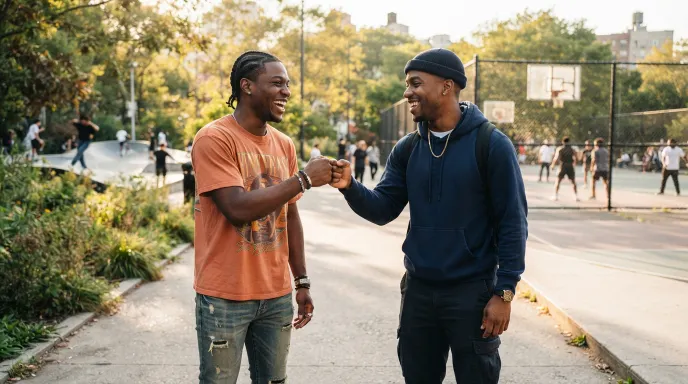
DAP slang meaning refers to a friendly handshake, fist bump, or greeting used to show respect, friendship, support, or congratulations in casual conversations, sports, and social settings.
DAP slang meaning refers to a friendly handshake, fist bump, or hand gesture used to show respect, friendship, congratulations, or agreement. If you’ve seen someone say “dap me up” or “give me dap” in a text, on social media, or in real life, they are usually asking for this casual greeting. The term is especially common in sports, hip-hop culture, schools, and everyday conversations.
In this guide, you’ll learn the DAP slang meaning, where it came from, how people use it in texting and social media, whether it’s appropriate in different situations, and real-life examples that make the meaning easy to understand.
Quick Answer :DAP Slang Meaning
DAP slang meaning usually refers to a friendly handshake, fist bump, or greeting that shows respect, friendship, or agreement. People often say “give me dap” or “dap me up” when asking someone for this greeting. In some online or texting contexts, DAP can also stand for “Detailed Action Plan,” but the handshake meaning is far more common in everyday slang.
What Does DAP Slang Mean?
DAP is a popular slang term used to describe a friendly greeting between two people. It often includes a handshake, fist bump, snap, or a combination of hand movements. More than just a greeting, dap shows respect, trust, congratulations, or appreciation.
People commonly use phrases like:
- “Give me dap.”
- “Dap me up.”
- “We exchanged dap before the game.”
Unlike a regular handshake, dap is usually more casual and personal. Friends, teammates, classmates, and coworkers may use it to celebrate success or simply say hello.
Key Features of Dap
| Feature | Explanation |
| Meaning | Friendly greeting or handshake |
| Tone | Positive and respectful |
| Common Users | Friends, students, athletes, coworkers |
| Used On | Real life, social media, texting, sports |
| Formality | Informal |
Does DAP Stand for Anything?
Yes. Depending on the situation, DAP can have different meanings.
DAP as Slang
In everyday conversations, DAP does not usually work as an acronym. It simply refers to the friendly handshake or greeting.
Examples:
- “He gave me dap after the presentation.”
- “Don’t leave me hanging—dap me up!”
DAP as an Acronym

Outside of slang, DAP may stand for different phrases, such as:
| Acronym | Meaning | Common Use |
| DAP | Detailed Action Plan | Business and project management |
| DAP | Data Access Protocol | Technology |
| DAP | Delivered at Place | International shipping and trade |
When people search for DAP slang meaning, they almost always mean the greeting rather than these technical definitions.
Different Meanings of DAP
The meaning of DAP changes based on context. Here are the most common uses.
DAP as a Friendly Greeting
This is the most popular meaning.
It refers to a handshake or fist bump shared between friends or teammates. The gesture often celebrates success or shows mutual respect.
Examples:
- “Coach gave every player dap after the win.”
- “We dapped each other up before class.”
DAP as a Sign of Respect
Sometimes people use dap to show support without saying many words.
For example:
- A friend gets good news.
- You smile and give them dap.
- The gesture says, “I’m happy for you.”
DAP in Sports
Athletes often exchange dap before games, after great plays, or when celebrating victories. It helps build team spirit and confidence.
Example:
- “The basketball team shared dap before tip-off.”
DAP in Text Messages
Although dap is mainly a physical gesture, people also mention it in chats.
Examples include:
- “I’ll dap you up when I see you.”
- “You deserve some dap for that!”
In texting, the phrase simply means you’ll greet or congratulate someone with a friendly handshake later.
What Is a DAP? Meaning, Greeting & Common Uses
If you are wondering what is a dap, it is a casual greeting that usually involves a special handshake, hand movement, or fist bump between people. The dap meaning can include friendship, respect, encouragement, congratulations, or a simple way of acknowledging someone.
The phrase what’s a dap may appear when someone is asking about the greeting itself. A dap can look different from person to person because there is no single fixed dap movement. Some people use a quick handshake, while others combine a handshake with a fist bump or another hand gesture.
The dap greeting meaning is usually positive and informal. Friends, teammates, classmates, and other people who know each other may use this type of greeting instead of a traditional handshake.
The dap gesture can also communicate support without requiring a long conversation. For example, someone might give a teammate dap after a strong performance or greet a friend with dap when they meet.
Where Is DAP Commonly Used?
DAP is most common in casual conversations and social settings. You may hear it in:
- Schools and colleges
- Sports teams
- Music and hip-hop culture
- Social media posts
- Text messages
- Workplace conversations between close coworkers
- Family gatherings
- Community events
It is widely recognized in the United States and has spread through sports, music, and online culture to many other English-speaking communities.
Is DAP Rude, Offensive, or Harmless?
DAP is generally harmless and positive. It is used to show friendship, respect, encouragement, or celebration.
However, it is best used in informal situations. In formal business meetings or with someone who prefers a traditional greeting, a regular handshake or verbal greeting may be more appropriate.
Real-Life Examples of DAP Slang
Seeing DAP in real conversations makes it easier to understand how people use it.
Friendly Conversation
Alex: “Great job on your driving test!”
Ben: “Thanks!”
Alex: “Come here dap me up!”
School
Emma: “You got the highest score in math!”
Jake: “Yeah, I worked hard.”
Emma: “You deserve some dap.”
Sports Team
Coach: “Excellent teamwork today!”
Players: Everyone exchanges dap before leaving the field.
Text Message
Friend 1: “I finally got the job!”
Friend 2: “That’s awesome! I’ll dap you up when I see you.”
Workplace
Coworker 1: “We finished the project ahead of schedule.”
Coworker 2: “Nice work! Dap!”
Origin and History of DAP
The modern use of dap has deep cultural roots. Many language experts trace it to the African American community, where it became a meaningful greeting that showed respect, unity, and trust.
The gesture became especially well known during the Vietnam War, when many Black soldiers used unique handshakes to recognize and encourage one another. Over time, different styles of dap developed, and the greeting spread into everyday life.
Later, hip-hop culture, basketball, football, and other sports helped make dap popular across the United States. Today, it is commonly seen in schools, workplaces, gyms, and social media.
While the exact origin of the word is debated, its connection to friendship and respect has remained consistent.
Similar Slang or Related Terms
These slang terms have meanings that are similar to dap, although each has its own style.
| Slang | Meaning | Difference from DAP |
| Fist bump | Touching fists as a greeting | Simpler than dap |
| High five | Celebration with raised hands | Usually celebrates success |
| Bro hug | Hug between friends | More personal than dap |
| Handshake | Traditional greeting | More formal |
| Props | Giving someone praise or respect | Spoken appreciation rather than a hand gesture |
DAP vs Handshake and Fist Bump
Understanding dap vs handshake can be confusing because both can involve a hand greeting. A traditional handshake is usually a simple and widely recognized greeting, while dap often has a more relaxed style and may include several hand movements.
The handshake vs dap difference is mainly about style and social context. A handshake can work in both formal and casual situations, while dap is generally associated with friendship, familiarity, celebration, or casual respect.
The dap fist bump meaning is similar to the meaning of a regular dap: it can show friendship, encouragement, agreement, or congratulations. However, a fist bump by itself is usually simpler than a full dap.
You may also hear the phrase fist bump dap when someone uses a fist bump as part of a casual greeting. The exact movement can vary between friends, teammates, or groups.
When Should You Avoid Using DAP?
Although dap is friendly, it is not appropriate in every situation.
Avoid using dap when:
- Meeting someone in a very formal business setting.
- Greeting teachers, judges, or officials who expect a formal handshake.
- The other person is uncomfortable with physical contact.
- Health or hygiene concerns make hand contact inappropriate.
- Cultural or workplace rules discourage casual greetings.
When you’re unsure, a smile and a polite handshake or verbal greeting is usually the safer choice.
Polite Alternatives
If dap doesn’t fit the situation, you can use one of these greetings instead:
- Handshake
- Hello
- Nice to meet you
- Good morning
- Congratulations
- Great job
- Well done
- Pleased to see you
These alternatives work well in schools, workplaces, and professional environments.
Why Do People Use DAP?
People use dap because it communicates positive feelings quickly without needing many words.
Common reasons include:
- Showing friendship
- Expressing respect
- Celebrating an achievement
- Greeting someone warmly
- Building team spirit
- Showing agreement or support
- Strengthening social connections
A simple dap can make a greeting feel more personal than just saying “hi.”
DAP on Social Media and in Texting
You may also see dap mentioned online, even though the gesture itself happens in person.
On TikTok
Creators often show friends giving dap after funny moments, sports wins, or successful challenges.
On Instagram
Captions may include:
- “Had to dap my brother up.”
- “Nothing but love and dap.”
On Discord and Gaming
Gamers sometimes type:
- “Virtual dap!”
- “Sending dap for the win.”
This doesn’t mean an actual handshake. Instead, it expresses congratulations, support, or respect through words.
Common Misunderstandings About DAP
Some people misunderstand the word dap because it has different meanings in other fields. Here are a few common misconceptions.
- DAP is not always an abbreviation. In everyday slang, it usually refers to a friendly handshake or greeting.
- DAP is more than a fist bump. A fist bump is one type of greeting, while dap can include handshakes, snaps, hugs, or custom hand movements.
- DAP is not rude. It is generally a positive and respectful gesture.
- DAP is not only used by teenagers. Adults, athletes, coworkers, and friends of many ages use it.
- DAP is mainly used in informal settings. It is less common in formal business or official situations.
DAP Meaning in Text, Slang & Online Conversations
The dap meaning in text is usually connected to the same friendly greeting used in real life. Since you cannot physically exchange a dap through a message, someone may mention it in a playful way to express respect, support, or congratulations.
If someone writes dap me meaning in a conversation, they may be referring to giving or receiving dap. Similarly, what does it mean to dap up someone usually asks about the action of greeting or acknowledging that person with dap.
The phrase dapped him up meaning describes someone giving another person a dap. For example, if someone says, “I dapped him up after the game,” they mean they greeted him with a friendly hand gesture.
You may also see what does it mean to dap someone up when people encounter the phrase online. In casual slang, it normally means giving someone a friendly dap or greeting.
The phrase dap up meaning slang therefore stays close to the basic idea of a casual greeting, although the exact hand movement can differ between people.
Frequently Asked Questions
Q1. What does DAP slang mean?
DAP slang means a friendly handshake, fist bump, or greeting that shows respect, friendship, support, or congratulations.
Q2. What does “dap me up” mean?
“Dap me up” means “give me a friendly handshake or greeting.”
Q3. Is DAP an acronym?
Usually, no. In slang, dap refers to a greeting rather than an abbreviation. In other fields, DAP can stand for different technical terms.
Q4. Is DAP rude?
No. DAP is generally a respectful and friendly gesture.
Q5. Where is DAP commonly used?
It is commonly used in schools, sports, music culture, social media, and everyday conversations among friends.
Q6. Can I use DAP at work?
Yes, but only in casual workplaces where coworkers know each other well. In formal settings, a regular handshake is usually a better choice.
Q7. Is DAP the same as a fist bump?
Not exactly. A fist bump is one form of dap, but dap can include many different handshake styles.
Q8. Who usually says “dap me up”?
Friends, classmates, teammates, coworkers, and family members often use this phrase.
Q9. Is DAP popular on social media?
Yes. You’ll often see it mentioned on TikTok, Instagram, Snapchat, Discord, and other online platforms.
Q10. Can children use the word DAP?
Yes. Since dap is a friendly and harmless greeting, it is generally appropriate for children and teenagers in casual situations.
Quiz: Test Your Knowledge of DAP Slang
1. What does DAP usually mean in slang?
A. A computer program
B. A friendly greeting or handshake
C. A secret code
D. A school subject
Answer: B
2. Which phrase is most commonly used with DAP?
Quiz options ko zyada natural aur varied kar dein:
A. Give me some dap
B. Meet me after class
C. Send me the notes
D. Tell me the answer
Answer: A
3. DAP is mainly used in which type of setting?
A. Casual conversations
B. Court hearings
C. Scientific research
D. Official government documents
Answer: A
4. What feeling does DAP usually express?
A. Anger
B. Respect or friendship
C. Fear
D. Confusion
Answer: B
5. Where might you hear someone say “dap me up”?
A. At a sports game
B. During a chemistry exam
C. In a legal contract
D. On a weather report
Answer: A
6. Is DAP generally considered offensive?
A. Always
B. Sometimes
C. No, it is usually harmless
D. Only online
Answer: C
7. Which platform may mention DAP in captions or comments?
A. TikTok
B. Instagram
C. Discord
D. All of the above
Answer: D
8. What is the best formal alternative to DAP?
A. Handshake
B. Wave your arms
C. Ignore the person
D. Shout loudly
Answer: A
9. Which group commonly uses DAP?
A. Friends and teammates
B. Professional athletes only
C. Musicians and performers only
D. College students only
Answer: A
10. Which statement is true?
A. DAP always stands for a technical acronym.
B. DAP is mainly a friendly greeting.
C. DAP is an insult.
D. DAP should only be used in business meetings.
Answer: B
Conclusion
DAP slang meaning is simple: it refers to a friendly handshake or greeting that shows respect, friendship, encouragement, or celebration. Whether someone says “dap me up” after a big win or gives you dap as a way of saying hello, the gesture helps build positive connections. While it is best suited for casual situations, understanding its meaning and cultural background helps you use it naturally and respectfully in conversations, texting, sports, and social media.
Read More About!

Michael Brooks is a language writer at SlangPath with 7+ years of experience creating simple, practical content on English slang and everyday expressions.