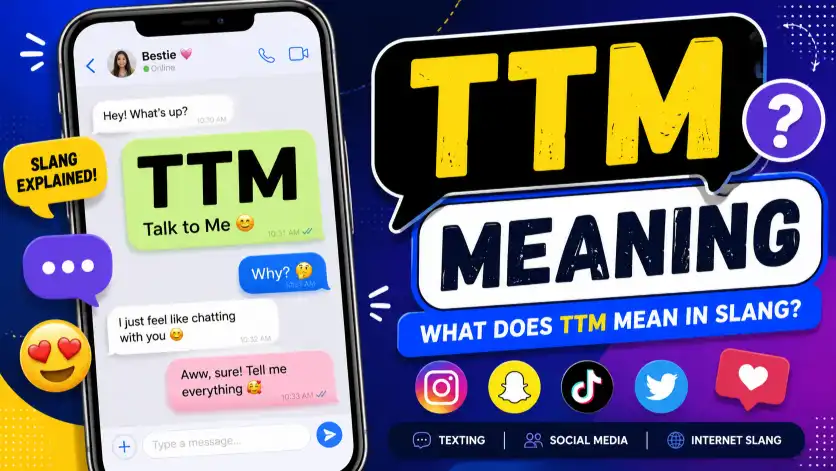
TTM in slang usually means “Talk to Me.” People use it in text messages, social media, and online chats when they want someone to reply, start a conversation, or say what is happening.
If you received a message saying “TTM” and wondered what it means, the context is usually simple. The person may want to chat with you, hear from you, or encourage you to open up. However, like many texting abbreviations, the exact meaning and tone can depend on the conversation.
In this article, you will learn what TTM means in slang, what it stands for, how people use it in messages, and when it is appropriate to use. You will also see realistic examples that make the abbreviation easy to understand.
Quick Answer: What Does TTM Mean in Slang?
TTM means “Talk to Me” in slang. It is a casual abbreviation people use in texts and online conversations when they want someone to reply, start talking, or share what they are thinking.
For example:
“You have been quiet today. TTM.”
This means:
“You have been quiet today. Talk to me.”
The abbreviation is usually friendly and casual. The tone can change depending on the conversation and the relationship between the two people.
What Does TTM Mean in Slang?
The most common slang meaning of TTM is “Talk to Me.”
People often use it when they want to:
- Start a conversation
- Get someone’s attention
- Ask someone to explain something
- Encourage someone to share their feelings
- Let someone know they want to chat
TTM is short and quick to type. That is one reason people use it in casual online conversations.
Imagine that your friend has not replied much during the day. You might send:
“Hey, TTM. What happened?”
Here, you are asking your friend to talk and tell you what is going on.
TTM can sound friendly, caring, curious, or playful. The surrounding message usually helps you understand the intended tone.
What Does TTM Stand For?
In internet slang and texting, TTM stands for “Talk to Me.”
Each letter represents a word:
- T = Talk
- T = To
- M = Me
Instead of writing three complete words, a person can simply type TTM.
This makes communication faster, especially during casual chats.
For example:
Person 1: I have something to tell you.
Person 2: TTM!
In this conversation, TTM means:
“Talk to me!”
The second person wants to hear what the first person has to say.
How Is TTM Used in Conversations?
TTM usually appears in casual conversations where one person wants another person to speak or respond.
It can be used by itself:
“TTM!”
It can also appear as part of a longer message:
“You seem upset. TTM when you are ready.”
Or:
“I haven’t heard from you all day. TTM.”
The meaning stays connected to communication. The person using TTM wants interaction with the other person.
TTM When Someone Is Quiet
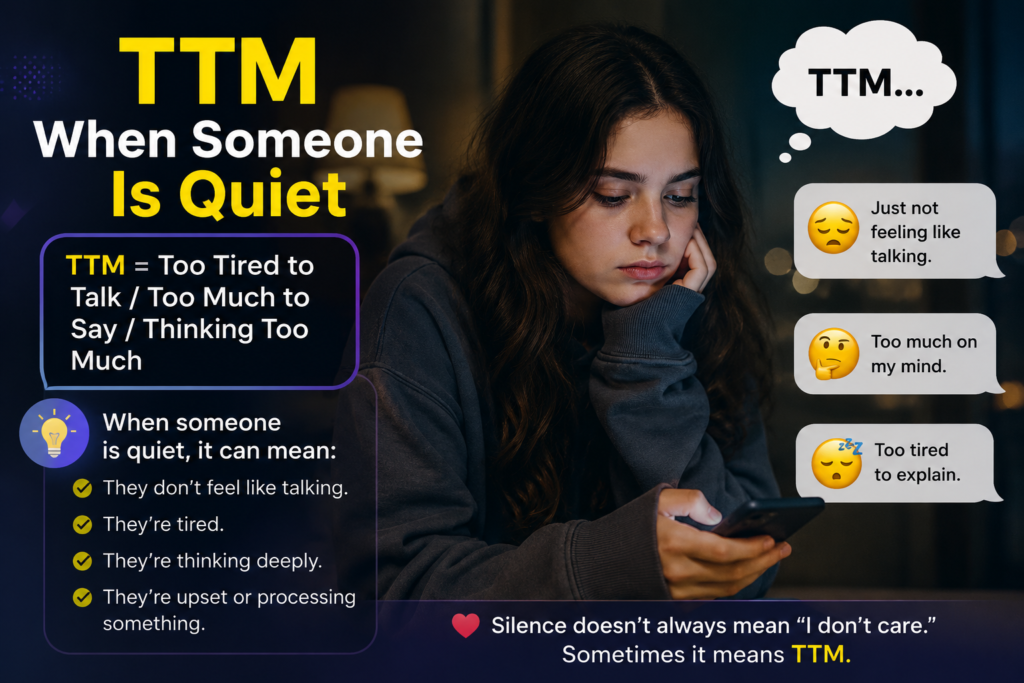
One common use happens when someone suddenly becomes quiet.
For example:
“You disappeared after class. TTM. Are you okay?”
Here, the person is asking for communication and may also be showing concern.
TTM When Someone Has News
TTM can also show curiosity.
For example:
“You said something mistaken happened yesterday. TTM!”
The meaning is close to:
“Tell me about it!”
The speaker wants to hear the story.
TTM as a Friendly Invitation
Sometimes, there is no serious reason behind TTM. A person may simply want to talk.
For example:
“I’m bored. TTM.”
This means:
“I’m bored. Talk to me.”
In this situation, TTM is casual and friendly.
Is TTM a Friendly or Serious Expression?
TTM is usually a friendly and informal expression. It is commonly used between friends, classmates, online friends, and people who already communicate casually.
However, context can make it sound different.
For example:
“TTM, I need to know what happened.”
This may sound more serious because the speaker wants information.
On the other hand:
“TTM 😂 I miss our random chats.”
This sounds playful and friendly.
The abbreviation itself is not normally rude or offensive. The rest of the message and the relationship between the people determine how it feels.
Where Is TTM Commonly Used?
TTM is mainly used in informal digital communication.
You may see it in:
- Text messages
- Private chats
- Social media messages
- Group chats
- Online communities
- Casual conversations between friends
It works best when the other person already understands common texting abbreviations.
A person may not understand TTM if they are unfamiliar with internet slang. In that case, writing “Talk to me” is clearer.
Why Do People Use TTM Instead of “Talk to Me”?
The main reason is speed.
Online conversations often move quickly, and people like short forms that save time.
TTM also fits naturally into casual texting. Instead of typing:
“Please talk to me and tell me what is going on.”
Someone might write:
“TTM, what happened?”
The abbreviation makes the message shorter while keeping the basic meaning clear.
People also use slang abbreviations because they can make a conversation feel more relaxed and natural.
TTM is best understood as a casual shortcut for communication. Its exact feeling can be caring, curious, playful, or direct depending on the message around it.
Part 2 mein main TTM ka texting, Snapchat, TikTok, Instagram usage, realistic examples, origin/history, aur similar slang cover karungi.
How Is TTM Used in Text Messages?
TTM is commonly used in text messages to mean “Talk to Me.” It is a quick way to ask someone to reply or continue a conversation.
People may use it when they are curious, bored, concerned, or simply want to chat.
For example:
“You have been quiet all day. TTM.”
This means the sender wants the other person to start talking.
Another example:
“I’m free now. TTM!”
Here, the person is inviting someone to have a conversation.
TTM works best in casual chats with people who understand texting slang.
What Does TTM Mean on Snapchat?
On Snapchat, TTM usually means “Talk to Me.” Someone may send it when they want you to reply to their Snap or start chatting.
For example:
“You keep watching my stories but never reply. TTM 😂”
The person is playfully asking you to start a conversation.
Someone might also post:
“Bored. TTM.”
This is an open invitation for friends or followers to send them a message.
Because Snapchat conversations are usually casual, TTM often sounds friendly and relaxed.
What Does TTM Mean on Instagram?
On Instagram, TTM can appear in direct messages, comments, or casual conversations between friends.
For example:
“I saw your post. TTM, I need the full story.”
Here, the person wants more information.
It can also appear as a friendly message:
“We haven’t talked in forever. TTM sometime!”
This means the sender would like to reconnect and have a conversation.
What Does TTM Mean on TikTok?
TTM may also appear in TikTok comments or private conversations, although the meaning always depends on the surrounding context.
For example:
“You can’t just post this and leave. TTM 😂”
The person is jokingly asking the creator or another user to explain more.
On social platforms, short abbreviations like TTM help people react quickly without writing a long message.
TTM Meaning on Discord and Online Chats
In Discord servers and other online communities, TTM generally means “Talk to Me.”
A user may write:
“I’m online for a while. TTM if anyone wants to chat.”
This means:
“Talk to me if anyone wants to chat.”
However, online communities sometimes create their own abbreviations. If TTM appears in a very specific gaming group, server, or community, the surrounding conversation should always be checked.
Context matters more than the abbreviation alone.
Real-Life Examples of TTM
Here are some natural examples showing how TTM can be used in different situations.
Example 1: Talking to a Friend
Aisha: You seem stressed today.
Sara: Yeah, a little.
Aisha: TTM. What’s going on?
Aisha is asking Sara to share what is bothering her.
Example 2: Curiosity
Ali: Something unbelievable happened at school.
Hamza: What? TTM!
Hamza wants Ali to tell him the story.
Example 3: Feeling Bored
“I’m just sitting here doing nothing. TTM 😭”
The person wants someone to start a conversation.
Example 4: Reconnecting
“It’s been so long since we talked. TTM when you’re free.”
The sender wants to reconnect.
Example 5: Social Media Chat
“You posted that and gave us no explanation. TTM 😂”
The person wants to know more about what happened.
Why Context Matters When Someone Says TTM
The same abbreviation can feel different depending on the message.
Consider these examples:
“TTM, I’m worried about you.”
This sounds caring and serious.
“TTM 😂 I need to hear the gossip.”
This sounds playful.
“TTM when you get home.”
This sounds direct and may suggest that the sender wants to discuss something later.
The basic meaning remains connected to communication, but the emotion behind the message changes.
When trying to understand TTM, look at:
- The message before it
- The person’s relationship with you
- Emojis or punctuation
- The topic of the conversation
- The platform where it was used
These details usually make the intended meaning clear.
Is TTM Popular?
TTM is recognized as a casual texting abbreviation, but its popularity can vary between different online communities and age groups.
Not everyone uses the same slang. Some people prefer writing the complete phrase “Talk to me,” while others regularly use short forms.
This is normal because internet slang changes quickly. A person may see TTM often in one friend group and almost never in another.
It is better to use TTM naturally rather than forcing it into conversations.
The Origin and History of TTM
TTM developed as part of the wider culture of shortening common phrases in digital communication.
Text messaging, online chat rooms, and social media helped popularize abbreviations because people often wanted to communicate quickly using fewer characters.
Unlike some slang words with a clearly documented origin, it can be difficult to identify one exact person, platform, or date responsible for TTM becoming common.
The safest explanation is that TTM grew through informal digital communication as a shortened form of “Talk to Me.”
Its meaning is easy to understand once the full phrase is known, which makes it useful in fast conversations.
Similar Slang and Related Text Abbreviations
TTM is part of a larger group of abbreviations people use to make conversations faster.
| Slang | Common Meaning | How It Is Used |
| TTM | Talk to Me | Asking someone to start or continue talking |
| HMU | Hit Me Up | Asking someone to contact you |
| WYD | What You Doing? | Asking what someone is doing |
| WYA | Where You At? | Asking where someone is |
| LMK | Let Me Know | Asking someone to provide information later |
These abbreviations are related because they all help people communicate quickly.
However, they do not mean exactly the same thing.
For example, TTM focuses on having a conversation, while HMU usually means contacting someone. WYD asks what a person is doing, while LMK asks them to provide information.
Using the right abbreviation depends on what you want to say.
Why Do People Use TTM?
People use TTM because it is short, simple, and direct.
It can communicate several intentions without requiring a long message.
Someone may use TTM because they:
- Want to start a conversation
- Miss talking to someone
- Want an explanation
- Feel bored
- Are worried about someone
- Want to hear a story
- Want someone to open up
The surrounding words give TTM its emotional meaning.
For example, “TTM, I miss you” feels warm and personal, while “TTM, what happened?” sounds curious and direct.
The abbreviation itself is simple, but context makes each conversation different.
Part 3 mein work/school usage, when to avoid TTM, common misunderstandings, FAQs, conclusion, SEO title, meta description, URL slug aur 16:9 feature image prompt hoga.
Can You Use TTM at Work or School?
TTM is best used in casual conversations, not formal communication.
At work, school, or in professional messages, some people may not understand the abbreviation. Writing the complete phrase “Talk to me” is usually clearer.
For example, instead of writing:
“TTM about the project.”
A clearer workplace message would be:
“Can you talk to me about the project?”
TTM may be acceptable when chatting casually with close classmates or friends. However, avoid it when messaging:
- Teachers
- Employers
- Clients
- Professors
- Professional contacts
- People who may not understand internet slang
Clear communication is usually the better choice in formal situations.
When Should You Avoid Using TTM?
You should avoid using TTM when the abbreviation could confuse the other person.
For example, avoid it when:
- Writing a formal email
- Speaking to a teacher in an official message
- Communicating with a client
- Sending professional work messages
- Talking to someone unfamiliar with texting slang
- Clear communication is especially important
TTM is quick, but not everyone understands online abbreviations.
Writing “Talk to me” takes only a few extra seconds and makes your message easier to understand.
Common Misunderstandings About TTM
One common mistake is assuming that every abbreviation has only one meaning.
Although TTM commonly means “Talk to Me” in slang, abbreviations can sometimes have different meanings in other industries, communities, or technical contexts.
That is why you should always look at the conversation.
For example, if someone sends:
“You seem upset. TTM when you’re ready.”
The meaning is clearly “Talk to Me.”
But if you see the letters TTM in a technical document, work report, game, or specialized community, they may mean something completely different.
The context tells you which meaning is correct.
Is TTM Rude or Offensive?
No, TTM is generally not rude or offensive.
It is usually a harmless and casual abbreviation.
However, the way someone uses it can change the tone.
For example:
“TTM, are you okay?”
This sounds caring.
“TTM right now!”
This may sound demanding depending on the relationship and situation.
The abbreviation itself is neutral. The words around it and the tone of the conversation create the emotional meaning.
Can TTM Sound Flirty?
TTM can sometimes sound flirty, but the abbreviation itself is not automatically romantic.
If someone says:
“I miss talking to you. TTM later ❤️”
The message may feel romantic because of the other words and the relationship between the people.
However:
“I’m bored. TTM 😂”
Usually sounds friendly and casual.
Do not assume that TTM alone means someone is flirting with you. Look at the full conversation before deciding what the person means.
Can You Reply to Someone Who Says TTM?
Yes. Your reply depends on why the person wants to talk.
If they seem friendly, you could reply:
- “Sure, what’s up?”
- “I’m here. Tell me.”
- “Haha, okay. What do you want to talk about?”
- “What’s going on?”
If the person seems concerned, you might say:
“Nothing serious. I’ve just been busy.”
Or:
“Yeah, I’ve had a lot on my mind lately.”
The best response depends on your relationship and the conversation.
TTM vs. HMU: What Is the Difference?
TTM and HMU can both encourage communication, but they are slightly different.
TTM means “Talk to Me.” It focuses directly on having a conversation.
HMU means “Hit Me Up.” It usually means contacting or messaging someone.
For example:
“TTM, I want to hear what happened.”
The person wants to talk now or continue a conversation.
“HMU when you’re free.”
The person wants you to contact them later.
The two expressions can sometimes feel similar, but they are not exact replacements for each other.
TTM vs. WYD: What Is the Difference?
TTM means “Talk to Me,” while WYD means “What You Doing?”
TTM invites conversation.
WYD asks about someone’s current activity.
For example:
“TTM, I’m bored.”
This means the person wants someone to chat.
“WYD?”
This asks what the other person is doing.
Both are common in casual texting, but they serve different purposes.
Frequently Asked Questions About TTM Meaning in Slang
1. What does TTM mean in texting?
TTM usually means “Talk to Me.” People use it when they want someone to reply, chat, or share something.
2. What does TTM stand for?
In slang and casual texting, TTM stands for “Talk to Me.”
3. What does TTM mean on Snapchat?
On Snapchat, TTM usually means “Talk to Me.” It can be used when someone wants you to reply or start a conversation.
4. Is TTM slang?
Yes. TTM is a casual texting and internet abbreviation.
5. Is TTM rude?
No. TTM is generally not rude or offensive. Its tone depends on the rest of the message.
6. What does TTM mean from a girl?
It usually means “Talk to Me.” Do not assume a romantic meaning without looking at the rest of the conversation.
7. What does TTM mean from a guy?
The most common meaning is also “Talk to Me.” The abbreviation alone does not automatically mean flirting.
8. Can I use TTM at work?
TTM is better for casual chats. In professional communication, writing the complete phrase is usually clearer.
9. Is TTM still used?
TTM is still understood in casual online and texting conversations, although its popularity can vary between friend groups and online communities.
10. What should I reply to TTM?
You can reply with something like “What’s up?”, “I’m here,” or “Sure, what do you want to talk about?”
Conclusion
So, what does TTM mean in slang? In most texting and online conversations, TTM means “Talk to Me.”
People use it when they want someone to reply, start a conversation, share information, or simply chat. The abbreviation is usually friendly and harmless, but the surrounding conversation can make it sound caring, curious, playful, direct, or sometimes flirty.
TTM works best in casual messages with people who understand internet slang. When communication needs to be clear or professional, writing “Talk to me” is usually the better choice.
The easiest way to understand TTM is to look at the full message. Context always helps you understand the tone behind slang.
Read More About !

My name is Olivia Bennett.I am a language enthusiast and educational writer with a strong interest in contemporary English and digital communication. I enjoys making language learning engaging and accessible.