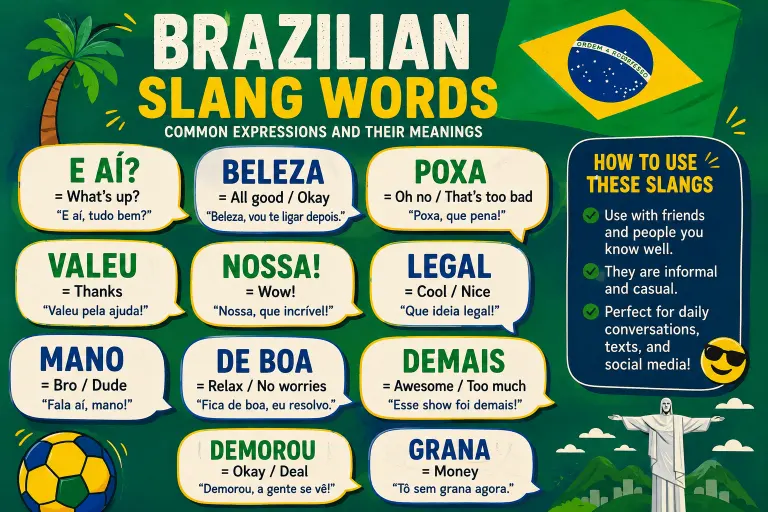
Brazilian slang words are informal Portuguese expressions commonly used in Brazil to make everyday conversations sound more natural and friendly. They often have meanings that depend on the situation, culture, and tone, and are widely used in texting, social media, and casual speech.
Brazilian slang words are popular expressions used in everyday conversations across Brazil. Many English speakers search for these words after watching Brazilian movies, listening to Brazilian music, chatting with friends, traveling to Brazil, or scrolling through TikTok, Instagram, YouTube, and other social media platforms. While standard Portuguese is taught in language courses, slang helps you understand how native speakers actually communicate in daily life.
Learning Brazilian slang also helps you avoid confusion because many common expressions have meanings that are very different from their literal translations. Some slang is friendly and humorous, while other terms should only be used in informal situations.
Quick Answer:brazilian slang words
Brazilian slang words are informal Portuguese expressions commonly used in Brazil to communicate naturally in casual conversations. Their meanings often depend on the situation, tone, and region where they are used.
What Does Brazilian Slang Words Mean in Text?
Brazilian slang words are informal expressions used instead of formal Portuguese in everyday conversations, text messages, social media posts, online gaming, and chats with friends.
Unlike dictionary Portuguese, slang changes over time. New words appear because of internet culture, music, memes, and younger generations.
People use Brazilian slang to:
- Sound more natural
- Express emotions quickly
- Make conversations friendlier
- Add humor
- Show excitement or surprise
Although many slang words are understood nationwide, some are more common in specific Brazilian states or cities.
Brazilian Slang Words Full Form / Definition
Unlike internet abbreviations, Brazilian slang words do not have a full form. They are simply informal words or phrases created through everyday speech.
Examples include:
| Brazilian Slang | Meaning in English | Tone |
| Oi | Hi | Friendly |
| Valeu | Thanks | Casual |
| Cara | Dude / Guy | Informal |
| Mano | Bro | Friendly |
| Legal | Cool | Positive |
| Beleza | Okay / Great | Casual |
| Nossa | Wow | Expressive |
| Poxa | Oh no | Mild |
| Demorou | Sounds good | Casual |
| Show | Awesome | Positive |
Most Common Brazilian Slang Words
Cara
Meaning: Dude, guy, or friend.
Example:
Cara, você chegou cedo!
Dude, you arrived early!
Mano
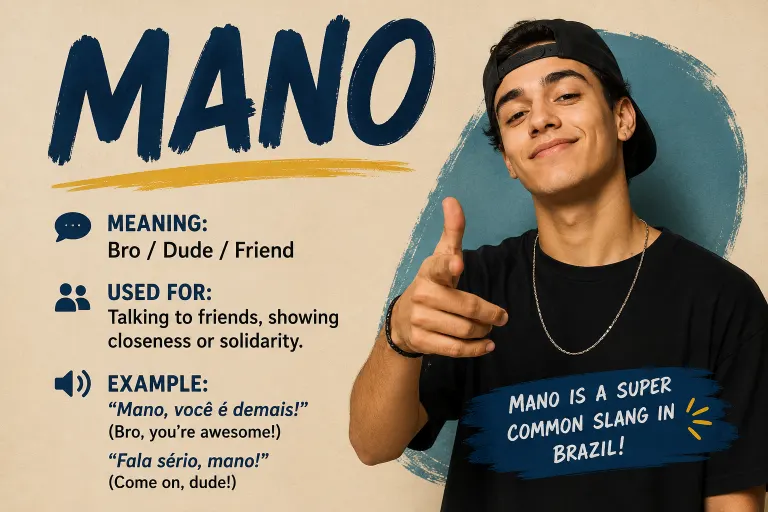
Meaning: Bro or buddy.
Usually used among close friends.
Example:
Valeu, mano!
Valeu
Meaning: Thanks or appreciate it.
This is one of Brazil’s most common informal expressions.
Example:
Valeu pela ajuda!
Beleza
Meaning: Okay, great, or all good.
Example:
Beleza, até amanhã.
Nossa
Meaning: Wow!
Used when someone feels surprised.
Example:
Nossa! Que incrível!
Poxa
Meaning: Oh no!
A soft expression of disappointment.
Example:
Poxa, perdi o ônibus.
Legal
Meaning: Cool or nice.
Example:
Esse filme é legal.
Demorou
Meaning: Deal, okay, sounds good.
Example:
Demorou! Vamos sair.
Show
Meaning: Excellent or awesome.
Example:
Ficou show!
Grana
Meaning: Money.
Example:
Estou sem grana hoje.
Is Brazilian Slang Rude, Offensive, or Neutral?
Most Brazilian slang is completely harmless.
Neutral Slang
- Valeu
- Cara
- Beleza
- Legal
- Nossa
These are safe for casual conversations.
Mild Slang
Some expressions may sound too informal in professional situations.
Examples include:
- Mano
- Demorou
Offensive Slang
A few Brazilian slang words are considered rude or insulting.
Always learn the meaning before using unfamiliar slang, especially with strangers or older adults.
Where Is Brazilian Slang Commonly Used?
Brazilian slang appears in many everyday situations.
Everyday Conversations
Friends and family use slang naturally.
Text Messages
People often shorten messages using informal language.
Social Media
Brazilian slang is common on:
- TikTok
- X
Gaming
Gamers often use casual expressions during online matches.
Music
Brazilian rap, funk, and pop songs frequently include slang.
Real-Life Examples of Brazilian Slang Words
Friendly Conversation
A: Valeu pela ajuda!
B: De nada!
Casual Chat
A: Mano, vamos jogar hoje?
B: Demorou!
Social Media
Nossa! Esse vídeo ficou show!
Travel
Tourist: Esse restaurante é legal?
Local: Sim, muito legal!
Origin and Background of Brazilian Slang
Brazilian slang has developed over many decades through different cultural influences.
Some slang comes from:
- African languages
- Indigenous Brazilian languages
- European Portuguese
- Youth culture
- Music
- Television
- Football
- Internet communities
Because Brazil is a large country, local slang often differs between Rio de Janeiro, São Paulo, Bahia, and other regions.
Some expressions become popular nationwide, while others remain regional.
Why Brazilian Slang Changes So Quickly
Like English internet slang, Brazilian slang evolves constantly.
Reasons include:
- Social media trends
- Viral memes
- Music artists
- Influencers
- Gaming communities
- Younger generations
A phrase that is popular today may become less common after a few years.
Comparison with Similar Portuguese Expressions
| Formal Portuguese | Brazilian Slang | English Meaning |
| Obrigado | Valeu | Thank you |
| Homem | Cara | Guy |
| Irmão | Mano | Bro |
| Muito bom | Show | Awesome |
| Está bem | Beleza | Okay |
This comparison helps learners understand when casual language replaces formal Portuguese.
When to Avoid Using Brazilian Slang
Although slang sounds natural, it is not always appropriate.
Avoid slang during:
- Job interviews
- Business meetings
- Academic writing
- Government documents
- Formal presentations
- Speaking with people who prefer formal language
When unsure, standard Portuguese is the safer choice.
Polite Alternatives
If you want a more respectful tone, consider these formal alternatives.
| Slang | Polite Alternative |
| Valeu | Obrigado |
| Mano | Senhor / Senhora (depending on context) |
| Cara | Pessoa or the person’s name |
| Beleza | Está bem |
These options are suitable in professional or formal situations.
Why People Use Brazilian Slang
People prefer slang because it makes conversations feel more natural.
Common reasons include:
- Builds friendships
- Sounds relaxed
- Shows local culture
- Makes texting faster
- Creates a sense of belonging
- Expresses emotions naturally
Native speakers usually switch between formal Portuguese and slang depending on the situation.
Impact of Using Brazilian Slang in Communication
Using Brazilian slang correctly can improve communication.
Benefits include:
- Better understanding of native speakers
- Easier conversations while traveling
- More confidence when speaking Portuguese
- Improved understanding of movies and music
- Better engagement on social media
However, using slang incorrectly may confuse listeners or sound unnatural.
Is It Safe for Social Media?
Yes.
Most Brazilian slang words are perfectly safe for:
- TikTok
- YouTube comments
- Discord
- X
However, avoid slang that contains insults or offensive language unless you fully understand its meaning and context.
Examples of Brazilian Slang Words in Different Situations
Friendly
Valeu pela dica!
Casual
Cara, esse jogo está muito legal.
Argumentative
Poxa, você nunca responde minhas mensagens.
Gaming
Mano, boa partida!
Social Media
Nossa! Esse vídeo ficou show!
Tips for Learning Brazilian Slang Faster
- Watch Brazilian YouTubers.
- Listen to Brazilian music.
- Read social media comments.
- Practice with native speakers.
- Learn the context before using new slang.
- Remember that regional expressions may differ.
Learning a few common slang words first is more useful than memorizing dozens at once.
Frequently Asked Questions
Q1. What are Brazilian slang words?
Brazilian slang words are informal Portuguese expressions used in casual conversations throughout Brazil.
Q2. Are Brazilian slang words different from Portuguese spoken in Portugal?
Yes. Many slang expressions are unique to Brazil, while Portugal has its own informal vocabulary.
Q3. Is “Valeu” a polite way to say thank you?
It is friendly and informal. In formal situations, “Obrigado” is usually the better choice.
Q4. Can tourists use Brazilian slang?
Yes. Simple expressions like “Valeu,” “Legal,” and “Beleza” are generally safe when used appropriately.
Q5. Do Brazilian slang words change over time?
Yes. Internet culture, music, and younger generations regularly introduce new slang.
Q6. Is Brazilian slang appropriate for work?
Usually no. Formal Portuguese is recommended in professional and official settings.
Conclusion
Brazilian slang words make everyday Portuguese more expressive, friendly, and natural. Learning common expressions such as cara, valeu, mano, beleza, and legal helps you understand conversations, social media, music, and Brazilian culture more easily. Remember that slang depends on context, age group, and region, so choose your words carefully. When used appropriately, Brazilian slang can make your communication sound more authentic while helping you connect with native speakers in a natural way.

My name is Olivia Bennett.I am a language enthusiast and educational writer with a strong interest in contemporary English and digital communication. I enjoys making language learning engaging and accessible.