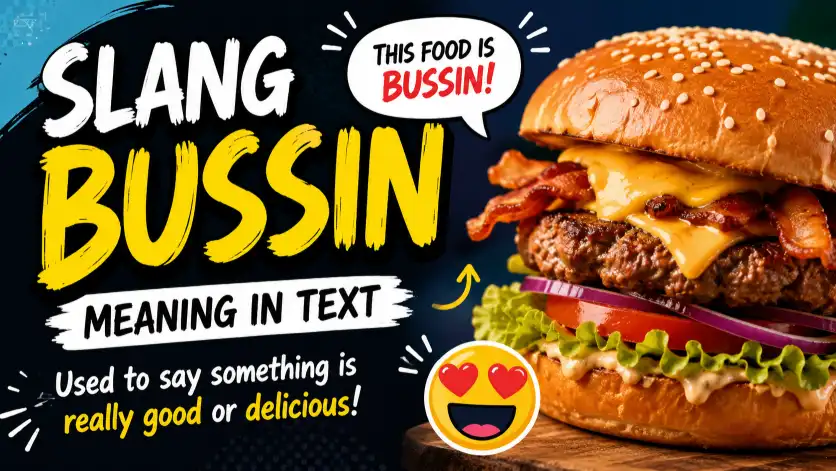
Slang bussin means something is extremely good, delicious, or enjoyable, especially when talking about food.
Slang bussin is a popular informal expression used to say that something is extremely good, impressive, or—most commonly—delicious. If you have seen someone comment “This food is bussin!” on TikTok or send “That pizza was bussin” in a text, they are giving the food a strong compliment.
People often search for this slang because its spelling does not make its meaning obvious. Unlike ordinary English words, bussin is internet and conversational slang that depends heavily on context. It became especially visible through social media and food
,related content, although people now use it for other things they consider excellent.
The word is generally positive and enthusiastic. It is informal, so it works best with friends, online communities, and casual conversations rather than formal writing.
Quick Answer:slang bussin
Bussin means extremely good or excellent, especially when describing delicious food. In texting and social media, it can also describe anything that feels amazing, satisfying, or impressive.
What Does Slang Bussin Mean in Text?
When someone writes “bussin” in a text, they are usually saying that something is really good.
The most common use relates to food:
“This chicken is bussin.”
This means the chicken tastes extremely good.
However, modern casual use can go beyond food. Someone might describe a song, outfit, party, game, or experience as bussin when they think it is excellent.
For example:
- “That new song is bussin.”
- “Your new sneakers are bussin.”
- “This party is bussin.”
- “That game was bussin.”
The exact meaning depends on what the speaker is describing. The basic idea remains the same: strong approval or praise.
Merriam,Webster defines bussin’ as African American English slang meaning “extremely good,” with a particular emphasis on something being delicious or tasty.
Bussin Full Form and Definition
A common question is: What does bussin stand for?
Unlike abbreviations such as “LOL” or “BRB,” bussin does not have a traditional full form. It is a slang word rather than an acronym.
The simplest definition is:
Bussin = extremely good, excellent, or especially delicious.
The spelling bussin’ is also common. The apostrophe represents the informal pronunciation of the ending.
Is Bussin Short for “Busting”?
The history is not completely certain.
Merriam,Webster says bussin’ is probably a variant of busting, while Dictionary.com describes its origin as disputed and suggests possible connections to burst or bust.
So it is better not to claim that there is one proven full form.
If someone asks, “What does bussin stand for?”, the most accurate answer is that it does not stand for a phrase like an acronym. It is an informal slang term meaning something is very good, particularly food.
Is Bussin a Compliment?
Yes. Bussin is normally a compliment.
When someone says:
“This burger is bussin!”
They are expressing strong approval of the burger.
The word can communicate more enthusiasm than simply saying:
- “This is good.”
- “This tastes nice.”
- “I like this.”
“Bussin” has a playful, energetic, and informal tone.
It can also be exaggerated for humor. For example, a person might jokingly say that a simple snack is “bussin” because they are enjoying it.
Is Bussin Rude, Offensive, or Neutral?
Bussin is generally not rude or offensive. It is normally a positive slang expression.
However, context still matters.
Using slang with close friends is different from using it in a formal workplace, academic essay, business presentation, or professional email.
For example:
Casual:
“Bro, this burger is bussin.”
Formal:
“The meal was exceptionally delicious.”
The first sentence sounds relaxed and youthful. The second is more appropriate for professional or formal communication.
There is also an important cultural point. Merriam,Webster labels bussin’ as African American English slang. Because the expression has roots in AAVE, users should avoid exaggerating or mocking the speech patterns associated with the term.
Using a slang word naturally is different from imitating a dialect for entertainment.
Where Is Bussin Commonly Used?
You may encounter bussin in many informal online spaces.
TikTok
TikTok helped make bussin widely recognizable, especially through food videos, reactions, recipes, and humorous posts.
A creator might taste a meal and say:
“Nah, this is bussin!”
The phrase quickly became associated with enthusiastic reactions to food.
Texting
Friends may use bussin in private messages when discussing food or something enjoyable.
“We need to try that restaurant. Everyone says the food is bussin.”
The word can appear in captions, comments, Stories, and direct messages.
For example:
“Sunday breakfast was bussin.”
Reddit users may use bussin casually in food discussions, memes, gaming conversations, or comments.
Discord and Gaming
Gamers sometimes use the word more broadly to praise something.
For example:
“That update is bussin.”
This means the person thinks the update is excellent.
However, the food related meaning remains one of the clearest and most established uses.
Why Do People Say Bussin?
Slang often gives people a quick way to express emotion. Bussin is short, memorable, and energetic.
Instead of writing:
“This food tastes exceptionally delicious.”
Someone can simply say:
“This is bussin!”
The slang also fits naturally into internet culture, where short expressions and humorous reactions spread quickly.
Another reason is emphasis. Saying something is “bussin” usually communicates stronger enthusiasm than simply saying “good.”
For example:
Mild praise:
“The fries are good.”
Strong casual praise:
“These fries are bussin!”
The second sentence sounds much more excited.
Bussin Meaning Slang: Different Uses
Although food is the most recognizable use, the slang can appear in several contexts.
1. Delicious Food
This is the most common and established meaning.
“That fried chicken is bussin.”
The speaker means the food tastes extremely good.
2. Something Excellent

People can also use bussin to describe something they strongly enjoy.
“That song is bussin.”
Here, the speaker is praising the song rather than food.
3. A Great Experience
Someone might describe an enjoyable event as bussin.
“That concert was bussin last night.”
This means the concert was extremely enjoyable.
4. Humorous or Exaggerated Praise
Online users may sometimes use bussin simply for comedic effect.
“These three chips are bussin.”
The statement may intentionally exaggerate how much the person enjoys a small snack.
Real Life Examples of Bussin
The tone changes depending on the situation.
Friendly Example
“You made this pasta? It’s bussin!”
The speaker is enthusiastically complimenting someone’s cooking.
Casual Texting Example
“That burger place was bussin. We should go again.”
The person is recommending the restaurant to a friend.
Social Media Example
“POV: Your mom makes the best breakfast and it’s bussin.”
This uses the slang in a playful social,media style.
Gaming Example
“This new weapon is bussin.”
Here, the player thinks the weapon is extremely effective or enjoyable.
Argumentative Example
“You said the food wasn’t good, but this is bussin.”
The speaker is disagreeing with someone while strongly defending the food.
Humorous Example
“I was starving, so that plain toast was bussin.”
The person is exaggerating for humor. The toast may not actually be extraordinary; hunger made it feel amazing.
Bussin vs. Fire vs. Lit vs. Slaps
Several slang words can express strong approval, but they are not always interchangeable.
| Slang | General Meaning | Common Use |
| Bussin | Extremely good or delicious | Food, experiences, things you enjoy |
| Fire | Excellent, impressive, or exciting | Music, food, clothes, ideas |
| Lit | Exciting, energetic, or fun | Parties, events, social situations |
| Slaps | Very good or enjoyable | Especially music, but also other things |
| Goated | Among the very best | People, players, performances, things |
For example:
“This pizza is bussin.”
Focuses strongly on how good the pizza is.
“This song is fire.”
Focuses on how impressive or excellent the song is.
“This party is lit.”
Focuses on the excitement and energy of the party.
“This song slaps.”
Focuses on how enjoyable or powerful the song sounds.
The meanings can overlap, but the words have different typical uses.
Origin and Background of Bussin
The history of bussin is more complicated than its viral internet popularity suggests.
It did not simply appear on TikTok. Merriam,Webster records its first known use in 2002 and identifies it as African American English slang. Its etymology is probably connected with busting, although the exact development is not completely certain.
Dictionary.com gives a slightly different account, listing the first recorded period as 2005–10 and noting that the origin is disputed.
This difference is a useful reminder that slang does not always have one neat starting point. Spoken expressions can exist within communities before they appear in dictionaries or searchable written records.
The word later became much more visible through online culture, particularly food related social media content. Dictionary.com notes that the term is associated with AAVE and that its broader Gen Z use expanded beyond food.
Merriam,Webster added bussin’ to its dictionary in 2023, defining it as extremely good, especially delicious or tasty.
When Should You Avoid Using Bussin?
You do not need to avoid the word completely, but you should consider your audience.
Avoid it in situations such as:
- Academic essays
- Formal reports
- Job applications
- Professional business documents
- Official emails
- Legal documents
- Formal presentations
For example, writing:
“The research results are bussin.”
would sound inappropriate in an academic paper.
Instead, write:
“The research results are impressive.”
In casual conversation, however, using bussin with friends can sound completely natural.
Polite and Standard Alternatives to Bussin
If your audience may not understand slang, use a clearer alternative.
Depending on the context, you can say:
- Delicious
- Excellent
- Amazing
- Fantastic
- Wonderful
- Impressive
- Really good
- Extremely tasty
- Enjoyable
- Outstanding
For food:
“This dessert is delicious.”
For music:
“This song is amazing.”
For an event:
“The party was fantastic.”
These alternatives work in both casual and formal settings.
Common Mistakes When Using Bussin
Mistake 1: Treating It Like an Acronym
Bussin does not mean a sequence of words represented by letters.
It is a slang expression.
Mistake 2: Using It in Every Sentence
Using slang repeatedly can make writing feel forced.
Instead of:
“The food is bussin, the music is bussin, and the party is bussin.”
Use it selectively.
Mistake 3: Assuming It Always Means Food
Food is a major use, but bussin can describe other things that someone considers excellent.
Mistake 4: Using It in Formal Writing
Even though dictionaries recognize the term, it remains informal slang. Formal contexts usually call for standard vocabulary.
Mistake 5: Confusing Bussin With “Bussing”
The spelling can cause confusion.
Bussin’ is slang meaning extremely good or delicious.
Bussing/busing can refer to transporting people by bus.
They are completely different uses.
Is Bussin Safe for Social Media?
Yes. Bussin is generally safe and non offensive slang for ordinary socia lmedia use.
It does not normally contain profanity or an inherently insulting meaning.
You can see it used in casual:
- TikTok captions
- Instagram comments
- YouTube comments
- Text messages
- Discord chats
- Gaming conversations
- Reddit discussions
Still, platform rules and audience expectations can vary. A word being harmless slang does not automatically make every sentence appropriate for every audience.
The Tone of Bussin
Tone is important because slang often communicates more than a literal definition.
Bussin usually sounds:
- Positive
- Excited
- Playful
- Casual
- Enthusiastic
- Informal
Compare these:
“The food is good.”
and:
“The food is bussin!”
The second statement sounds more energetic and expressive.
If someone says “bussin” sarcastically, however, the intended meaning can change. For example:
“Wow, this dry cereal is really bussin.”
Depending on the situation, the speaker may actually be joking because the cereal is not very good.
That is why facial expression, tone of voice, emojis, and surrounding conversation can matter when interpreting slang.
Is Bussin Still Used Today?
Yes. The term remains recognizable in modern internet slang, although slang popularity can change quickly.
Its widespread recognition grew strongly through social media, and the word continues to appear in casual online conversations, especially when people talk about food or something they find particularly enjoyable.
It is also worth remembering that a slang term can become less trendy without disappearing completely. People may still understand and use bussin even if they do not consider it the newest expression.
Frequently Asked Questions
Q.1 What does bussin mean in slang?
Bussin means extremely good or excellent, especially when describing delicious food. It can also describe something else that a person finds impressive or enjoyable.
Q.2 What does bussin stand for?
Bussin does not stand for a phrase or acronym. It is a slang word. Its exact historical development is uncertain, although Merriam Webster connects it probably to busting.
Q.3 Is bussin a bad word?
No. Bussin is generally a positive and non offensive slang term. It is simply informal, so it may not fit professional or academic writing.
Q.4 Can you use bussin for something other than food?
Yes. Although food is one of its strongest and most recognizable uses, people may use bussin for music, clothes, experiences, games, or other things they think are excellent.
Q.5 Is bussin a Gen Z word?
Bussin became strongly associated with Gen Z internet culture, particularly through social media. However, the term has earlier roots and was not invented by Gen Z.
Q.6 Is bussin appropriate for formal writing?
Usually not. It is informal slang. In formal writing, words such as excellent, delicious, impressive, or outstanding are better choices.
Conclusion
Slang bussin is a positive informal expression meaning extremely good, excellent, or especially delicious. It is most strongly associated with food, but people can also use it for music, games, experiences, and other things they really enjoy.
The term has roots in African American English, and its exact etymology is not completely settled. Social media helped make it widely recognizable, especially through food related content.
In everyday texting and social media, saying “That food is bussin” is a fun way to show strong approval. Just remember that it is casual slang, so standard words are usually better for school, business, and other formal situations.
Read More About !

Michael Brooks is a language writer at SlangPath with 7+ years of experience creating simple, practical content on English slang and everyday expressions.