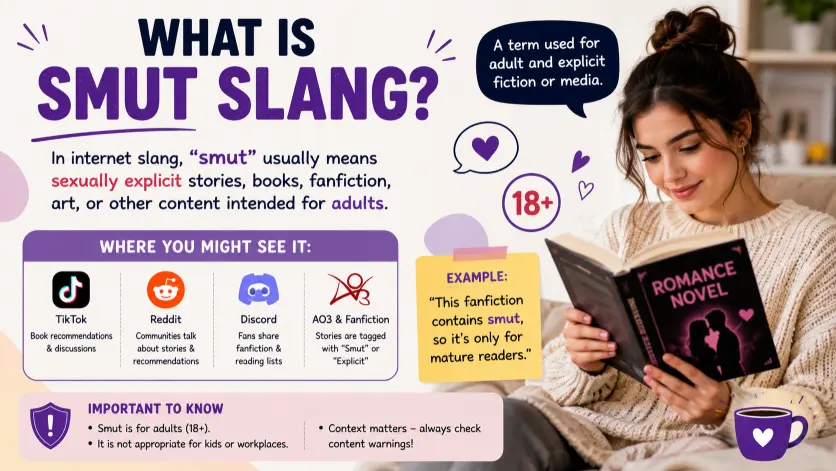
What is smut slang? In modern internet slang, smut usually refers to sexually explicit stories, books, comics, artwork, or other content created for adults.
People often use the word when talking about romance novels with explicit scenes, fan fiction, online fiction, or mature entertainment. Depending on the conversation, it may be used as a neutral description, a joke, or a criticism.
Many people search for what is smut slang after seeing the word on TikTok, Reddit, Discord, Instagram, or in online reading communities. The meaning can change slightly depending on the platform and the speaker’s tone.
In this guide, you’ll learn exactly what smut slang means, where people use it, whether it is considered offensive, and how to understand it correctly in different situations.
Quick Answer: What Is Smut Slang?
Smut slang is a casual term for sexually explicit or erotic content intended for adults. It most commonly refers to written stories, fan fiction, romance novels, comics, or artwork that contain graphic sexual scenes. While some people use the word neutrally, others may use it in a negative or joking way. Understanding the context is important because the tone changes from one conversation to another.
| Term | Meaning | Tone |
| Smut | Sexually explicit content for adults | Neutral, humorous, or critical depending on context |
| Smut fiction | Adult stories with explicit scenes | Common in reading communities |
| Smut fanfiction | Fan-created stories containing mature content | Popular in online fandoms |
What Does Smut Slang Mean?
Smut slang means sexually explicit material created for adult audiences. Today, the word is used far more often online than in everyday conversation. Instead of referring to a specific type of media, it has become an umbrella term covering many forms of mature content.
People may use smut to describe:
- Adult romance novels
- Explicit fan fiction
- Mature web comics
- Erotic short stories
- Adult-themed artwork
- Fiction with graphic intimate scenes
The word itself does not describe a person. It describes the content being discussed.
For example:
- “That novel starts as a romance but turns into smut later.”
- “I didn’t realize the fanfiction contained smut.”
- “The author clearly labels the story as smut for adult readers.”
In many online communities, writers label their work clearly so readers know the content includes explicit material.
Different Meanings of Smut Slang
Although the modern internet meaning is the most common, smut can have more than one meaning depending on the situation.
1. Adult Fiction or Stories (Most Common)
The most common meaning today is explicit fictional content written for adults.
This includes:
- Romance novels
- Fanfiction
- Online serial stories
- Web novels
- Digital comics
Example:
“She enjoys reading fantasy smut novels.”
Here, the speaker simply means novels that include explicit adult scenes.
2. Explicit Artwork or Media
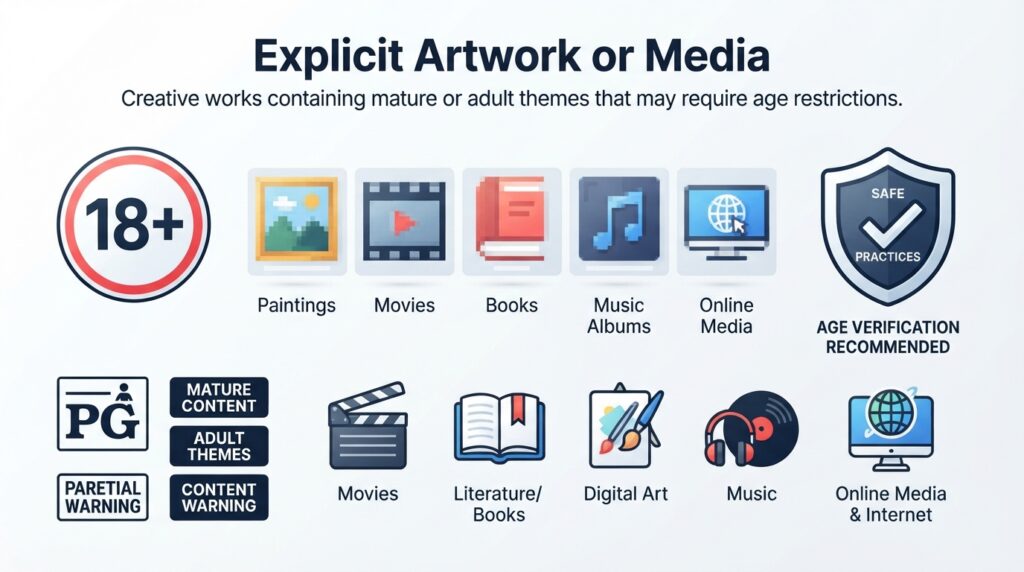
Sometimes smut refers to visual content rather than written stories.
Examples include:
- Adult illustrations
- Explicit comics
- Mature animations
- Adult digital artwork
Example:
“The artist clearly marks their page as containing smut.”
The term warns viewers that the artwork is intended only for adults.
3. A Negative Description
Some people use smut critically to suggest that content is vulgar, overly sexual, or lacking artistic value.
Example:
“The movie wasn’t romantic—it was just smut.”
In this case, the speaker is expressing a personal opinion rather than giving a neutral description.
4. Humorous Internet Usage
Among friends, especially on TikTok, Reddit, Discord, and fandom communities, smut is sometimes used jokingly.
Examples:
- “Back to reading my smut tonight.”
- “My weekend plans involve snacks and smut.”
Here, the speaker is making a lighthearted joke about reading adult fiction rather than criticizing it.
Where Is Smut Slang Commonly Used?
Smut slang is most common in online communities where people discuss books, fan fiction, comics, and digital media. It is rarely used in formal conversations and is mainly found in spaces where readers and creators share recommendations.
Reading Communities
Readers often use smut to describe romance books or stories with explicit adult scenes.
Example:
- “Can anyone recommend slow-burn romance with a little smut?”
Here, the word simply tells other readers what type of content to expect.
Fan Fiction Websites
Fan fiction communities frequently use content tags to help readers choose stories.
Examples include:
- Smut
- Mature
- Explicit
- Adult Content
These labels help readers understand the story before opening it.
TikTok
Book lovers on TikTok often talk about romance novels using hashtags like:
- #BookTok
- #RomanceBooks
- #SpicyBooks
Some creators also mention smut when reviewing books with explicit scenes.
Many Reddit communities discuss novels, manga, web novels, and fan fiction.
Users may ask questions like:
- “Is this book mostly romance or smut?”
- “Does the story contain smut?”
Discord
Reading groups and fandom servers sometimes recommend stories by mentioning whether they include smut.
Social Media Usage Table
| Platform | How “Smut” Is Used |
| TikTok | Book reviews and romance recommendations |
| Discussions about novels and fan fiction | |
| Discord | Community reading suggestions |
| Book reviews and reading content | |
| Fan Fiction Sites | Content tags and story labels |
Is Smut Slang Rude, Offensive, or Harmless?
Smut is not automatically a rude word, but it refers to adult content and should be used carefully. Whether it sounds offensive depends on the audience, the setting, and the speaker’s tone.
Usually Neutral
Among adults discussing books, writing, or online fiction, smut is often a neutral description.
Example:
“The novel contains smut, so it’s intended for mature readers.”
This simply describes the type of content.
Sometimes Critical
Some people use smut to criticize media they believe is overly sexual.
Example:
“The story focused more on smut than the plot.”
Here, the speaker is expressing a negative opinion.
Not Appropriate Everywhere
Because the word refers to sexually explicit material, it is usually not appropriate in:
- School assignments
- Workplace conversations
- Professional emails
- Formal presentations
- Conversations with young children
If you are unsure whether the audience will understand or appreciate the term, choose a more neutral phrase such as adult content or explicit material.
Real-Life Examples of Smut Slang
Seeing the word in context makes it easier to understand.
Example 1 – Book Recommendation
Person A: “Is that romance novel good?”
Person B: “Yes, but it contains some smut, so it’s definitely for adults.”
Example 2 – Fan Fiction
“I filtered out stories with smut because I wanted something family-friendly.”
Example 3 – Social Media
“BookTok convinced me to read another fantasy romance with smut.”
Example 4 – Reader Review
“The characters were interesting, but there was more smut than storytelling.”
Example 5 – Online Community
“Please tag your story if it includes smut.”
Origin and History of Smut
The word “smut” existed long before the internet. Historically, it referred to dirt, soot, or marks left by smoke. Over time, English speakers began using it to describe material considered obscene or indecent.
As online communities grew in the late 1990s and early 2000s, the meaning shifted further. Reading communities, fan fiction websites, and romance readers adopted smut as a convenient label for fiction containing explicit adult scenes.
Today, the term is widely recognized across internet culture. While it still refers to adult content, many online readers use it as a neutral category rather than an insult.
Similar Slang and Related Terms
Some words have meanings similar to smut, although they are not always exact substitutes.
| Term | Meaning | Notes |
| Spicy | Contains adult romance scenes | Popular on BookTok |
| NSFW | Not Safe For Work | Warning label for adult or graphic content |
| Explicit | Clearly describes mature content | Neutral term |
| Adult Content | Material intended for adults | Formal expression |
| Mature | Suitable only for older audiences | Rating label |
Each term has its own context. For example, NSFW is a warning label, while spicy is a lighter, more playful expression commonly used in book communities.
When Should You Avoid Using Smut?
Avoid using the word when the audience or setting calls for more formal language.
Situations where another term is usually better include:
- Academic writing
- School projects
- Business communication
- Professional reviews
- Conversations with children
- Public presentations
Instead, consider using:
- Explicit content
- Adult material
- Mature content
- Erotic fiction (when discussing the literary genre)
These alternatives are clearer and more appropriate in formal situations.
Why Do People Use the Word Smut?
People use smut because it is a short, widely recognized way to describe explicit adult fiction or media.
Common reasons include:
- To label stories accurately
- To warn readers about mature content
- To recommend books with specific themes
- To filter search results on reading platforms
- To discuss adult fiction within online communities
In many fandoms and book clubs, the term helps readers quickly understand what type of content a story contains without needing a lengthy explanation.
Common Misunderstandings About Smut Slang
Many people misunderstand the word smut because it is used differently across communities. Here are the most common misconceptions.
Smut Always Means Pornography
Not exactly. While smut refers to sexually explicit content, it often describes fiction, such as romance novels or fan fiction, rather than videos or commercial adult entertainment.
Every Romance Novel Is Smut
No. Most romance books focus on relationships and emotions. Only those with graphic sexual scenes are commonly labeled as smut.
Smut Is Always an Insult
Not anymore. Although the word was once used mostly as criticism, many online readers now use it as a neutral category when discussing books and stories.
Smut Is Safe to Use Everywhere
No. Since the term refers to explicit adult material, it is better avoided in schools, workplaces, and other formal settings.
Frequently Asked Questions
Q1. What is smut slang?
Smut slang refers to sexually explicit content created for adults, including romance novels, fan fiction, comics, artwork, and other mature media.
Q2. Is smut a bad word?
Not necessarily. It is not profanity, but it refers to adult material, so it may be considered inappropriate in formal or family-friendly settings.
Q3. What does smut mean on TikTok?
On TikTok, smut usually refers to romance books or stories that include explicit adult scenes. Book reviewers often use the term when recommending or discussing novels.
Q4. What does smut mean in fan fiction?
In fan fiction communities, smut is a tag that tells readers a story contains explicit sexual content intended for adults.
Q5. Is smut the same as romance?
No. Romance focuses on relationships and emotional connections. Smut specifically refers to stories that include graphic intimate scenes. A romance novel may contain smut, but many do not.
Q6. Can teenagers use the word smut?
Teenagers may encounter the term online, especially on social media or fan fiction websites. However, because it refers to adult content, it is important to understand its meaning without assuming the material is suitable for younger audiences.
Q7. Is smut offensive?
The word itself is not usually offensive, but it can sound rude or judgmental depending on how it is used. Context and tone matter.
Q8. Can I use the word smut at work?
Generally, no. In professional or academic settings, it is better to use terms such as explicit content, adult material, or mature content.
Conclusion
What is smut slang? In today’s online language, smut is a common term for sexually explicit fictional or artistic content intended for adults. It appears most often in romance book communities, fan fiction websites, and social media discussions. While many people use the word as a neutral label, others use it critically or humorously, so understanding the context is essential.
If you see the word on TikTok, Reddit, Discord, Instagram, or a reading platform, it usually refers to mature content rather than everyday slang. Knowing its meaning helps you understand online conversations, choose appropriate reading material, and avoid using the term in situations where more formal language is expected.
Read More About!

My name is Olivia Bennett.I am a language enthusiast and educational writer with a strong interest in contemporary English and digital communication. I enjoys making language learning engaging and accessible.