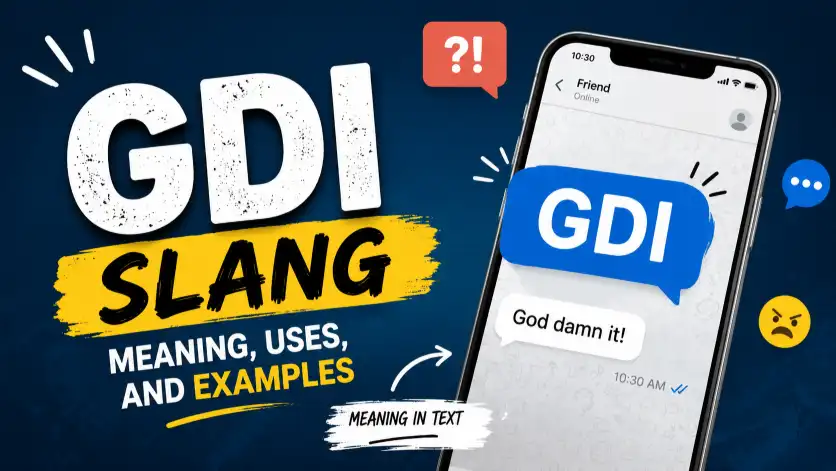
GDI slang is commonly used online and in text messages as a short form of “God damn it.” People usually type GDI when they feel annoyed, frustrated, disappointed, or angry about something. It is often used as a quick reaction when something goes wrong.
You may see GDI in texting, gaming chats, Reddit discussions, social media comments, and other casual online conversations. Because it comes from a phrase that includes religious language, its tone can feel stronger than simple words such as “ugh” or “darn.”
In this guide, you will learn what GDI slang means, what it stands for, how people use it, and when it may be better to avoid it.
Quick Answer: What Does GDI Mean in Slang?
GDI usually means “God damn it.” It is an informal expression people use to show frustration, annoyance, anger, or disappointment. For example, someone might type, “GDI, I forgot my keys again!”
What Does GDI Slang Mean?
GDI slang is a short internet and texting expression for “God damn it.”
It works much like saying “ugh,” “darn it,” or “damn it” after something goes wrong. The exact emotion depends on the situation. A person might use GDI because they made a mistake, lost something, received bad news, or became frustrated with a situation.
For example:
- “GDI, I missed the bus.”
- “GDI, my game crashed again.”
- “GDI! I forgot to save the file.”
The expression is usually directed at the situation, not necessarily another person.
GDI Can Show Different Emotions
Although frustration is the most common meaning, the expression can appear in several situations.
Annoyance:
“GDI, this computer is so slow.”
Disappointment:
“GDI, I really wanted to win that match.”
Frustration:
“GDI, I have to do this whole thing again.”
Surprise mixed with frustration:
“GDI, I didn’t see that coming.”
The surrounding conversation helps show how strongly the person feels.
What Does GDI Stand For?
GDI stands for “God damn it.”
The three letters come from the initial letters of the words:
- G = God
- D = damn
- I = it
It is an abbreviated form, so people can express the same reaction without typing the complete phrase.
In online conversations, abbreviations like this can make messages faster and shorter. However, knowing the full form matters because it helps explain the tone of the expression.
Is GDI a Bad Word?
GDI can be considered mild profanity or an inappropriate expression in some settings.
The word “damn” is often treated as a swear word, while the use of “God” can also make the phrase sensitive for some people because of its religious wording.
That does not mean everyone considers GDI highly offensive. Its strength depends on the person, situation, and audience.
A casual gaming conversation may use it without much concern, while a school, workplace, or formal discussion may not be the right place for it.
Where Is GDI Commonly Used?
GDI is most useful in casual communication where people already understand informal slang and abbreviations.
Text Messages
Friends may use GDI when something frustrating happens.
“GDI, I left my charger at home.”
Gaming Chats
Gamers may type GDI after losing a match, making a mistake, or experiencing a technical problem.
“GDI, we were one point away!”
Reddit and Online Forums
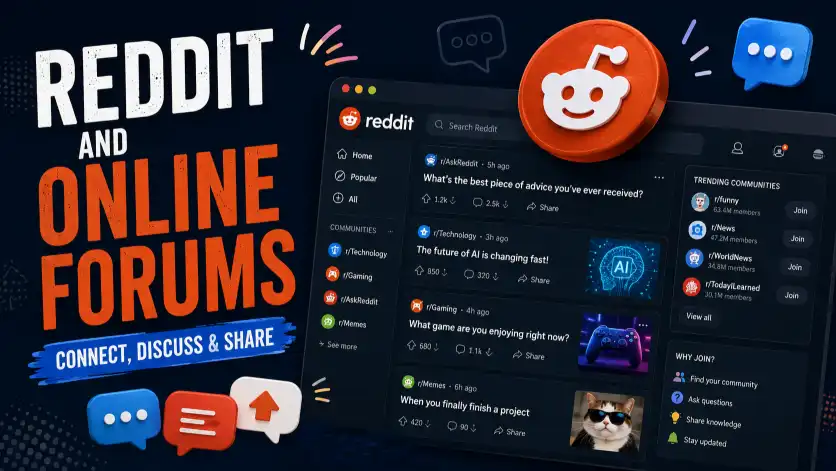
GDI can appear in casual discussions when users want to express irritation or disappointment.
“GDI, I thought the update fixed this problem.”
Social Media
People may use it in comments or posts as a short emotional reaction.
“GDI, I just saw the ending spoiled for me.”
The important point is that GDI is informal. It fits casual online communication much better than formal writing.
GDI in a Conversation
The meaning becomes clearer when you look at how it works in an actual conversation.
Example 1
Friend 1: Did you bring the tickets?
Friend 2: GDI, I left them on my desk.
Here, GDI shows frustration with the speaker’s own mistake.
Example 2
Player 1: We almost won!
Player 2: GDI, that was so close.
Here, the expression shows disappointment rather than serious anger.
Example 3
Friend 1: The website is down again.
Friend 2: GDI. I just started my work.
This use shows annoyance with an unexpected problem.
Is GDI Rude or Offensive?
GDI can sound rude because it is a shortened form of a phrase that contains profanity. However, the level of offense depends on the audience and situation.
Among close friends, the expression may sound casual and emotional. In a professional setting, it can appear unprofessional. Some people may also dislike the religious wording in the full phrase.
If you are unsure about your audience, a softer expression is usually safer.
GDI in Casual Chats
GDI is more acceptable when people are already comfortable using informal language.
“GDI, I forgot my password again.”
The speaker is showing frustration, not necessarily trying to offend anyone.
GDI at Work
Using GDI in workplace communication can be risky. Even if your coworkers use slang, the abbreviation may still look unprofessional in an email, report, or formal message.
Instead of:
“GDI, the meeting was moved again.”
You could say:
“Ugh, the meeting was moved again.”
When Should You Avoid GDI?
Avoid GDI when the situation calls for polite or professional language.
You should generally avoid it in:
- Formal emails
- Job applications
- School assignments
- Messages to teachers
- Business documents
- Customer service conversations
- Professional presentations
- Conversations with people you do not know well
A useful rule is simple: if you would not comfortably say the full phrase aloud, do not use GDI in that conversation.
Polite Alternatives to GDI
If you want to express frustration without using profanity, several alternatives work well.
| GDI | Softer Alternative |
| GDI! | Oh no! |
| GDI, I forgot! | I can’t believe I forgot! |
| GDI, it broke again. | Ugh, it broke again. |
| GDI, we lost. | That’s frustrating. |
| GDI! | Darn it! |
These alternatives can communicate the same basic emotion while sounding more appropriate in mixed or formal settings.
GDI vs. Other Frustration Slang
GDI is not the only short expression people use when something goes wrong.
GDI usually expresses frustration or annoyance.
OMG usually expresses surprise, shock, excitement, or disbelief.
SMH means “shaking my head” and often shows disappointment or disbelief.
WTF is a much stronger expression that can show shock, confusion, or anger.
Ugh is a softer way to show annoyance.
The best choice depends on how strong you want your reaction to sound.
Does GDI Mean the Same Thing Everywhere?
Not always. Slang can change depending on the community and conversation.
Someone might use GDI seriously after a frustrating event, while another person may use it jokingly. The surrounding words, punctuation, and situation can change the tone.
For example:
“GDI, I missed the train.”
This sounds genuinely frustrated.
But:
“GDI 😂 I forgot my own birthday was coming up.”
This may be more playful or self-mocking.
So, do not judge the tone from the abbreviation alone. Look at the complete message.
Common Mistakes When Using GDI
One common mistake is assuming that everyone knows the abbreviation. Someone unfamiliar with internet slang may not understand what GDI means.
Another mistake is using it in a formal setting simply because the letters look less offensive than the full phrase. GDI still carries the tone of the original expression.
It is also better not to use GDI toward another person unless you understand the relationship and context. A message such as “GDI, you did that again” can sound much harsher than using GDI about your own mistake.
Is GDI Still Used Today?
GDI can still be understood in online conversations, but it is not necessarily one of the newest or most popular slang abbreviations.
You may encounter it in older internet communities, gaming conversations, forums, social media, or casual text messages. Younger users may choose newer expressions or simply write “ugh,” “damn,” or another reaction instead.
This is one reason context matters when reading older posts or messages: slang can remain understandable even when its popularity changes over time.
GDI on Reddit
On Reddit, GDI may appear when someone reacts strongly to a frustrating event, mistake, spoiler, technical problem, or disappointing outcome.
For example:
“GDI, I clicked the wrong option and lost everything.”
The abbreviation helps make the comment feel quick and emotional.
However, Reddit communities have different rules and cultures. Some communities are relaxed about profanity, while others may have stricter standards. Always consider the specific subreddit before posting.
GDI in Gaming
Gaming is one situation where short emotional reactions are common.
A player might type:
“GDI, my connection dropped!”
Or:
“GDI, I almost had that boss!”
In these examples, GDI adds emotional force to the message. It is usually a reaction to the situation rather than a direct insult toward another player.
What Does GDI Mean in Texting?
In texting, GDI usually means “God damn it.” It is used when the sender wants to quickly show frustration, annoyance, or disappointment.
Because texting is informal, abbreviations can replace longer expressions. Still, the recipient needs to understand the slang for the message to have its intended effect.
For a polite conversation, phrases such as “Oh no,” “That’s frustrating,” or “I can’t believe that happened” are safer choices.
Sure — here is Part 3, continuing the article with a completely different structure and natural wording.
Why 80s Slang Still Feels Unique
The slang of the 1980s had a strong personality. Many expressions were short, playful, dramatic, or connected to the music, movies, television, and youth culture of the time.
Some words disappeared quickly, while others stayed in everyday English. You may still hear them in movies, nostalgic conversations, or when people talk about the culture of the 1980s.
Slang That Became Part of Pop Culture
Movies and television helped spread many expressions across the United States. Young people often copied phrases they heard from popular characters, musicians, and celebrities.
This made certain words strongly connected with the decade.
For example:
- Awesome — very impressive or exciting.
- Rad — extremely cool or enjoyable.
- Bodacious — impressive, excellent, or attractive.
- Totally — used to strongly agree or emphasize something.
- Gag me — an exaggerated way to say something is disgusting or unpleasant.
- No duh — a sarcastic way to say something is obvious.
- Like — often used as a filler in casual speech.
These expressions could sound natural among teenagers but might feel unusual or dated today.
80s Slang in Everyday Conversations
People did not use every 1980s slang word all the time. Some expressions appeared mainly among teenagers and young adults, while others became more widely understood.
A conversation might have sounded like this:
“That movie was totally awesome.”
Or:
“No way! That new song is rad.”
The meaning was usually easy to understand from the situation. The style, however, gave the conversation a distinctly 80s feel.
Slang Connected to Attitude and Personality
The decade also had expressions that described someone’s behavior, attitude, or social style.
Poser was used for someone who pretended to be something they were not, especially someone trying to appear cool or belong to a particular group.
Geek could describe someone very interested in a particular subject. The word could be insulting in some situations, but its meaning has changed significantly over time.
Wimp referred to someone seen as weak or lacking courage.
Dweeb was a teasing insult for someone considered socially awkward or uncool.
These words show that 80s slang was not only about saying something was “cool.” It also reflected how young people judged personalities and social behavior.
Why Some 80s Slang Sounds Funny Today
Language changes quickly. A word that sounded fresh in 1985 can sound old-fashioned decades later.
That is why phrases such as “gag me,” “grody,” “radical,” and “totally” can immediately create an 80s atmosphere today.
Writers often use these expressions when they want dialogue to feel connected to the decade.
However, using too many of them together can make modern writing sound exaggerated. Real conversations usually contained a mixture of slang and ordinary English.
Are These Words Still Used?
Yes, but their popularity varies.
Words such as awesome, geek, and poser survived and can still appear in modern English. Other expressions are mostly associated with the 1980s.
Some words also changed meaning over time. Geek, for example, is now often used positively for someone who has deep knowledge or enthusiasm about technology, games, science, or another subject.
This is an important reminder that slang does not always disappear. Sometimes it changes.
80s Slang vs. Modern Slang
One major difference is how strongly 80s slang was connected to physical media and pop culture.
People learned expressions from:
- Television
- Movies
- Radio
- Music
- Magazines
- Friends
- School
- Local communities
Modern slang spreads much faster through social media, messaging apps, gaming communities, and online platforms.
That difference helps explain why 80s slang often feels tied to a specific cultural era, while today’s slang can spread globally within a very short time.
Quick Examples of Classic 80s Expressions
| Expression | Simple Meaning |
| Awesome | Very good or impressive |
| Rad | Very cool |
| Bodacious | Excellent or impressive |
| Totally | Strong agreement or emphasis |
| Gag me | That is disgusting |
| No duh | Obviously |
| Grody | Gross or unpleasant |
| Poser | Someone pretending to be cool or something they are not |
| Geek | A person deeply interested in a subject |
| Dweeb | A socially awkward or uncool person |
| Wimp | A weak or timid person |
| Tubular | Extremely cool or excellent |
Conclusion
80s American slang was colorful, playful, and closely connected to the decade’s youth culture. Words like rad, awesome, totally, bodacious, poser, and gag me can still instantly create an old-school 1980s feeling.
Some expressions survived into modern English, while others became mostly historical or nostalgic. Understanding them can make older movies, television shows, music, and conversations much easier to understand.
Read More About !

Michael Brooks is a language writer at SlangPath with 7+ years of experience creating simple, practical content on English slang and everyday expressions.