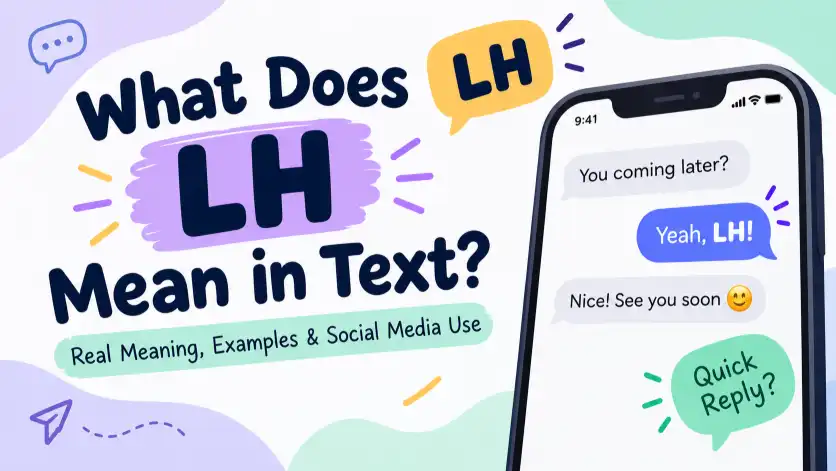
LH in text usually means “Laughing Hard,” expressing that something is very funny, but its meaning can vary depending on the conversation.
LH can mean “laughing hard” in some casual text conversations, while /lh means “lighthearted” as an internet tone indicator. The intended meaning depends on how the abbreviation appears and what the conversation is about.
You may come across LH while chatting with friends, reading TikTok comments, or checking messages on Snapchat and Instagram. Because it is not as familiar as LOL or LMAO, its meaning can sometimes be confusing.
People regularly use shortened expressions to make online conversations quicker and more natural. Some abbreviations express laughter, while others help communicate emotions or explain the tone of a message.
In this article, you will learn what LH means, how people use it on different platforms, and how to understand the difference between LH and /lh.
What Does LH Mean in Text?
LH does not have one universally established meaning in texting. In some informal conversations, people use it to mean “laughing hard.” It can express amusement when someone shares a funny story, joke, picture, or unexpected situation.
However, there is another meaning you should know. When written as /lh, it stands for “lighthearted.” This expression is known as a tone indicator because it helps readers understand how someone intends their message to sound.
For example, someone might write “LH 😂” after hearing a funny story. In another conversation, a person might write “You’re so dramatic /lh” to show that they are teasing rather than being serious.
The difference is important because these two forms do not communicate exactly the same thing.
LH Meaning in Simple Words
Here is a simple breakdown of both expressions:
- LH: Sometimes used as informal shorthand for laughing hard.
- /lh: Means lighthearted and indicates a playful or friendly tone.
- LOL: Means laughing out loud and is a much more widely recognized laughter abbreviation.
Consider this conversation:
A: I accidentally sent my private message to the class group.
B: LH 😂 What happened next?
A: Everyone started asking questions.
Here, B is using LH as a laughter,related reaction.
Now consider another example:
A: You’re always forgetting your homework /lh.
B: I can’t even deny that!
In this conversation, /lh shows that A is making a lighthearted comment instead of seriously criticizing B.
Is LH an Acronym, Abbreviation, or Slang?
LH is generally used as informal internet shorthand rather than a standard English word.
When someone uses it to mean “laughing hard,” it functions as an abbreviation of a longer expression. However, /lh is a tone indicator that communicates the intention behind a sentence.
It is not a formal expression that everyone understands. Its meaning can vary between online communities, friend groups, and individual users.
For comparison, expressions such as IDK, BRB, and IMO have widely recognized meanings. LH is less standardized, so understanding the surrounding conversation is especially important.
What Does LH Mean in Everyday Chat?
In everyday messaging, the intended meaning depends on how someone uses the expression.
If a person sends LH after a joke, they may be expressing laughter. If they add /lh at the end of a sentence, they are usually indicating that their words are meant to sound playful.
Here are a few examples:
- “That video was hilarious LH.”
- “You’re impossible /lh.”
- “I can’t believe you actually did that.”
- “Your jokes are terrible /lh.”
- “Stop making me laugh 😂”
These examples show how the abbreviation can appear in different types of conversations.
If someone sends you just “LH” without any additional explanation, do not immediately assume its meaning. The previous messages can provide useful clues.
Where Do People Use LH?
LH and /lh can appear in different online spaces, including social media comments, private messages, and group conversations.
However, people do not necessarily use the expression in the same way everywhere. Some may recognize it as laughter,related shorthand, while others may understand only the tone indicator.
LH on TikTok
TikTok users often communicate through short comments, reactions, captions, and private messages. Internet abbreviations make these interactions quicker, especially when someone is responding to a funny video.
For example:
A: Did you see that person falling off the chair?
B: Yes, LH 😂
A: I watched it five times!
In this conversation, B uses LH as a laughter,related reaction.
You may also see /lh in TikTok comments when someone wants to make a joke without sounding insulting.
For example:
“Your dancing skills are something else /lh.”
The tone indicator suggests that the comment is playful.
LH on Snapchat
Snapchat conversations are usually informal. Friends send pictures, videos, and quick messages throughout the day.
Because many conversations happen between people who already know each other, they sometimes use personal abbreviations and expressions.
For example:
A: Look at the picture I just took.
B: Why are you making that face? 😭
A: I was trying to look serious.
B: LH, you look hilarious.
Here, B is reacting to a funny picture.
If someone writes “You’re so dramatic /lh,” the expression indicates that the comment is intended as friendly teasing.
LH on Instagram
Instagram users communicate through comments, reels, stories, and direct messages.
You might encounter LH when someone responds to a funny reel or shares an amusing experience with a friend.
For example:
A: Did you watch the video I sent?
B: Yes, LH 😂
A: I knew you would laugh.
The abbreviation works as an informal reaction in this conversation.
The slash version can also appear in Instagram messages when someone wants to make their intention clearer.
LH on WhatsApp
WhatsApp is commonly used for personal conversations, family groups, and everyday communication.
Friends sometimes use shortened expressions to avoid typing complete sentences.
For example:
A: I spent twenty minutes searching for my glasses.
B: Where were they?
A: On my head the whole time.
B: LH 😂
The reply suggests that B finds the situation funny.
However, if someone writes /lh at the end of a message, it generally communicates a lighthearted tone rather than laughter itself.
LH in SMS and Regular Text Messages
LH is not a widely established abbreviation in traditional SMS messaging. Still, someone might use it as personal shorthand when texting friends or family.
For example:
A: I accidentally called my boss by the wrong name.
B: LH, that must have been awkward.
A: I wanted to disappear!
Here, the sender uses LH as a laughter,related response.
If you receive LH in a regular text message and cannot understand its meaning, consider the surrounding conversation. You can also ask the sender what they mean instead of guessing.
10 Real Chat Examples of LH in Text
Understanding LH becomes easier when you see how it can appear in everyday conversations. The following examples show its possible use as a laughter,related abbreviation and how /lh works as a lighthearted tone indicator.
Example 1: Laughing at an Embarrassing Moment
A: I waved at someone who wasn’t even waving at me.
B: Seriously? What did you do?
A: Pretended I was fixing my hair.
B: LH 😂 That’s so embarrassing.
Meaning: B is laughing at the awkward situation.
Example 2: Reacting to a Funny Picture
A: Look at this picture I took yesterday.
B: Why are you making that face? 😭
A: I was trying to look serious.
B: LH, you look hilarious.
Meaning: B uses LH as a laughter,related reaction to the picture.
Example 3: Friendly Teasing
A: You never listen when I explain something.
B: That’s not true.
A: You forgot everything I told you yesterday /lh.
B: Okay, maybe I wasn’t paying attention 😂
Meaning: The /lh shows that A is teasing rather than seriously complaining.
Example 4: Talking About School
A: I studied the wrong chapter for the test.
B: How did that happen?
A: I didn’t check the syllabus properly.
B: LH 😭 That’s an unfortunate mistake.
Meaning: B finds the situation amusing, even though it was frustrating for A.
Example 5: Gaming Conversation
A: I lost the match because I fell off the map.
B: How did you even do that?
A: I was looking at my phone.
B: LH 😂 Focus next time!
Meaning: B is laughing at the unexpected gaming mistake.
Example 6: Snapchat Conversation
A: I sent you that snap from the party.
B: Yes, I saw it.
A: Don’t laugh at my dancing.
B: Too late, LH 😭
Meaning: B is joking about A’s dancing and expressing amusement.
Example 7: Instagram Direct Message
A: I posted a picture and forgot to check the caption.
B: What’s wrong with it?
A: I wrote the wrong date.
B: LH, I noticed that 😂
Meaning: B is reacting to the small mistake with laughter.
Example 8: Joking With a Close Friend
A: You’re always stealing my snacks.
B: I only take a little.
A: You finished the whole packet /lh.
B: Sharing is caring!
Meaning: The tone indicator makes A’s complaint sound playful rather than serious.
Example 9: Funny Family Conversation
A: My little brother tried to teach me how to use my phone.
B: Isn’t he younger than you?
A: Yes, and now he thinks he’s an expert.
B: LH 😂 That’s actually funny.
Meaning: B is amused by the situation and responds casually.
Example 10: Lighthearted Compliment
A: You really think my cooking is good?
B: Of course!
A: You’re just being nice.
B: No, it’s actually good /lh.
A: Now I don’t know if to believe you.
Meaning: B uses /lh to communicate a playful tone.
These conversations show that the surrounding words are important. LH may express amusement in some chats, while /lh helps explain the intention behind a sentence.
How to Reply When Someone Says LH
Your response should match the situation. If someone uses LH after a funny message, you can laugh along or make another joke. If they use /lh to soften a comment, you can respond in a friendly way.
You do not need to mention the abbreviation every time. A natural response is usually enough.
Funny Replies to LH
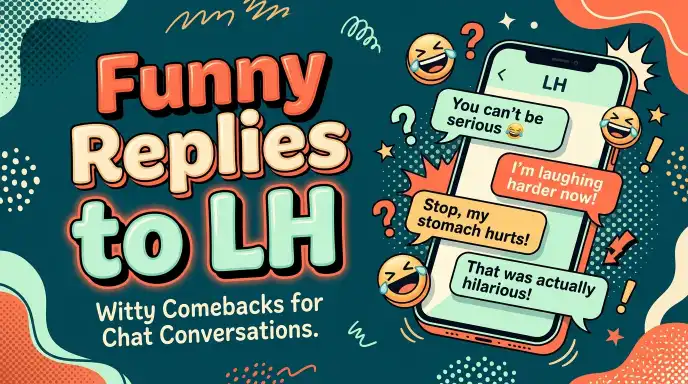
If someone is laughing at your story, picture, or mistake, try one of these playful responses:
- “Don’t laugh too hard 😂”
- “I’m glad my problems entertain you.”
- “Wait until you hear the rest.”
- “I knew that would make you laugh.”
- “Stop laughing at me 😭”
- “At least I made your day.”
- “My comedy skills are improving.”
- “You haven’t seen anything yet.”
- “Why are you enjoying this so much?”
- “I’m never telling you another story.”
These replies are suitable for casual conversations with friends who enjoy joking around.
Casual Replies to LH
Sometimes a short answer is all you need. These responses help keep the conversation moving without making it awkward.
- “Haha, I know.”
- “That was funny, though.”
- “I couldn’t help it.”
- “Right? 😂”
- “Exactly!”
- “I was laughing too.”
- “It happens sometimes.”
- “You understand me.”
- “I know, right?”
- “That was unexpected.”
Use these replies when the conversation is relaxed and you simply want to acknowledge the other person’s reaction.
Friendly Replies to LH
If someone is joking with you or reacting to something funny, you can respond warmly.
- “You’re always laughing at my stories.”
- “That’s why I tell you everything.”
- “Glad I made you smile.”
- “You would have done the same thing.”
- “At least we’re having fun.”
- “I knew you’d understand.”
- “You’re just as funny.”
- “We always find something to laugh about.”
- “You know me too well.”
- “That’s what friends are for.”
These responses work well in conversations with close friends, classmates, and people you feel comfortable talking to.
Neutral Replies to LH
If you do not know the sender very well, you may prefer a simple and polite response.
- “Haha, that’s funny.”
- “I see what you mean.”
- “That’s understandable.”
- “Interesting!”
- “Thanks for the reaction.”
- “What do you mean by LH?”
- “Are you using LH as a laughter abbreviation?”
- “I didn’t know that expression.”
- “Can you explain what you mean?”
- “Got it.”
Asking for clarification is perfectly acceptable. It is better to understand the message than respond based on an incorrect assumption.
How to Reply to /LH Specifically
When someone uses /lh, remember that it is a tone indicator. It tells you how they intend their words to sound.
For example:
A: You’re always making silly decisions /lh.
B: That’s my special talent 😂
A: I knew you’d say that!
You can simply respond to the playful comment. There is no need to treat /lh as a separate question.
Is LH Rude or Offensive?
No, LH is not inherently rude or offensive. When used as informal laughter,related shorthand, it generally expresses amusement. The /lh tone indicator is also intended to make a message sound lighthearted or playful.
However, the surrounding words still matter. An abbreviation cannot automatically make an insulting statement acceptable.
Consider these examples:
- “You’re so funny LH 😂” sounds friendly.
- “You’re always making mistakes /lh” may sound like playful teasing.
- “Nobody wants to talk to you /lh” can still be hurtful.
The third example shows why context matters. Adding a tone indicator does not automatically remove the negative meaning of someone’s words.
Is LH Safe to Use With Friends?
Yes, LH can be appropriate in casual conversations when your friends understand what you mean.
For example, you might use it after sharing a funny experience or reacting to something unexpected.
However, because LH is not universally recognized, some people may misunderstand it. If you want to make your meaning clear, familiar alternatives such as LOL, HAHA, or “That’s hilarious” are easier to understand.
Is LH Appropriate at School?
LH may be acceptable in informal messages between classmates, especially when discussing jokes, funny situations, or everyday activities.
However, it is not suitable for every school,related conversation.
Avoid using unfamiliar abbreviations in:
- School assignments
- Formal emails to teachers
- Academic presentations
- Official school communication
Clear English is a better choice when communicating in an educational setting.
Is LH Appropriate at Work?
LH is not a standard professional abbreviation. You might use casual expressions when chatting with coworkers you know well, but formal communication requires clearer language.
For example, instead of writing:
“That was funny LH.”
You could write:
“That was really funny!”
Similarly, /lh is usually unnecessary in professional emails because you can communicate a friendly tone through your wording.
The best approach is to consider your audience. An abbreviation that makes sense in a private conversation may confuse someone in a professional setting.
Who Uses LH?
LH is an informal expression that may appear in different online communities. However, it does not have one clearly defined audience, and its popularity is not comparable to widely recognized abbreviations such as LOL, IDK, or BRB.
People may encounter it through social media, private messages, gaming communities, and conversations with friends.
Teenagers and Young Internet Users
Teenagers often come across unfamiliar abbreviations while browsing social media or chatting with friends.
Some recognize /lh because tone indicators are used in online conversations to explain if a statement is serious, sarcastic, or playful.
For example:
A: You’re terrible at this game /lh.
B: At least I’m having fun 😂
Here, the indicator shows that the comment is intended as friendly teasing.
Gen Z Users
Gen Z users are familiar with many internet expressions and shortened phrases. They often encounter new terms through TikTok, Instagram, Snapchat, and Discord.
Some also use tone indicators such as /lh, /j, and /srs to make their intentions clearer.
For example:
“Your singing is definitely something /lh.”
The indicator suggests that the person is joking in a friendly way.
However, not every Gen Z user knows or uses LH. Its recognition depends on personal habits and online communities.
Adults and Older Internet Users
Adults may also encounter LH when communicating with younger family members, friends, or coworkers.
Someone unfamiliar with internet tone indicators might not understand why another person adds /lh at the end of a sentence.
For this reason, using familiar expressions or explaining an abbreviation can prevent misunderstandings.
Where Is LH Commonly Seen?
You may encounter LH or /lh in different online spaces, including:
- TikTok comments and direct messages
- Snapchat conversations
- Instagram stories and DMs
- WhatsApp group chats
- Discord servers
- Online gaming communities
- Internet forums and discussion groups
Its appearance on these platforms does not mean that it is equally popular everywhere. It remains less standardized than many common texting abbreviations.
Origin of LH
The exact origin of LH as a laughter,related abbreviation is uncertain. There is no well,established historical record identifying when people first began using it to mean “laughing hard.”
Like many internet expressions, it may have developed through informal digital communication, where people shorten longer phrases to make messages quicker.
The history of /lh, however, is more closely connected to internet tone indicators.
How Did /LH Develop?
Tone indicators are short labels that help readers understand the intention behind a written message.
In face,to,face conversations, people communicate through facial expressions, voice, and body language. Text messages do not always provide these signals.
As online communication developed, some internet communities began using slash,based indicators to explain the intended tone of their words.
For example:
- /lh means lighthearted.
- /j means joking.
- /s means sarcastic.
- /srs means serious.
- /gen means genuine or genuinely asking.
These indicators can help readers distinguish a playful comment from a serious statement.
Did LH Originate on TikTok?
There is no reliable evidence that TikTok invented LH or /lh.
Social media platforms can help unfamiliar expressions spread to larger audiences, but many internet terms develop in smaller online communities before becoming more widely recognized.
The use of tone indicators is associated with online communication communities, particularly spaces where people want to make their intentions clearer.
It is therefore better not to attribute the origin of LH to one particular website or social media platform.
Why Do People Use LH?
People use short expressions because typing complete sentences is not always necessary in casual conversations.
There are several reasons someone might use LH or /lh:
- To communicate amusement quickly.
- To make a playful comment easier to understand.
- To reduce confusion in written conversations.
- To avoid making friendly teasing sound too serious.
- To communicate in a style familiar to their online community.
The important difference is that the laughter,related use and the lighthearted tone indicator have different purposes.
LH vs. IDK, IDC, IMO, and BRB
LH is different from many popular texting abbreviations. Some expressions communicate feelings, others share opinions, and some explain what someone is doing.
Here is a comparison to make the differences easier to understand.
| Abbreviation | Meaning | Type | Usage | Popularity |
| LH | Sometimes laughing hard | Informal abbreviation | Laughter,related reaction | Less common |
| IDK | I Don’t Know | Acronym | Expressing uncertainty | Very common |
| IDC | I Don’t Care | Acronym | Expressing indifference | Common |
| IMO | In My Opinion | Acronym | Sharing personal opinions | Common |
| BRB | Be Right Back | Acronym | Temporarily leaving a conversation | Very common |
LH vs. IDK
IDK means “I don’t know.” People use it when they are unsure about something or do not have an answer.
Example:
A: What time does the movie start?
B: IDK. Check the website.
LH, on the other hand, may be used as a laughter,related reaction.
LH vs. IDC
IDC means “I don’t care.” It communicates a lack of concern or interest.
Example:
A: Do you want pizza or burgers?
B: IDC. You can choose.
LH does not communicate indifference. Its possible laughter,related meaning is quite different.
LH vs. IMO
IMO stands for “in my opinion.” It is used when someone wants to share a personal view.
Example:
A: Which movie was better?
B: IMO, the first one was better.
LH is not normally used to introduce an opinion.
LH vs. BRB
BRB means “be right back.” People use it when they need to leave a conversation temporarily.
Example:
A: Are you still there?
B: BRB, someone is at the door.
LH does not communicate that someone is leaving. The two expressions serve different purposes.
Real,World Usage Example
Imagine two friends are chatting after a long school day.
One friend shares a funny story about accidentally entering the wrong classroom. The other friend finds the situation amusing and responds with a short laughter,related reaction.
1: I waved back at someone who wasn’t waving at me.
2: Seriously? 😂
3: Yes! I wanted to disappear. I only realized when the teacher started discussing a completely different subject.
Friend 2: LH 😂 That’s actually hilarious.
In this situation, LH is being used as informal shorthand to express amusement.
Now imagine a different conversation.
Friend 1: You always forget where you put your keys /lh.
Friend 2: I know, I need to get organized.
Here, /lh communicates that the first friend is making a playful comment rather than seriously criticizing the other person.
Both examples demonstrate why punctuation and context matter when interpreting internet abbreviations.
Frequently Asked Questions
Q1. What does LH mean in text messages?
LH can mean “laughing hard” in some informal text conversations. However, /lh means “lighthearted” and is used to communicate a playful tone.
Q2. What does LH mean on TikTok?
On TikTok, LH may appear as a casual laughter,related reaction. When written as /lh, it means lighthearted and indicates that a comment is intended playfully.
Q3. Is LH slang?
LH is informal internet shorthand. It is less standardized than popular texting expressions such as LOL, IDK, and BRB. Its meaning depends on how it is used.
Q4. Is LH rude or offensive?
No, LH is not inherently rude or offensive. It is generally harmless when used as a casual expression or tone indicator. However, the surrounding message still matters.
Q5. How should you reply to LH?
You can respond with “Haha, I know,” “Don’t laugh 😂,” or “That was funny!” If you are unsure what the sender means, ask them to explain the abbreviation.
Q6. What does /lh mean on Snapchat?
On Snapchat, /lh means “lighthearted.” It tells the reader that a message is intended to sound playful or friendly rather than serious.
Q7. What is the difference between LH and LOL?
LOL means “laughing out loud” and is a widely recognized texting abbreviation. LH may be used to mean “laughing hard,” but it is less common and has less standardized usage.
Q8. Can I use LH in a conversation with friends?
Yes, you can use LH in casual conversations if your friends understand its meaning. If they are unfamiliar with it, LOL or HAHA may communicate your reaction more clearly.
Q9. What does LH mean when a girl texts it?
When a girl sends LH, it may be a laughter-related reaction to something funny. If she writes /lh, she is indicating a lighthearted or playful tone. The surrounding conversation helps clarify her intention.
Q10. What does LH mean when a boy texts it?
When a boy uses LH, it can have the same meanings as it does in other conversations. It may express amusement or, when written as /lh, indicate that a comment is meant playfully.
Conclusion
LH is an informal internet expression that can have different meanings depending on its format and context. In some casual conversations, it is used to mean “laughing hard,” while /lh is a tone indicator meaning “lighthearted.”
You may encounter it on TikTok, Snapchat, Instagram, WhatsApp, and other online platforms. However, it is not as widely recognized as common abbreviations like LOL, IDK, and BRB.
When using LH, consider if the other person understands it. For everyday conversations with friends, it may fit naturally, but in school assignments, professional emails, and formal messages, clear English is usually a better option.
Understanding the difference between LH and /lh will help you interpret online messages more accurately and avoid unnecessary confusion.
Read More About !

Michael Brooks is a language writer at SlangPath with 7+ years of experience creating simple, practical content on English slang and everyday expressions.