TLC slang usually stands for “Tender Loving Care.” People use it to describe extra kindness, attention, comfort, or care given to a person, pet, relationship, or even an object. While the phrase existed long before the internet, it is now common in text messages, social media posts, and everyday online conversations.
If you searched for TLC slang, you may have seen it in a message, TikTok caption, Facebook post, Reddit comment, or chat. In this guide, you’ll learn what TLC slang means, where people use it, whether it is appropriate in different situations, and how to understand it correctly in context.
Quick Answer: TLC Slang
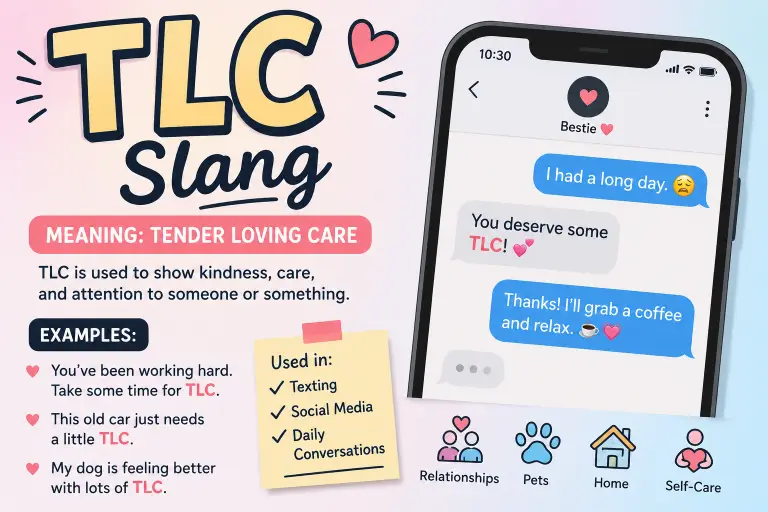
TLC slang means “Tender Loving Care.” It refers to giving someone or something extra attention, kindness, patience, or care. The phrase is positive, friendly, and commonly used in texting, social media, family conversations, and even workplace discussions.
| Term | Meaning | Tone | Common Usage |
| TLC | Tender Loving Care | Warm, caring, positive | Texting, social media, daily conversations |
What Does TLC Slang Mean?
TLC slang means giving special care, love, or attention to someone or something. It is often used when a person, relationship, pet, house, or even a car needs extra care to improve or recover.
Unlike many internet abbreviations, TLC is not limited to online communication. People have used the phrase for many years in everyday English, and it remains popular because it is simple and meaningful.
For example:
- “Grandma needs a little TLC after surgery.”
- “This old bicycle just needs some TLC.”
- “Our friendship could use some TLC.”
In every example, TLC suggests gentle care rather than fixing something quickly.
What Does TLC Stand For?
TLC stands for “Tender Loving Care.”
Each word has a simple meaning:
- Tender – Gentle and kind.
- Loving – Showing affection and warmth.
- Care – Looking after someone or something.
Together, the phrase describes thoughtful attention that helps someone or something feel better.
People often shorten the phrase to TLC because it is quicker to type in messages and online conversations.
Different Meanings of TLC
Although Tender Loving Care is by far the most common meaning, the abbreviation TLC can represent different things depending on the conversation. Context is important.
TLC as “Tender Loving Care”
This is the slang meaning most people use.
Example:
“You’ve been working too hard. Take the weekend off and give yourself some TLC.”
Here, TLC means relaxing and taking care of yourself.
TLC for Objects
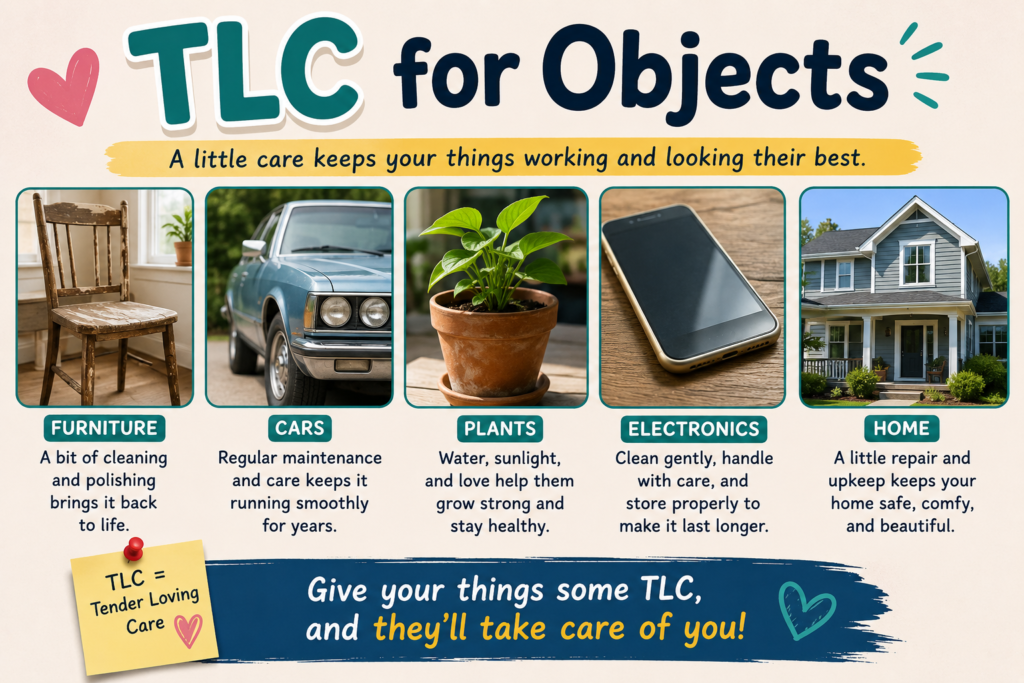
People also use TLC when talking about things that need attention.
Examples include:
- A house
- A car
- Furniture
- A garden
- Old electronics
Example:
“This old truck still runs well. It just needs some TLC.”
The speaker means the truck needs maintenance and care.
TLC in Relationships
TLC often describes emotional care between family members, friends, or partners.
Examples:
- Spending quality time together.
- Showing appreciation.
- Listening carefully.
- Being supportive.
Example:
“Every relationship needs a little TLC now and then.”
Here, TLC means putting effort into keeping the relationship healthy.
TLC in Self-Care
Many people use TLC when talking about personal wellness.
Examples include:
- Resting after a busy week.
- Taking a relaxing bath.
- Reading a favorite book.
- Getting enough sleep.
- Taking a break from work.
Example:
“I’m staying home today for some much-needed TLC.”
This means the person wants time to relax and recharge.
Where Is TLC Slang Commonly Used?
TLC slang is used in many everyday situations, both online and offline. Unlike many internet abbreviations, it is widely understood by people of different age groups.
Text Messages
Friends and family often use TLC to show support or encouragement.
Examples:
- “You sound exhausted. Get some TLC this weekend.”
- “After being sick, she needs lots of TLC.”
Social Media
People use TLC in captions and posts about self-care, relationships, pets, or home improvement.
Examples:
- “Sunday is all about coffee, books, and TLC.”
- “This rescue dog finally got the TLC he deserved.”
Workplace Conversations
Although informal, TLC can appear in workplace chats when discussing employee well-being or projects.
Example:
- “This project needs a little TLC before we send it to the client.”
Family Conversations
Parents and relatives commonly use the phrase when talking about children or loved ones.
Example:
- “The baby needs some extra TLC today.”
Home and DIY
Homeowners often describe repairs or maintenance using TLC.
Example:
- “The old cabin has great potential. It just needs some TLC.”
Is TLC Slang Rude, Offensive, or Harmless?
TLC is a harmless and positive expression. It shows kindness, patience, or care rather than disrespect.
| Situation | Appropriate? | Why |
| Texting Friends | ✅ Yes | Friendly and supportive |
| Family Conversations | ✅ Yes | Common and caring |
| Social Media | ✅ Yes | Frequently used in positive posts |
| School | ✅ Yes | Easy to understand |
| Workplace | ✅ Usually | Suitable in informal conversations |
| Formal Business Documents | ❌ Not Recommended | Write “Tender Loving Care” or use more formal wording instead |
There are no offensive meanings associated with TLC slang in normal conversations. The meaning remains positive in almost every context.
Real-Life Examples of TLC Slang
Seeing the phrase in real conversations makes it easier to understand.
Friendly Conversation
Emma: You look tired.
Sarah: I know. I need some TLC this weekend.
Text Message
Alex: How’s your dog doing?
Jordan: Much better now. He just needed a little TLC.
Home Improvement
“My grandparents’ house has good bones. It only needs some TLC.”
Relationship
“Our friendship needs a little TLC after we’ve both been so busy.”
Self-Care
“I’m taking today off for some much-needed TLC.”
Workplace Chat
“This presentation is almost finished. It just needs a little TLC before the meeting.”
Origin and History of TLC
The phrase “Tender Loving Care” has been part of English for many decades. It became popular long before texting and social media existed.
Originally, people used the full phrase when talking about caring for loved ones, patients, children, or pets. Over time, the abbreviation TLC became common because it was shorter and easier to write.
Today, people use TLC across many platforms, including:
- Text messages
- X (formerly Twitter)
- TikTok
- Online forums
- Emails
- Everyday conversations
Unlike many modern slang terms, TLC has stayed popular for years because its meaning is clear, positive, and useful in many situations.
Similar Slang and Related Expressions
These expressions share a similar idea with TLC, although each has a slightly different meaning.
| Expression | Meaning |
| Self-care | Taking care of your physical and mental health |
| Pamper Yourself | Treat yourself kindly |
| Look After | Care for someone |
| Show Some Love | Give kindness or attention |
| Take It Easy | Relax and rest |
| Give It Attention | Spend time improving something |
| Care For | Help or support someone |
While these phrases are similar, TLC uniquely combines kindness, affection, and careful attention into one simple expression.
When Should You Avoid Using TLC?
TLC is friendly, but it is not always the best choice. Some situations call for more formal language.
Avoid using TLC when:
- Writing academic papers.
- Preparing legal documents.
- Creating official business reports.
- Communicating in highly formal professional settings.
- Speaking with people who may not understand English abbreviations.
In formal writing, use phrases like:
- “Additional care”
- “Extra attention”
- “Supportive care”
- “Careful maintenance”
- “Personal attention”
These alternatives sound more professional while keeping the same general meaning.
Polite Alternatives to TLC
If you prefer not to use the abbreviation, you can say:
- Tender loving care
- Extra care
- Gentle care
- Loving attention
- Personal attention
- Thoughtful support
- Care and attention
- Special care
These alternatives work well in formal writing, professional communication, and conversations with people unfamiliar with internet abbreviations.
Why Do People Use TLC?
People use TLC because it quickly expresses kindness, care, and attention. It is a short, positive phrase that fits many situations, from comforting a friend to describing a home improvement project.
Common reasons people use TLC include:
- Showing emotional support.
- Encouraging someone to rest.
- Talking about self-care.
- Describing repairs or maintenance.
- Expressing affection in relationships.
- Making conversations sound warm and friendly.
Because the abbreviation is easy to remember, it remains popular in both spoken and written English.
Common Misunderstandings About TLC
Although TLC usually means Tender Loving Care, people sometimes misunderstand it because the same three letters are used in other contexts.
TLC Always Means Slang
Not always. While TLC is commonly used as shorthand for Tender Loving Care, it can also refer to organizations, TV channels, or brand names depending on the conversation.
TLC Is Only Used Online
No. People have used the phrase in everyday English for decades. It appears in conversations, books, workplaces, healthcare settings, and social media.
TLC Is Only for People
Not true. TLC can describe caring for:
- People
- Pets
- Cars
- Houses
- Plants
- Furniture
- Relationships
Anything that needs extra attention can be said to need TLC.
Frequently Asked Questions
Q1. What does TLC mean in slang?
TLC means Tender Loving Care. It refers to giving someone or something extra kindness, attention, or care.
Q2. What does TLC mean in texting?
In text messages, TLC usually means someone needs comfort, support, rest, or extra care.
Q3. Is TLC a positive slang term?
Yes. TLC is a positive and caring expression. It is not considered rude or offensive.
Q4. Can TLC refer to objects?
Yes. People often say a car, house, garden, or other item needs TLC when it requires maintenance or repair.
Q5. Is TLC appropriate at work?
Usually, yes. It works well in casual workplace conversations. In formal reports or business documents, writing “Tender Loving Care” or using phrases like “extra attention” is often more appropriate.
Q6. Is TLC popular on social media?
Yes. It is commonly used on Facebook, Instagram, TikTok, Reddit, and in text messages, especially in posts about self-care, wellness, relationships, and home improvement.
Conclusion
TLC slang stands for Tender Loving Care, a simple expression that represents kindness, patience, and thoughtful attention. Whether someone is talking about self-care, supporting a loved one, repairing an old car, or improving a relationship, TLC communicates warmth and compassion in just three letters.
Unlike many internet slang terms that quickly disappear, TLC has remained popular because it is easy to understand and useful in everyday life. Knowing its meaning helps you confidently understand conversations in texts, social media posts, workplaces, and daily communication.
Read More About!

My name is Olivia Bennett.I am a language enthusiast and educational writer with a strong interest in contemporary English and digital communication. I enjoys making language learning engaging and accessible.