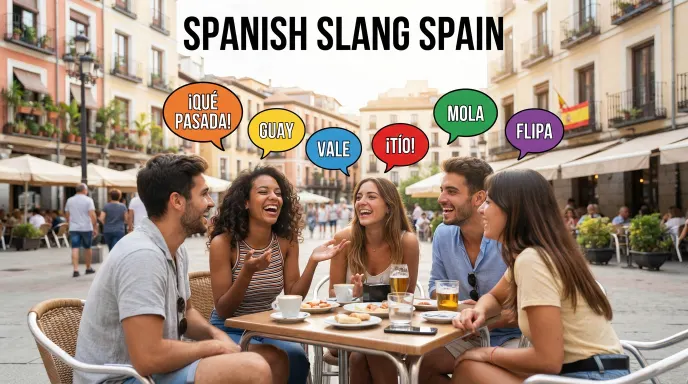
Spanish slang Spain refers to informal words and expressions that people in Spain use in everyday conversations. These words often sound different from standard Spanish. Many appear in chats, social media posts, schools, workplaces, family conversations, and local communities. Some slang terms are friendly, some are humorous, and others fit only casual situations.
People search for Spanish slang Spain to understand local conversations, prepare for travel, learn authentic Spanish, or enjoy Spanish movies and TV shows. This guide explains the meaning of Spanish slang, where people use it, common types, and practical examples. Every section uses simple English, making it easy for beginners to understand.
Quick Answer: Spanish Slang Spain
What Is Spanish Slang Spain?
Spanish slang Spain means informal words and phrases commonly used by people in Spain instead of formal Spanish. These expressions make conversations sound natural, friendly, and local. Most slang appears in daily speech, texting, social media, and casual conversations with friends.
What Does Spanish Slang Spain Mean?
Simple Definition
Spanish slang Spain includes everyday expressions that native speakers use in relaxed situations. These words often replace formal vocabulary during normal conversations.
Why People Learn Spanish Slang
Learning slang helps you understand real conversations. Native speakers rarely use textbook Spanish all the time. Slang makes speech sound more natural and expressive.
Is It Different From Standard Spanish?
Yes. Standard Spanish follows grammar rules used in schools, books, and official writing. Spanish slang focuses on casual communication. Many expressions are acceptable among friends but not during formal meetings.
| Standard Spanish | Spanish Slang Spain | Common Meaning |
| Amigo | Tío / Tía | Friend, mate |
| Muy bueno | Guay | Very cool |
| Dinero | Pasta | Money |
| Trabajar | Curar* (regional) | To work |
| Irse | Pirarse | To leave |
*Some slang terms are regional and may not be understood everywhere in Spain.
Different Types of Spanish Slang in Spain
Everyday Conversation Slang
People use these words during normal conversations with friends and family.
- Guay – Cool
- Vale – Okay
- Tío – Mate or buddy
- Jo – Oh no!
- Venga – Come on
Youth Slang
Teenagers and young adults often create new expressions. Some become popular across Spain. Others disappear after a few years.
Examples include:
- Flipar – To be amazed
- Rayarse – To overthink
- Currar – To work
- Molar – To be awesome
Regional Slang
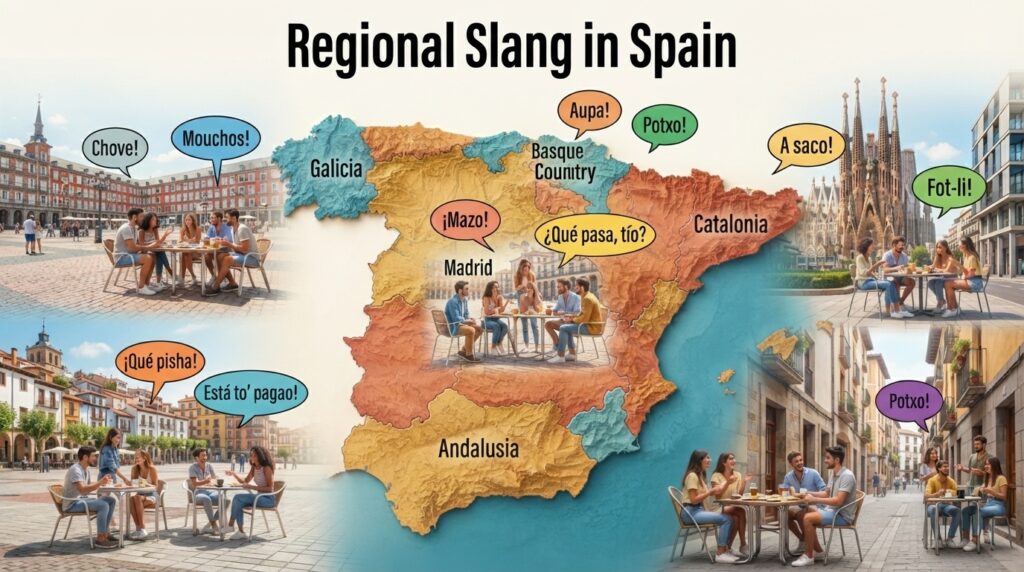
Different areas of Spain have their own local expressions. A slang word used in Madrid may sound unusual in Andalusia or Galicia.
Regional slang reflects local culture and community identity.
Internet and Social Media Slang
Many Spanish speakers mix traditional slang with online expressions.
Common places where people use online slang include:
- TikTok
- Discord
- X
Some online slang becomes popular across Spain. Other terms remain limited to younger users.
Where Is Spanish Slang Spain Commonly Used?
Daily Conversations
Friends often use slang while talking at school, cafés, parks, or during family gatherings.
Example
Carlos: “¿Vienes luego?”
David: “Vale, allí estaré.”
Text Messages
Short slang words save time while texting.
Example
“¡Qué guay estuvo ayer!”
Social Media
People use slang in captions, comments, and short videos because it sounds natural and friendly.
University and School
Students commonly use slang when chatting with classmates outside lessons.
Entertainment
Spanish TV shows, podcasts, YouTube videos, and movies include many slang expressions. Learning these words makes entertainment easier to understand.
Travel Around Spain
Visitors hear slang while ordering food, shopping, using public transport, or speaking with local people. Knowing a few common expressions makes conversations feel more comfortable.
Is Spanish Slang Spain Rude, Offensive, or Harmless?
Is Most Spanish Slang Harmless?
Most Spanish slang in Spain is harmless. People use it to sound friendly, relaxed, and natural. These expressions fit casual conversations with friends, classmates, and family members.
Can Some Slang Be Offensive?
Yes. Some slang words can sound rude or insulting. The meaning depends on the situation, the speaker, and the tone of voice. A word that sounds playful among close friends may offend someone else.
| Type | Safe to Use | Best Situation |
| Friendly slang | Yes | Friends, classmates |
| Internet slang | Usually | Social media, texting |
| Strong slang | No | Avoid with strangers |
| Insulting slang | No | Avoid in polite conversations |
Can You Use It at Work?
Use formal Spanish during business meetings, interviews, and professional emails. Simple expressions like vale are usually acceptable in relaxed workplaces. Strong slang should stay out of professional conversations.
Can Students Use Spanish Slang?
Students often use slang while talking with friends. Teachers usually expect standard Spanish during lessons, homework, and presentations.
Real-Life Examples
Friends Talking
Weekend Plans
Lucía: “¿Quieres salir esta noche?”
Mario: “Vale. Suena guay.”
Watching Football
Pablo: “Ese gol fue brutal.”
Javier: “Sí, moló mucho.”
Text Messages
Making Plans
Message 1:
“Estoy cerca. Espérame.”
Reply:
“Vale.”
Funny Chat
Message 1:
“¡Flipé con esa película!”
Reply:
“Yo también.”
Social Media
Instagram Caption
“Un día guay con los mejores amigos.”
TikTok Comment
“Este vídeo mola muchísimo.”
School Conversation
Between Classmates
Ana: “¿Terminaste la tarea?”
Sara: “Sí. Fue fácil.”
Travel Situation
At a Café
Customer: “Todo estuvo guay.”
Server: “Muchas gracias.”
Origin and History
Where Did Spanish Slang Come From?
Everyday Speech
Many Spanish slang words developed through daily conversations. Families, local communities, and young people shaped these expressions over many years.
Regional Influence
Spain has different regions with unique cultures and local vocabulary. Many slang words started in one area before spreading to other parts of the country.
Youth Culture
Young people create new slang every generation. Some words become popular across Spain. Others disappear after a short time.
Television and Music
Spanish television, comedy shows, movies, and music have helped many slang expressions become widely recognized.
Social Media
Platforms such as TikTok, Instagram, WhatsApp, and X spread modern slang very quickly. Popular creators often introduce new expressions that millions of people begin using.
Similar Spanish Slang Words
Common Alternatives
| Slang Word | Meaning | Typical Use |
| Guay | Cool | Something impressive |
| Mola | Awesome | Showing approval |
| Vale | Okay | Agreeing with someone |
| Tío | Mate | Talking to a friend |
| Pasta | Money | Casual conversation |
| Currar | To work | Everyday speech |
| Pirarse | To leave | Informal conversation |
| Flipar | Be amazed | Expressing surprise |
| Rayarse | Overthink | Talking about feelings |
| Chulo | Cool or stylish | Complimenting someone |
Why Do People Use Spanish Slang in Spain?
To Sound Natural
Everyday Communication
Native speakers use slang because it feels relaxed and comfortable during normal conversations.
Building Friendships
Slang creates a friendly atmosphere. Casual words often make conversations feel warmer.
Expressing Emotions
Many slang words express excitement, surprise, happiness, or frustration more naturally than formal vocabulary.
Saving Time
Short expressions make texting and online conversations faster.
Feeling Part of a Group
People often use local slang to connect with friends, classmates, teammates, or online communities.
When Should You Avoid Using Spanish Slang?
Formal Business Meetings
Use standard Spanish during meetings, presentations, and official conversations. Slang may sound too casual in professional settings.
Job Interviews
Employers usually expect polite and formal language. Clear Spanish creates a better impression.
Academic Writing
School assignments, research papers, and exams should use standard Spanish instead of slang.
Speaking With Someone You Do Not Know
Some slang words may confuse strangers. Formal language works better during first conversations.
Talking to Older People
Many older adults understand common slang. Some modern expressions may sound unfamiliar or disrespectful. Choose your words carefully.
Common Misunderstandings
Every Spanish-Speaking Country Uses the Same Slang
No. Spain has its own slang. Countries like Mexico, Argentina, Colombia, and Chile often use different informal words.
Every Slang Word Is Rude
No. Most Spanish slang is friendly and harmless. Only a small number of expressions can sound offensive.
Slang Never Changes
No. New slang appears every year. Older expressions sometimes become less common.
Textbook Spanish Is Enough Everywhere
Textbook Spanish helps you communicate. Slang helps you understand real conversations with native speakers.
Frequently Asked Questions
Q1. What does Spanish slang Spain mean?
Spanish slang Spain means informal words and phrases that people in Spain use in everyday conversations.
Q2. Is Spanish slang different from standard Spanish?
Yes. Standard Spanish is formal. Slang is casual and used in relaxed situations.
Q3. Is Spanish slang only used by young people?
No. People of all ages use slang. Younger speakers usually create new expressions more often.
Q4. Is Spanish slang rude?
Most slang is friendly. Some expressions can be rude depending on the situation.
Q5. Can tourists use Spanish slang in Spain?
Yes. Simple and common slang can make conversations feel more natural.
Q6. Where can I hear Spanish slang?
You can hear it in daily conversations, movies, TV shows, podcasts, YouTube videos, and social media.
Q7. Is Spanish slang used in text messages?
Yes. Many people use slang while chatting on WhatsApp and other messaging apps.
Q8. Does every region in Spain use the same slang?
No. Some slang words are different in each region.
Q9. Should I use slang at work?
Formal Spanish is the better choice for workplaces and business communication.
Q10. Why do people use Spanish slang?
People use slang to sound friendly, natural, and relaxed during everyday conversations.
Quiz
1. What does Spanish slang Spain refer to?
A. Formal writing
B. Informal words used in Spain
C. Scientific vocabulary
D. Legal language
Answer: B
2. Which word means “cool” in Spain?
A. Guay
B. Libro
C. Escuela
D. Mesa
Answer: A
3. Where is Spanish slang commonly used?
A. Daily conversations
B. Social media
C. Text messages
D. All of the above
Answer: D
4. Should you use slang during a job interview?
A. Yes
B. No
C. Only in writing
D. Only online
Answer: B
5. What does vale usually mean?
A. Goodbye
B. Okay
C. Please
D. Tomorrow
Answer: B
6. Does every region in Spain use the same slang?
A. Yes
B. No
C. Only students do
D. Only tourists do
Answer: B
7. Why do people use Spanish slang?
A. To sound natural
B. To confuse people
C. To replace grammar
D. To write reports
Answer: A
8. Which platform commonly includes Spanish slang?
A. TikTok
B. Instagram
C. WhatsApp
D. All of the above
Answer: D
9. Is most Spanish slang harmless?
A. Yes
B. No
C. Never
D. Always offensive
Answer: A
10. What is the best choice for formal business communication?
A. Strong slang
B. Regional slang
C. Standard Spanish
D. Internet slang
Answer: C
Conclusion
Spanish slang Spain helps everyday conversations sound natural, friendly, and local. Many expressions appear in daily speech, text messages, social media, and entertainment. Most slang is harmless when used with friends. Formal Spanish remains the better choice for workplaces, schools, and official situations. Learning common slang makes it easier to understand native speakers and enjoy real conversations across Spain.
Read More About!

Michael Brooks is a language writer at SlangPath with 7+ years of experience creating simple, practical content on English slang and everyday expressions.