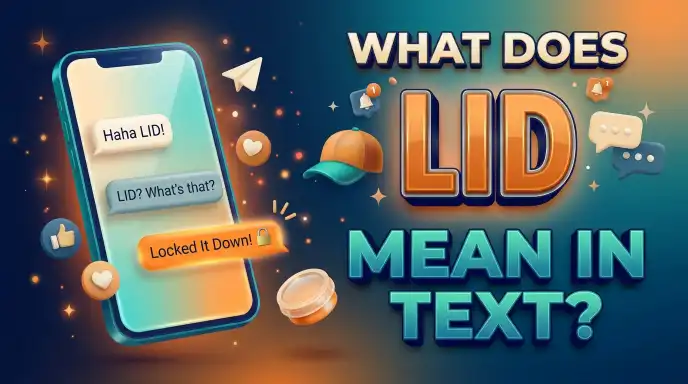
LID: An informal English word that can mean a hat, container cover, or an older slang expression depending on the context.
LID in text does not have one widely recognized texting meaning. It can refer to a cover, hat, or an older slang expression. Its intended meaning depends on the conversation and the context in which someone uses it.
You may come across LID in text messages, TikTok comments, Snapchat chats, Instagram posts, or online discussions. Unlike common abbreviations such as IDK and BRB, it is not a standard texting shortcut with one universally accepted definition.
Sometimes people use lid as an informal word for a hat or cap. In older slang, it also referred to a specific quantity of cannabis. In some regional English expressions, it can be used as a casual way to address someone.
Understanding the surrounding message is important because the same word can have different meanings. Let’s look at its definitions, examples, and uses so you can understand it without guessing.
LID Meaning in Text
The word LID can mean a cover, hat, or an older slang term for approximately one ounce of cannabis. It is an ordinary English word with several informal meanings rather than a widely recognized texting acronym.
When someone writes LID in a conversation, the meaning depends on what they are discussing. For example, a message about clothing may use it to describe a hat, while a conversation about household items may refer to a container cover.
It is also important to understand that writing the word in capital letters does not automatically make it an abbreviation. Some people type entire words in capital letters for emphasis, while others use uppercase letters because of their typing habits.
1. LID as an Ordinary English Word
The most familiar meaning of lid is the cover of something.
It is the part that closes or protects an opening, such as the top of a jar, bottle, box, or cooking pot.
For example:
- “Please close the lid of the bottle.”
- “I can’t find the lid for this container.”
- “Put the lid back on the box.”
In these sentences, the word has no special internet meaning. It simply describes an everyday object.
Someone might use it in a WhatsApp message or SMS because they are discussing something at home, at school, or at work.
2. LID as Slang for a Hat
Another informal meaning of lid is a hat or cap.
People sometimes use this expression when talking about clothing, fashion, or someone’s appearance. It can make a sentence sound more relaxed and conversational.
For example:
“That’s a cool lid!”
This means the speaker likes someone’s hat.
You might see this expression in conversations about baseball caps, streetwear, fashion accessories, or personal style.
Here are a few more examples:
- “I bought a new lid yesterday.”
- “Your lid looks great with that jacket.”
- “Where did you get that lid?”
- “I need a warmer lid for winter.”
This use is easy to understand when the conversation includes clothing or accessories.
3. LID as Older Cannabis Slang
LID also has a historical slang meaning connected to cannabis.
In older American slang, particularly during the 1960s and 1970s, the word was used to describe approximately one ounce of marijuana.
This meaning is different from the everyday definition of a container cover. It is mainly found in older books, films, slang dictionaries, and discussions about historical counterculture language.
For example:
“The character used the word lid while discussing old,fashioned cannabis slang.”
Someone who has never encountered this historical expression might find it confusing. That is why understanding the subject of the conversation is important.
It should not be assumed that someone discussing a lid in an ordinary message is referring to drugs.
4. LID as a Regional Expression
In some regional English conversations, particularly Liverpool or Scouse slang, lid can be used as an informal way to address someone.
It can sound similar to words such as “mate” or “lad.”
For example:
“Alright, lid? How are things?”
The speaker is using a familiar expression to greet someone.
However, this is not a universal way of speaking English. People from other regions may not recognize the expression or may understand it differently.
5. Is LID an Abbreviation?
LID is not a widely established abbreviation in everyday texting.
Many popular texting shortcuts represent complete phrases. For example:
- IDK means I Don’t Know.
- IDC means I Don’t Care.
- IMO means In My Opinion.
- BRB means Be Right Back.
- LOL means Laughing Out Loud.
LID does not have the same level of standard recognition.
If someone sends you only these three letters, the best approach is to consider the conversation before deciding what they mean.
6. What Does LID Mean in Everyday Conversations?
The meaning becomes easier to understand when you look at the topic.
Consider these situations:
| Message | Possible meaning |
| “Nice lid!” | A compliment about someone’s hat |
| “Find the lid.” | The cover of a container |
| “Put your lid on.” | A hat or helmet |
| “Alright, lid?” | A regional informal greeting |
| “An old slang term for a lid” | Historical cannabis,related meaning |
These examples show why one fixed definition cannot explain every use.
If you receive an unfamiliar message, read the complete sentence rather than focusing only on the three letters.
Where Do People Use LID?
LID can appear in different online spaces, but it does not have a special, universally accepted meaning on every social media platform.
People may use the word in comments, captions, private messages, or discussions about language. Its meaning usually comes from the topic rather than the platform.
LID on TikTok
On TikTok, you might encounter LID in video captions, comment sections, or educational content about unusual English words.
For example, a creator might share a video about old slang expressions. Someone watching the video could mention the historical meaning of the word in the comments.
It may also appear in fashion videos where people discuss hats, caps, or streetwear.
A comment such as “That lid looks amazing!” would most likely be talking about someone’s hat.
However, do not assume LID is a trending TikTok abbreviation just because you see it in a comment. The video and surrounding discussion provide better clues.
LID on Snapchat
Snapchat is commonly used for quick messages, pictures, and casual conversations.
Someone might use lid while discussing an everyday object or complimenting another person’s clothing.
For example:
A: I finally bought that new cap.
B: Nice lid! It looks good.
In this situation, the sender is simply complimenting the cap.
If someone sends LID without any explanation, you can ask what they mean rather than assuming it is a secret Snapchat abbreviation.
LID on Instagram
On Instagram, the word may appear in fashion comments, captions, reels, and language,related posts.
For example, someone sharing a picture of a baseball cap might receive a comment saying:
“Love that lid!”
The commenter is referring to the person’s hat.
It may also appear in posts explaining older expressions or regional vocabulary.
Instagram does not give LID one special meaning. Its interpretation depends on the content and conversation.
LID on WhatsApp
WhatsApp messages are often personal and informal.
People use ordinary English words, shortened expressions, and private shorthand when communicating with family members and friends.
For example:
A: Did you find the lid for the jar?
B: Yes, it was in the kitchen.
Here, the word refers to a physical object.
Someone could also use the expression in a regional greeting or while talking about clothing.
If the sender has a personal meaning for LID, asking for clarification is the easiest way to understand it.
LID in SMS Text Messages
Traditional SMS conversations also contain informal language and abbreviations.
However, LID is not a common standard SMS shortcut like IDK, OMG, or BRB.
You may see it in an ordinary sentence, an informal comment, or a conversation about older slang.
For example:
A: Where is the lid?
B: Next to the bottle.
The meaning is straightforward because the conversation is about household items.
The important thing is not to confuse every short word with an internet acronym.
10 Real Chat Examples of LID
The best way to understand an unfamiliar word is to see how people might use it in actual conversations.
Since LID has several meanings and is not a standard texting abbreviation, these examples cover different situations, including everyday objects, fashion, regional expressions, and historical slang.
Example 1: Talking About a Bottle
A: Did you put the lid back on the bottle?
B: Yes, I closed it properly.
A: Thanks, I didn’t want it to spill.
Meaning: Here, lid means the cover of a bottle.
Example 2: Complimenting Someone’s Hat
A: That’s a really cool lid!
B: Haha, thanks. I just bought it.
A: The color looks great on you.
Meaning: The sender is using lid as an informal word for a hat or cap.
Example 3: Talking About a Motorcycle Helmet
A: Don’t forget your lid before leaving.
B: It’s already in my backpack.
A: Good, ride safely!
Meaning: In this conversation, lid refers to a helmet.
Example 4: A Casual Regional Greeting
A: Alright, lid? How’s everything going?
B: Pretty good, mate. What about you?
A: All good here!
Meaning: This example uses a regional expression similar to mate or lad.
Example 5: Discussing Historical Slang
A: I found the word lid in an old slang dictionary.
B: Really? What did it mean?
A: It was once used for approximately an ounce of cannabis.
Meaning: The conversation refers to the historical slang definition.
Example 6: Talking About Cooking
A: Can you pass me the lid?
B: The big one or the small one?
A: The big one next to the cooking pot.
Meaning: Lid means the cover of a cooking pot.
Example 7: Discussing Fashion
A: Your new lid looks awesome.
B: Thanks! I wanted something different this time.
A: It definitely matches your style.
Meaning: The sender is complimenting someone’s headwear.
Example 8: Understanding an Instagram Comment
A: Someone commented “Nice lid” on my picture.
B: Were you wearing a cap?
A: Yes, I was.
B: Then they’re probably complimenting your hat.
Meaning: The word is being used as an informal expression for a cap.
Example 9: Asking About an Unfamiliar Expression
A: I heard someone say “Alright, lid?” today.
B: That’s a regional expression.
A: Does it mean hello?
B: Yes, it’s similar to saying “Alright, mate?”
Meaning: The speaker is explaining a regional greeting.
Example 10: Clearing Up a Misunderstanding
A: What did you mean by LID in your message?
B: I meant the cover of the storage box.
A: Oh, I thought it was some kind of abbreviation.
B: Haha, no. Just the regular word!
Meaning: The conversation shows why context is important when understanding unfamiliar words.
How to Reply When Someone Says LID
Your reply depends on the meaning and tone of the original message.
If someone compliments your hat, you can respond with a simple thank,you. If they use a regional expression, you can reply naturally. When the meaning is unclear, asking a question is perfectly fine.
Here are some responses for different situations.
Funny Replies to LID
If someone uses lid while talking about your hat or helmet, a little humor can make the conversation more interesting.
- “My lid deserves its own fashion show!”
- “It’s the crown of my outfit.”
- “Best lid in the neighborhood!”
- “My headwear has entered the chat.”
- “A good lid makes all the difference.”
- “It’s doing all the hard work today.”
- “Fashion starts from the top!”
- “This lid has main character energy.”
- “Not just a hat, it’s a whole personality.”
- “I guess my lid is famous now!”
Casual Replies to LID
Casual responses work well when you are chatting with someone you know.
- “Haha, thanks!”
- “Yeah, I like it too.”
- “Got it!”
- “That’s the one.”
- “Sure, no problem.”
- “Thanks for noticing.”
- “I’ll check it out.”
- “Sounds good.”
- “Appreciate it!”
- “No worries!”
Friendly Replies to LID
Choose a friendly response when you want to keep the conversation positive and welcoming.
- “Thanks, that’s really kind of you.”
- “Glad you noticed!”
- “Hope you’re having a great day.”
- “Haha, appreciate your comment!”
- “Good to hear from you.”
- “Thanks for the compliment!”
- “You’re always so thoughtful.”
- “That’s sweet of you to say.”
- “Glad you like it!”
- “Thanks for making me smile!”
Neutral Replies to LID
Sometimes you do not need a funny or enthusiastic response. A short, clear message is enough.
- “What do you mean?”
- “Could you explain that?”
- “Are you talking about a hat?”
- “Do you mean the cover?”
- “I didn’t understand that part.”
- “Can you give me some context?”
- “Thanks for clarifying.”
- “Which one are you referring to?”
- “Can you explain what LID means here?”
- “I’m not familiar with that expression.”
What If Someone Sends Only LID?
If someone sends just three letters without any other information, avoid assuming they mean something specific.
You could reply:
- “What does LID mean?”
- “Is that an abbreviation?”
- “Are you talking about a hat?”
- “Did you mean something else?”
A simple clarification is better than responding with an unrelated meaning.
Is LID Rude or Offensive?
Generally, LID is not considered a rude or offensive word. Its ordinary meanings are harmless, and using it to describe a hat, helmet, or container cover is perfectly normal.
However, some meanings may be unsuitable for particular conversations. The historical cannabis,related meaning, for example, may not be appropriate in every environment.
Understanding the context helps you decide if the word is suitable.
Is LID a Bad Word?
No, lid is not generally considered a swear word or an insult.
For example:
- “Close the lid” is a normal instruction.
- “Nice lid” is usually a compliment about someone’s hat.
- “Where’s your lid?” might refer to a helmet or cap.
None of these examples is inherently offensive.
The tone could change if someone uses the word sarcastically or tries to make fun of another person. As with many ordinary English words, the intention behind the message matters.
Is LID Safe to Use With Friends?
Yes, in ordinary conversations.
You can use it when talking about hats, containers, or other familiar subjects. If you are using a regional expression, make sure the other person understands it.
Not everyone is familiar with local slang, so an unfamiliar expression might create confusion.
Is LID Appropriate at School?
The ordinary meaning is suitable for school conversations.
For example, a student might ask:
“Can you pass me the lid for this bottle?”
There is nothing inappropriate about that sentence.
However, the older cannabis,related meaning is a different matter. Avoid introducing drug,related slang into school discussions unless it is part of an appropriate educational topic.
Is LID Appropriate at Work?
In professional communication, clear and direct language is usually the best choice.
You can use lid when referring to a physical object, such as a container or machine cover.
However, avoid unexplained regional expressions or historical slang in formal emails, presentations, and business messages.
For example:
Clear: “Please put the lid back on the container.”
Less clear: “Put the lid back, mate.”
The first sentence is more suitable for a professional environment.
Who Uses This Term?
LID does not belong to one specific age group or online community.
Its different meanings have appeared in everyday English, regional speech, older slang, and informal conversations. However, that does not mean everyone understands all its definitions.
Teenagers and Younger Users
Teenagers may encounter the word through social media videos, fashion discussions, or conversations with family members.
Some may understand it as another word for a hat, while others may only recognize its ordinary dictionary meaning.
There is no reliable evidence that LID is a widely used teenage texting abbreviation.
Gen Z Usage
Gen Z frequently uses abbreviations, short expressions, and informal language when communicating online.
However, LID is not an established mainstream Gen Z acronym like POV, TBH, or IMO.
A younger user might use the word while discussing fashion, repeating a regional expression, or making a joke.
It is better to understand its actual meaning than automatically classify it as a new internet trend.
Adults and Older Generations
Adults may recognize LID through older slang dictionaries, films, books, and regional conversations.
Some people may also remember its historical cannabis,related meaning.
Others simply use it as an ordinary word for a container cover or hat.
Common Online Platforms
The word may appear in several online spaces:
- TikTok: Educational videos, slang discussions, and fashion content.
- Snapchat: Personal messages and casual conversations.
- Instagram: Comments about clothing, hats, and accessories.
- WhatsApp: Everyday conversations and regional expressions.
- Reddit: Discussions about English vocabulary and historical slang.
- SMS: Regular messages involving household objects or clothing.
How Often Does LID Appear Online?
LID is not known as a particularly popular modern texting abbreviation.
Its use depends on the subject, region, and people involved in the conversation.
For example, someone discussing baseball caps may use it naturally, while someone chatting about everyday activities might never use it.
This is why it is important to distinguish between a word that exists in slang and an abbreviation that is genuinely popular in modern messaging.
Origin of the Term LID
The word lid has a much longer history than modern texting and social media. It existed in English long before people started communicating through smartphones, messaging apps, and online platforms.
Its different meanings developed over time through everyday language, regional expressions, and older slang.
Where Did the Word LID Come From?
The English word lid comes from Old English hlid, which referred to a cover or something that closes an opening.
Over time, the spelling and pronunciation changed into the familiar word used today.
People commonly use it when talking about the cover of a jar, bottle, box, or cooking pot.
For example:
“Please put the lid back on the container.”
This is the traditional meaning and remains widely understood.
How Did LID Become Slang for a Hat?
The word also developed an informal meaning related to hats and caps.
People sometimes use lid as a casual alternative to hat. This expression can make conversations about clothing sound more relaxed.
For example:
“That’s a nice lid you’ve got there!”
The speaker is complimenting someone’s hat.
This usage is especially understandable in informal conversations about fashion, accessories, and personal style.
The Historical Cannabis,Related Meaning
One of the more unusual meanings of LID comes from older American slang.
During the 1960s and 1970s, the word was used to describe approximately one ounce of marijuana.
It became associated with the counterculture language of that period and can still appear in historical discussions, older films, and slang dictionaries.
This meaning is not the same as the ordinary definition of a container cover.
It is also important not to assume that someone using the word today is referring to cannabis. The subject of the conversation provides the necessary context.
Regional Influence on LID
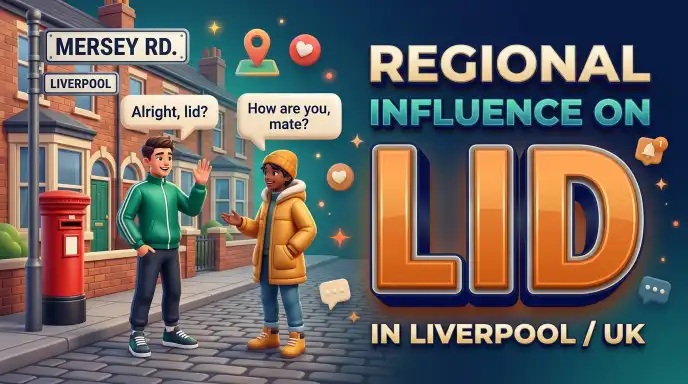
In some regional English expressions, especially Liverpool or Scouse slang, lid can be used as a familiar way to address someone.
It is similar to expressions such as “mate” or “lad.”
For example:
“Alright, lid? Haven’t seen you in ages!”
This is a casual greeting rather than a texting abbreviation.
However, regional expressions are not understood everywhere. Someone unfamiliar with Scouse vocabulary might find the sentence confusing.
Did LID Originate on Social Media?
No. The word existed long before TikTok, Instagram, Snapchat, and WhatsApp became popular.
Social media may help people discover unfamiliar words, but it did not create the ordinary English word or its older slang meanings.
People sometimes encounter LID online and assume it is a newly invented acronym. In reality, its history goes back much further.
The exact development of every informal use is not always clear, so it is best to distinguish established dictionary meanings from personal or community,specific expressions.
LID vs. IDK, IDC, IMO, and BRB
People sometimes confuse unfamiliar short words with common internet abbreviations.
However, LID is different from expressions such as IDK, IDC, IMO, and BRB.
Those abbreviations represent complete phrases and have widely understood meanings in digital conversations.
The following table explains the differences.
| Term | Meaning | Type | Usage | Popularity |
| LID | Cover, hat, or older cannabis slang | Word / slang | Context,specific | Limited as texting slang |
| IDK | I Don’t Know | Abbreviation | Expressing uncertainty | Very common |
| IDC | I Don’t Care | Abbreviation | Showing indifference | Very common |
| IMO | In My Opinion | Abbreviation | Sharing opinions | Common |
| BRB | Be Right Back | Abbreviation | Temporarily leaving a chat | Common |
LID vs. IDK
IDK stands for “I Don’t Know.”
It is one of the most recognizable texting abbreviations. People use it when they do not know something or cannot provide an answer.
Example:
A: What time does the store close?
B: IDK, maybe around 9 PM.
LID does not communicate uncertainty. It has different meanings depending on the subject.
LID vs. IDC
IDC means “I Don’t Care.”
People use it when something does not matter to them or when they do not have a particular preference.
Example:
A: Should we watch a comedy or an action movie?
B: IDC, both sound good.
Unlike IDC, LID is not a common abbreviation for expressing feelings or opinions.
LID vs. IMO
IMO stands for “In My Opinion.”
It is used when someone wants to share a personal viewpoint.
Example:
A: Which design looks better?
B: IMO, the second one is more attractive.
LID does not introduce an opinion. It is an ordinary word or context,specific slang expression.
LID vs. BRB
BRB means “Be Right Back.”
It is commonly used when someone needs to leave a conversation temporarily.
Example:
A: Are you still there?
B: BRB, someone is calling me.
LID does not have this function in standard messaging.
Real,World Usage Example
Imagine that you are chatting with someone who recently bought a new baseball cap.
You send them a picture of your outfit, and they respond:
“Nice lid! Where did you get it?”
At first, you might wonder if they are using an unfamiliar internet expression.
However, the meaning becomes clear when you consider the picture. They are simply complimenting your hat.
You could reply:
“Thanks! I bought it from a local clothing store.”
Now consider another situation.
You are watching an older movie set in the 1960s. One character uses the word lid while discussing historical cannabis slang.
In this case, the meaning is completely different.
These situations demonstrate why context matters. The same word can have different interpretations depending on the subject, location, and period in which it is used.
When you encounter an unfamiliar expression, look at the complete conversation before deciding what the sender means.
Frequently Asked Questions
1. What Does LID Mean in Text Messages?
LID can mean a container cover, hat, or an older slang term for approximately one ounce of cannabis. It does not have one widely accepted modern texting meaning.
2. What Does LID Mean on TikTok?
On TikTok, LID may refer to a hat, older slang, or a context,specific expression. The video and surrounding comments help explain its intended meaning.
3. Is LID Slang?
Yes, lid has several documented slang meanings. However, it is also an ordinary English word rather than a widely recognized texting acronym.
4. Is LID Rude or Offensive?
Generally, no. It is harmless when referring to a hat, helmet, or container cover. Its appropriateness depends on the context.
5. How Should You Reply to LID?
If someone is complimenting your hat, you can say “Thanks!” If you do not understand the message, ask “What do you mean by LID?”
6. Does LID Mean a Hat?
Yes. In informal English, lid can refer to a hat or cap. For example, “I like your lid” means “I like your hat.”
7. Does LID Have a Drug,Related Meaning?
Yes. Historically, LID was used as slang for approximately one ounce of marijuana. This is an older expression rather than a standard modern texting abbreviation.
8. Is LID a Gen Z Slang Word?
LID is not established as a mainstream Gen Z texting expression. Younger users may encounter it through fashion discussions, regional language, or older slang.
9. Can I Use LID in Professional Messages?
You can use it when referring to an ordinary object, such as a container lid. However, standard words are usually clearer than unfamiliar slang in professional communication.
10. Does LID Mean the Same Thing on Snapchat and Instagram?
There is no universally recognized Snapchat or Instagram meaning for LID. Its interpretation depends on the message, post, and conversation.
Conclusion
LID is an interesting English word with several meanings. It can refer to the cover of a container, an informal word for a hat, or an older slang expression for approximately one ounce of cannabis. In some regional conversations, it can also be used as a friendly way to address someone.
Unlike common texting abbreviations such as IDK, IDC, IMO, and BRB, LID is not a widely recognized modern messaging shortcut.
If you encounter it on TikTok, Snapchat, Instagram, WhatsApp, or in an SMS message, pay attention to the surrounding conversation. The topic usually provides the best clue.
When the meaning is unclear, simply ask the sender to explain. Understanding the context is always better than guessing.
Read More About !

Michael Brooks is a language writer at SlangPath with 7+ years of experience creating simple, practical content on English slang and everyday expressions.