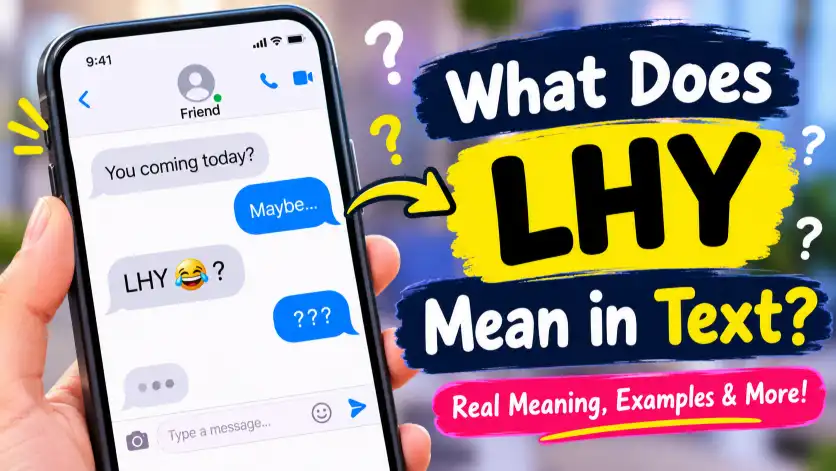
LHY is an uncommon texting abbreviation that does not have one universally accepted meaning. Some informal sources associate it with expressions such as “I Hate You,” but its intended meaning can change depending on the person, conversation, and situation.
You may come across LHY while chatting on Snapchat, scrolling through TikTok comments, reading Instagram messages, or talking with friends on WhatsApp. When someone uses unfamiliar letters instead of a complete sentence, it is natural to wonder what they are trying to say.
One possible explanation is that LHY is personal shorthand used between friends. It may also be a typing mistake for IHY, which commonly means “I Hate You.” The letters I and L can look similar in certain fonts, making this confusion possible.
However, it is important not to assume that every person using LHY intends the same phrase. Understanding the conversation, the relationship between the people, and the tone of the message can help you interpret it correctly.
What Does LHY Mean in Text?
LHY is an uncommon abbreviation that does not have a confirmed, widely accepted definition in everyday texting. Some informal online references connect it with the phrase “I Hate You,” while other interpretations may come from personal texting habits or private conversations.
When people use abbreviations in messages, they often shorten longer expressions to save time. Popular examples include LOL (Laughing Out Loud), IDK (I Don’t Know), and BRB (Be Right Back). These expressions have become familiar because millions of people use them in everyday digital communication.
LHY is different because it is not widely recognized as a standard texting abbreviation. Someone might use it with a particular meaning that their friends understand, but another person could interpret the same letters differently.
For example, imagine that your friend sends you this message:
Person A: You finished the whole packet of chips without asking me!
Person B: LHY 😂
Person A: You could have at least saved me some!
Here, the conversation suggests playful frustration. The sender might be joking about something that happened between friends. The laughing emoji also makes the message seem less serious.
However, this example does not establish an official meaning for LHY. It simply demonstrates why context is important when interpreting uncommon expressions.
Is LHY an Acronym, Abbreviation, or Slang?
LHY can be described as an abbreviation when someone uses its letters as a shortened form of a longer expression. However, if it is technically an acronym depends on the intended words behind those letters.
People sometimes use the terms abbreviation, acronym, and slang interchangeably, but they have different meanings.
An abbreviation is a shortened version of a word or phrase. For example, ASAP means “As Soon As Possible.” It allows someone to communicate an idea without writing every word.
An acronym is generally formed from the first letters of several words and used as a shortened expression. For example, NASA is formed from the initial letters of its full organizational name.
Slang refers to informal words and expressions commonly used by particular communities, age groups, or social circles. Internet slang includes expressions such as LOL, FR, TBH, and IMO.
LHY does not have the same established position as these familiar expressions. It may function as personal shorthand, but there is not enough reliable evidence to classify it as widely recognized internet slang.
This distinction matters because seeing an abbreviation online does not automatically make it a popular slang term. Some combinations of letters are used by only a small number of people, while others become recognizable across different platforms.
Does LHY Always Mean “I Hate You”?
No. Although some informal references associate LHY with “I Hate You,” this interpretation is not confirmed as its universal meaning.
The phrase itself can communicate different emotions depending on how someone uses it. Close friends might say something similar jokingly after a small disagreement, while someone in a serious argument might use it to express genuine frustration.
Consider these situations:
Playful situation:
Person A: You changed my phone wallpaper again!
Person B: IHY 😂
Person A: You’re so annoying!
In this conversation, the expression is likely intended as teasing.
Serious situation:
Person A: I cannot believe you lied to me.
Person B: IHY.
Here, the same expression would sound much more negative because the conversation involves an actual disagreement.
If someone writes LHY instead of IHY, it could be a typing mistake. However, you should not automatically interpret it that way without considering the surrounding messages.
Could LHY Be a Typing Mistake for IHY?
Yes, this is one possible explanation, particularly when the conversation seems to involve the phrase “I Hate You.”
On some keyboards and in certain fonts, the lowercase letter L and uppercase letter I look almost identical. This can make it easy to confuse the two characters when typing or reading a short message.
For example, someone might intend to write IHY but accidentally enter LHY.
Imagine this conversation:
Person A: I accidentally deleted your saved game!
Person B: IHY 😭
Person A: Wait, are you serious?
Person B: I’m joking, but seriously, why did you delete it?
If the second person had typed LHY instead, the intended expression might still have been IHY.
There is another possibility: the sender may have used voice typing, autocorrect, or a keyboard that replaced the intended letters.
Still, not every unusual abbreviation is a spelling mistake. Some people create their own shortened expressions and use them regularly with friends.
If you are uncertain, asking the sender if they meant IHY is more reliable than guessing.
What Does LHY Mean in Different Conversations?
The meaning of an unfamiliar abbreviation becomes easier to understand when you look at the complete conversation instead of focusing only on the letters.
For example, if someone sends LHY after you make a funny mistake, the message might be intended as a joke. If it appears during an argument, it could carry a more negative tone.
Here are a few situations that show why context matters.
1. Between close friends
Friends often tease each other and use expressions that outsiders might not understand. LHY could be personal shorthand that has a special meaning within their friendship.
2. During an argument
If someone sends LHY while discussing a disagreement, do not immediately assume they are joking. Look at their other messages and consider if they sound upset.
3. In a social media comment
A stranger might use LHY under a TikTok video or Instagram post. Since you may not know their communication style, the intended meaning can be difficult to identify.
4. In a private group chat
A group of friends may develop its own abbreviations over time. An expression that seems confusing to other people might be completely normal within that group.
The important point is that LHY does not have one dependable interpretation for every situation. Its meaning should be understood through the sender’s intention rather than an unsupported assumption.
How Can You Tell What Someone Means by LHY?
If you receive LHY and cannot understand it, there are a few practical ways to interpret the message.
First, read the message that came immediately before it. The previous sentence may provide clues about the subject and emotional tone.
Second, pay attention to emojis. A laughing face, crying emoji, or heart can change how a message feels, although emojis alone cannot confirm the intended meaning.
Third, consider your relationship with the sender. A close friend may use private shorthand that you already understand, while a stranger may be using an expression unfamiliar to you.
Finally, ask a direct question if the meaning remains unclear.
For example:
You: Wait, what does LHY mean?
Sender: I meant IHY. It was a typo.
You: Oh, that makes sense now!
There is nothing unusual about asking someone to explain an abbreviation. Clear communication is more useful than pretending to understand a message.
Where Do People Use LHY?
Texting abbreviations appear in many places, including social media comments, private messages, online gaming chats, and regular mobile conversations. Different platforms encourage different communication styles, but an abbreviation does not automatically receive a new meaning simply because someone uses it on another app.
LHY may appear in different online conversations, although there is no reliable evidence that it is a popular or platform,specific expression. Understanding where it appears can help you consider the situation in which someone used it.
LHY on TikTok
TikTok has become a popular place for discovering internet expressions, short phrases, memes, and informal communication styles. People use the platform to share videos, react to content, and communicate through comments and direct messages.
Because TikTok comments are often short, users sometimes write abbreviations instead of complete sentences. This makes unfamiliar combinations of letters more noticeable, especially when they appear under a popular video.
You might encounter LHY in a funny video comment, a reply between friends, or a private conversation. However, it does not have a confirmed TikTok,specific meaning.
For example:
User A: I watched this video five times and still can’t stop laughing.
User B: LHY 😂
User A: You know exactly why it’s funny!
In this situation, the abbreviation might be an inside joke or personal shorthand between the users. The conversation gives some information about the tone, but it does not prove what the letters stand for.
If you see LHY on TikTok, consider the video, the other comments, and the relationship between the users. Avoid assuming that every person uses the expression in the same way.
LHY on Snapchat
Snapchat is widely used for quick conversations, photo sharing, private messages, and group chats. Its informal communication style makes it common for users to shorten words and use emojis when talking with friends.
You might see LHY in a Snapchat message after sharing a picture, making a joke, or discussing something that happened during the day.
For example:
Person A: You still have that embarrassing picture of me?
Person B: Of course 😭
Person A: Delete it right now!
Person B: LHY 😂
This conversation sounds playful, particularly because the two people appear comfortable teasing each other.
However, Snapchat does not assign an official meaning to LHY. It remains an uncommon expression whose interpretation depends on the sender.
If a friend regularly uses unusual abbreviations, you may need to ask what they mean once before understanding their future messages.
LHY on Instagram
Instagram conversations take place through direct messages, story replies, comments, and group chats. Users often communicate casually, particularly when interacting with friends or responding to funny posts.
An unfamiliar abbreviation such as LHY might appear in a comment or DM. However, there is no established Instagram,specific definition.
For example:
Person A: I finally posted the pictures from our trip!
Person B: These are actually beautiful.
Person A: Thank you! I was waiting for the right time.
Person B: LHY 😂
The sender’s intended meaning is not completely clear from these messages. It could be an expression understood between the two people or a typo.
When reading Instagram messages, remember that comments can lack the context of a full conversation. A short reply may have a meaning that only the original poster and their friends understand.
LHY on WhatsApp
WhatsApp is commonly used for personal conversations, family groups, school discussions, and everyday communication. People often send short messages because they want to share information quickly.
Some users develop their own abbreviations while chatting with friends. These shortcuts can become familiar within a group even if other people have never seen them.
For example:
Person A: You finished all the snacks before everyone arrived.
Person B: LHY 😂
Person A: Next time, at least leave something for us!
The conversation suggests that the sender is teasing someone about eating the snacks. Still, the abbreviation does not have a confirmed WhatsApp meaning.
In a family or school group, it is usually better to use familiar expressions that everyone can understand. Uncommon shortcuts can easily create confusion, especially when several people are participating in the conversation.
LHY in SMS Text Messages
SMS is one of the traditional ways people communicate through mobile phones. Although messaging apps are now widely used, regular text messages remain useful for personal and practical communication.
People sometimes shorten their messages to save time. Common examples include LOL, IDK, BTW, and BRB.
LHY is much less familiar than these expressions. Someone might use it as personal shorthand, or it could appear because of a typing mistake.
For example:
Person A: Are you still upset about yesterday?
Person B: No, everything is fine.
Person A: Okay, I just wanted to make sure.
Person B: LHY
If you receive a message like this, do not assume you know what the sender intends. The most helpful response is to ask for clarification.
Remember: LHY does not have a verified, universal meaning on TikTok, Snapchat, Instagram, WhatsApp, or SMS. The sender’s intended meaning matters more than the platform.
10 Real Chat Examples of LHY
The easiest way to understand an unfamiliar texting abbreviation is to see how it might appear in everyday conversations. LHY is not a standardized expression, so the following examples show possible situations where someone might encounter it.
These conversations are illustrative. They do not establish one official meaning for the abbreviation. The surrounding messages help explain the possible tone and intention.
1. A Playful Conversation Between Friends
Friends sometimes use unusual abbreviations when teasing each other about small mistakes or funny situations.
Person A: You ate the chocolate I was saving for later!
Person B: LHY 😂
Person A: I knew you were going to do that!
Person B: It was just sitting there. I couldn’t resist!
In this conversation, the response appears playful rather than serious. The laughing emoji suggests that the sender is joking about the situation.
2. Talking About an Embarrassing Mistake
People often share embarrassing moments with friends. An unusual abbreviation might appear as part of a joking response.
Person A: I waved at someone today, but they weren’t waving at me.
Person B: No way 😭
Person A: I wanted to disappear immediately.
Person B: LHY, that’s actually hilarious!
Here, the conversation has a humorous tone. The sender appears to be reacting to an embarrassing situation rather than starting an argument.
3. A Conversation About Gaming
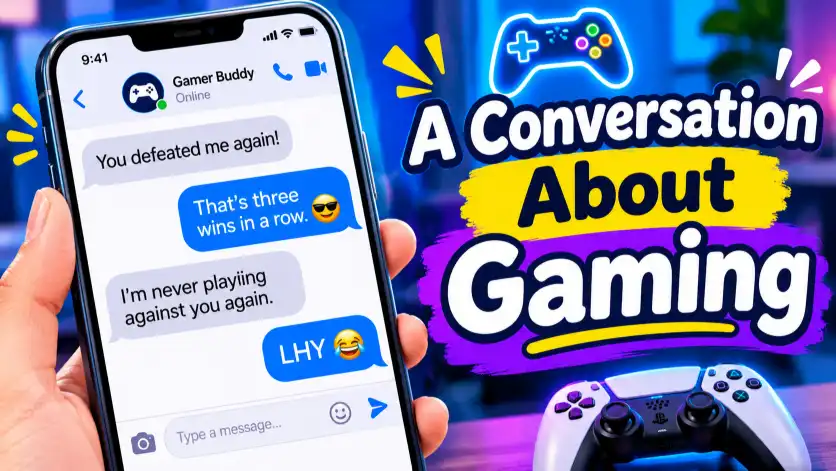
Online gaming conversations often include short replies, reactions, and informal expressions. Players may also develop their own shorthand while communicating.
Person A: You defeated me again!
Person B: That’s three wins in a row.
Person A: I’m never playing against you again.
Person B: LHY 😂
The exchange suggests friendly competition. The sender may be using personal shorthand as part of the joke.
4. A Snapchat Conversation
Snapchat messages are often casual and involve jokes between friends. A short abbreviation may appear when someone reacts to a picture or message.
Person A: Look at the picture I accidentally sent yesterday.
Person B: I still can’t believe you posted that!
Person A: Please don’t show anyone.
Person B: LHY 😭
The conversation sounds like friendly teasing. The crying emoji adds a humorous reaction, although the exact expansion of LHY remains uncertain.
5. Talking About a Surprise
Sometimes friends accidentally reveal information that was supposed to remain secret.
Person A: I think I ruined your birthday surprise.
Person B: What happened?
Person A: I mentioned the party in front of everyone.
Person B: LHY, you were supposed to keep it secret!
In this example, the sender appears frustrated about the mistake. The meaning should still be understood from the complete conversation rather than the abbreviation alone.
6. A Friendly Instagram DM
Instagram direct messages are commonly used to share pictures, discuss posts, and maintain friendships.
Person A: Did you see my new pictures?
Person B: Yes! They look amazing.
Person A: I wasn’t sure if to post them.
Person B: LHY 😂
The exchange is friendly, but the abbreviation is not clear enough to establish a definite meaning. It may be personal shorthand between the users.
7. A Conversation About Food
Food is a common subject of playful arguments between friends and family members.
Person A: You ordered pizza without asking me?
Person B: I thought you were busy.
Person A: You know that’s my favorite flavor!
Person B: LHY 😂
The conversation suggests that both people are joking about the situation. The sender may be using an expression familiar within their friendship.
8. A Conversation About Being Late
Friends sometimes complain when someone repeatedly arrives late.
Person A: Where are you? Everyone is waiting.
Person B: I’m almost there.
Person A: You said that twenty minutes ago!
Person B: LHY 😭
The exchange has a teasing tone, but it is not possible to identify the exact meaning of LHY from these letters alone.
9. A Possible Typing Mistake
Sometimes an unfamiliar abbreviation is simply a typing error. This example shows how someone might clarify what they originally intended.
Person A: What does LHY mean?
Person B: Sorry, I meant IHY.
Person A: Oh, you scared me for a second!
Person B: My keyboard made a mistake 😂
Here, the sender confirms that they intended to type IHY, which commonly means “I Hate You.”
10. Asking Someone to Explain LHY
Not everyone understands the same internet expressions. Asking questions can prevent confusion during online conversations.
Person A: LHY 😂
Person B: Wait, what does that mean?
Person A: It’s something I use with my friends.
Person B: Oh, I haven’t seen that abbreviation before.
This is a realistic situation because people frequently encounter unfamiliar shorthand online. There is nothing wrong with asking someone to explain their message.
How to Reply When Someone Says LHY
Receiving an unfamiliar abbreviation can leave you wondering if you should respond with a joke, ask a question, or simply ignore it.
With LHY, the best response depends on the sender’s intention. Since it does not have one widely accepted meaning, understanding the conversation should come before choosing your reply.
If a close friend sends it during a funny conversation, a playful response might work. If someone sends it during a serious discussion, it is better to ask what they mean.
Here are several natural ways to respond.
Funny Replies to LHY
If you are chatting with a close friend and the conversation is already humorous, you can use a funny reply to keep things entertaining.
These responses work well when both people understand that they are joking.
- “What did I do this time? 😭”
- “Okay, that’s dramatic!”
- “I’ll pretend I didn’t see that 😂”
- “You need to relax!”
- “Not you starting again!”
- “Should I be worried?”
- “And what exactly did I do?”
- “I’m innocent, I promise!”
- “Why am I always the problem? 😂”
- “Here we go again!”
Example conversation:
Person A: LHY 😂
Person B: What did I do this time?
Person A: You know exactly what you did!
Person B: I think I need a lawyer 😭
A humorous response can make a casual conversation more enjoyable. However, avoid joking if the sender appears genuinely upset.
Casual Replies to LHY
Sometimes you do not need a funny or emotional response. A simple message can keep the conversation moving without making the situation awkward.
Here are some casual replies:
- “Haha, okay!”
- “Wait, really?”
- “What’s that supposed to mean?”
- “Alright, got you.”
- “Lol, explain.”
- “Okay, I hear you.”
- “What’s going on?”
- “Fair enough!”
- “I see what you mean.”
- “Tell me more.”
Example conversation:
Person A: LHY.
Person B: Haha, okay! What’s that supposed to mean?
Person A: I’ll explain later.
Person B: Alright, now I’m curious.
These responses are useful when you want to stay relaxed and friendly without making assumptions about the abbreviation.
Friendly Replies to LHY
If the message comes from someone you know well, you can respond warmly. Friendly replies are especially useful when the conversation involves sharing jokes, discussing daily activities, or catching up.
Try these responses:
- “Haha, you’re funny!”
- “You always make me laugh.”
- “What’s going on?”
- “Tell me what you mean.”
- “I’m listening 😂”
- “You’re too much!”
- “You never change!”
- “I know you’re joking.”
- “That’s why I like talking to you.”
- “You made me smile!”
Example conversation:
Person A: LHY 😂
Person B: Haha, you’re too much!
Person A: I knew you’d understand.
Person B: Of course, but explain what you mean!
A friendly response helps maintain a comfortable conversation while leaving room for clarification.
Neutral Replies to LHY
If you receive LHY from someone you do not know very well, neutral replies are usually the better choice.
You do not need to guess if the sender is joking, annoyed, or expressing something else. Simply ask them to explain.
Here are some neutral responses:
- “What does LHY mean?”
- “Can you explain that?”
- “I’m not familiar with this abbreviation.”
- “Did you mean something else?”
- “Could you clarify your message?”
- “I’m not sure I understand.”
- “What are you trying to say?”
- “Is that a typo?”
- “Can you write that in full?”
- “I haven’t heard that expression before.”
Example conversation:
Person A: LHY.
Person B: I’m not familiar with that abbreviation. What does it mean?
Person A: Sorry, I meant something else.
Person B: No problem!
This approach is particularly useful when communicating with new friends, classmates, colleagues, or people you have only recently met.
What If Someone Uses LHY During an Argument?
A serious conversation requires a different approach from a funny exchange.
If someone sends LHY after a disagreement, avoid immediately replying with jokes or assuming that they are insulting you.
Instead, try to understand their feelings.
For example:
Person A: I didn’t like the way you spoke to me earlier.
Person B: LHY.
Person A: Are you upset with me, or did you mean something else?
This type of response gives the other person an opportunity to explain their intention.
If the sender confirms that they meant something hurtful, you can decide how to respond based on the situation. You do not have to accept disrespect simply because someone uses an abbreviation.
Is LHY Rude or Offensive?
LHY is not automatically rude or offensive. Since it does not have one universally accepted definition, its tone depends on what the sender intends and how the other person understands it.
Some informal references associate LHY with “I Hate You.” If someone uses it with this intended meaning, it may sound negative, especially when the conversation involves a disagreement.
However, expressions involving strong words are sometimes used jokingly between close friends. For example, someone might jokingly say “I hate you” after a friend eats their favorite snack or wins a game.
The relationship between the people, the situation, and the overall tone all matter.
Is LHY Considered a Bad Word?
No, the three letters themselves are not a swear word or an inherently offensive expression.
However, if the sender intends LHY to communicate “I Hate You,” the underlying phrase can be hurtful depending on the situation.
Consider the difference:
Playful conversation:
Person A: You beat me at the game again!
Person B: IHY 😂
The sender is probably teasing their friend about losing.
Unfriendly conversation:
Person A: Why did you share my private messages?
Person B: IHY.
In this situation, the expression could sound genuinely hostile.
The important distinction is between the letters themselves and the meaning a person intends to communicate.
Is LHY Safe to Use With Friends?
Using unfamiliar abbreviations with friends is generally fine when everyone understands the intended meaning.
However, LHY can cause confusion because it is not a widely recognized texting expression.
One friend might interpret it as a joke, while another might believe that the sender is genuinely angry.
If you want to avoid misunderstandings, use a familiar expression or explain what you mean.
For example, if you are joking about a friend’s mistake, adding a laughing emoji or writing a complete sentence can make your intention clearer.
Is LHY Appropriate at School?
It is better to avoid using LHY in school assignments, classroom presentations, or formal communication with teachers.
There are two main reasons.
First, teachers and classmates may not understand the abbreviation. Using unclear shorthand can make your message difficult to interpret.
Second, if someone understands it as “I Hate You,” they might consider the expression disrespectful, even if you intended it as a joke.
For casual conversations between friends, the rules may be different. However, using clear and respectful language is always a good choice.
Can You Use LHY at Work?
LHY is not recommended for professional communication.
Workplace conversations often involve instructions, deadlines, meetings, customer requests, and important decisions. Unfamiliar abbreviations can create unnecessary confusion.
For example, sending an unclear three,letter expression to a manager or colleague may make your message seem unprofessional.
Instead, write the complete phrase you intend to communicate.
It is also important to remember that jokes do not always translate well into workplace conversations. An expression that seems harmless between close friends may sound inappropriate to someone who does not know you personally.
A useful rule: Keep unfamiliar abbreviations for casual conversations where everyone understands them. Use clear, respectful language in school, work, and formal situations.
Who Uses LHY?
LHY is an uncommon texting abbreviation, so it is difficult to identify a particular age group or online community that uses it regularly. Unlike familiar expressions such as LOL, IDK, and TBH, it does not have widespread recognition across social media.
However, people who regularly communicate through messaging apps may encounter unusual abbreviations like LHY in comments, private messages, and group conversations.
Some users develop their own shortened expressions to make conversations quicker. These expressions may become familiar among friends even when other internet users have never heard of them.
Do Teenagers and Young Adults Use LHY?
Teenagers and young adults frequently use shortened expressions when communicating online. They often prefer quick messages, emojis, and informal language when chatting with friends.
Some individuals may use LHY as personal shorthand, particularly when communicating with people who already understand their texting habits.
However, there is no reliable evidence showing that LHY is especially popular among teenagers. Seeing an abbreviation in a young person’s message does not automatically make it a popular youth slang expression.
Many younger users are more familiar with established abbreviations such as:
- LOL – Laughing Out Loud
- FR – For Real
- TBH – To Be Honest
- IDK – I Don’t Know
- NGL – Not Gonna Lie
- IMO – In My Opinion
These expressions have recognizable meanings and appear in many everyday online conversations.
Is LHY Common Among Gen Z?
Gen Z is familiar with internet slang, shortened phrases, and social media expressions. Many members of this generation use abbreviations to make conversations faster and more casual.
However, not every unusual combination of letters is a Gen Z slang term.
LHY is not a widely established Gen Z expression. Some individuals might use it in private chats, but there is no strong evidence that it is a mainstream part of Gen Z vocabulary.
For example, a group of friends might create a shortcut for a phrase they regularly use. Everyone in that group could understand it, while people outside the group might find it confusing.
This is one reason why some abbreviations appear in private conversations without becoming popular internet slang.
Which Online Platforms Might Have LHY?
People may encounter LHY in different digital spaces, particularly where informal conversations are common.
- TikTok: It might appear in video comments, replies, or private messages.
- Snapchat: Friends may use it in direct conversations or group chats.
- Instagram: It could appear in DMs, story replies, or comment sections.
- WhatsApp: Someone might use it while chatting with friends or participating in a group conversation.
- SMS: It may appear in regular mobile text messages as personal shorthand.
These platforms support informal communication, but none gives LHY an official meaning.
How Popular Is LHY Online?
LHY appears to be much less recognizable than common texting abbreviations.
There is no dependable usage data establishing its popularity or showing how frequently people use it across different platforms.
Some users may recognize it because they have seen it in a private conversation. Others may encounter it for the first time and search online to understand what the sender intended.
For this reason, it is more accurate to describe LHY as an uncommon abbreviation rather than a trending internet expression.
Origin of LHY
The exact origin of LHY as a texting expression is unclear. There is no well,established historical record identifying when it first appeared, who introduced it, or which online community originally used it.
Like many unusual combinations of letters, it may have developed through informal digital communication.
People have always created shortcuts to communicate more quickly. As mobile phones, messaging apps, and social media became popular, these shortcuts became an important part of everyday online language.
Did LHY Come From Early Text Messaging?
Early mobile phones encouraged people to write shorter messages. Traditional SMS communication had character limits, so users often shortened common phrases to save time.
This helped popularize abbreviations such as LOL, BRB, and IDK.
Over time, people began creating their own shortcuts for everyday expressions. Some became widely recognized, while others remained limited to small groups of friends.
LHY could be an example of informal shorthand, although its original development has not been established.
How Has Internet Culture Influenced LHY?
Internet culture constantly introduces new words, abbreviations, and expressions.
People create shortened phrases for social media comments, gaming conversations, private messages, and online communities. When other users find an expression useful or entertaining, they may start using it too.
For example, a phrase that begins as an inside joke between friends might eventually become familiar within a larger online community.
However, not every abbreviation becomes popular. Some expressions remain inside jokes, while others appear in a few online conversations before disappearing.
LHY may be used in this way, but there is not enough reliable evidence to connect it to a particular internet trend or community.
Is There a Confirmed First Use of LHY?
No widely verified first use has been established.
Without reliable historical records, it would be misleading to claim that LHY originated on TikTok, Snapchat, Instagram, or another specific platform.
It is also possible that different people developed the same combination of letters independently.
This happens frequently with internet shorthand because users often create abbreviations based on phrases they commonly use.
Why Does LHY Have Different Possible Meanings?
There are several reasons why people may interpret LHY differently.
Personal texting habits: Friends sometimes create their own shortcuts that only make sense within their group.
Typing mistakes: LHY may occasionally appear when someone intends to type IHY.
Different interpretations: People may assign different words to the same letters without agreeing on one definition.
Limited usage: An uncommon abbreviation is less likely to have a consistent meaning across different communities.
Online confusion: Different websites and social media users may suggest meanings without providing reliable evidence.
This is why it is important to avoid treating every online definition as an established fact.
LHY vs. IDK, IDC, IMO, and BRB
Not all texting abbreviations are equally popular or easy to understand. Some have clear meanings that most regular internet users recognize, while others depend heavily on personal context.
LHY belongs to the less familiar category because its intended meaning is uncertain.
The following comparison explains how it differs from four widely recognized texting abbreviations.
| Term | Meaning | Type | Usage | Popularity |
| LHY | No universally accepted meaning | Uncommon abbreviation | Context,dependent | Low |
| IDK | I Don’t Know | Abbreviation | Expressing uncertainty | High |
| IDC | I Don’t Care | Abbreviation | Expressing indifference | High |
| IMO | In My Opinion | Abbreviation | Sharing an opinion | High |
| BRB | Be Right Back | Abbreviation | Temporarily leaving a conversation | High |
LHY vs. IDK
IDK stands for “I Don’t Know.” It is one of the most familiar texting abbreviations and is used when someone does not have an answer or is unsure about something.
For example:
Person A: Do you know when the store closes?
Person B: IDK. You should check online.
Unlike LHY, IDK has a clear and widely recognized meaning. Most people can understand it without needing additional context.
LHY vs. IDC
IDC means “I Don’t Care.” People use it when expressing indifference or showing that they do not have a strong preference.
For example:
Person A: Should we watch a comedy or an action movie?
Person B: IDC, you can choose.
The expression can sound relaxed between friends, but it may also seem dismissive in a serious conversation.
LHY is different because its intended meaning is not universally established.
LHY vs. IMO
IMO stands for “In My Opinion.” It is commonly used when someone wants to share a personal viewpoint without presenting it as a fact.
For example:
Person A: Which phone do you think has the best camera?
Person B: IMO, this model takes better pictures.
IMO is particularly useful in online discussions, reviews, and casual debates.
Unlike LHY, its meaning is familiar across many social media platforms.
LHY vs. BRB
BRB means “Be Right Back.” It is used when someone needs to leave a conversation temporarily but plans to return.
For example:
Person A: Are you still playing?
Person B: BRB, I need to answer the door.
This abbreviation has a practical purpose and is commonly understood in messaging and gaming conversations.
LHY does not have the same clear communication function.
Real,World Usage Example of LHY
Imagine two close friends are chatting after spending the afternoon together. One friend borrowed the other’s headphones but accidentally left them in a classroom.
The conversation might look like this:
Friend A: Did you bring my headphones?
Friend B: Oh no, I think I left them in the classroom.
Friend A: Seriously? I needed them today.
Friend B: I’m sorry! I’ll bring them tomorrow.
Friend A: LHY 😂 You always forget something!
Friend B: I promise I’ll remember next time.
In this situation, Friend A appears to be teasing the other person about forgetting their belongings.
The laughing emoji suggests that the conversation is playful rather than aggressive. However, the abbreviation itself does not establish a definite meaning.
What Can You Learn From This Situation?
There are a few useful lessons from this example.
First, the surrounding conversation provides important clues. The discussion about forgotten headphones helps explain why one friend might be teasing the other.
Second, the relationship between the people matters. Close friends often understand personal expressions that might confuse strangers.
Third, emojis can help communicate the intended tone, but they cannot confirm the exact expansion of an unfamiliar abbreviation.
Finally, you should not assume that everyone uses LHY in the same way.
If someone sends you this expression in a real conversation, asking what they mean is the simplest way to understand their message.
Frequently Asked Questions
Q1. What does LHY mean in text messages?
LHY is an uncommon texting abbreviation without one universally accepted meaning. Some informal sources associate it with “I Hate You,” but its intended meaning depends on the sender and conversation.
Q2. What does LHY mean on TikTok?
LHY does not have a confirmed TikTok,specific meaning. It may appear in comments or messages as personal shorthand, an inside joke, or a typing mistake.
Q3. Is LHY slang?
LHY can be used as informal shorthand, but it is not a widely established slang expression. Different people may interpret the letters differently.
Q4. Is LHY rude or offensive?
Not necessarily. Its tone depends on the intended meaning. If someone uses it to represent “I Hate You,” it could sound negative or playful depending on the relationship.
Q5. How should you reply to LHY?
If you understand the conversation, respond naturally. If you are confused, simply ask, “What does LHY mean?” This avoids unnecessary misunderstandings.
Q6. Does LHY mean I Hate You?
Some informal references associate LHY with “I Hate You,” but this is not a confirmed universal definition. It may also be personal shorthand or a typing mistake for IHY.
Q7. Is LHY the same as IHY?
No, the letters are different. IHY commonly stands for “I Hate You,” while LHY does not have one widely accepted meaning. Someone might accidentally type LHY instead of IHY.
Q8. Can LHY be used between friends?
Yes, people can use personal abbreviations with friends if everyone understands the intended meaning. However, LHY may confuse others because it is not a familiar texting expression.
Q9. Does LHY have a different meaning on Snapchat and Instagram?
There is no confirmed evidence that LHY has different official meanings on these platforms. Its interpretation depends on the sender, the conversation, and the context in which it appears.
Q10. Should I use LHY in professional messages?
It is better to avoid LHY in professional communication. Its meaning is unclear to many people, so using complete words will make your message easier to understand and more appropriate for work.
Conclusion
LHY is an uncommon texting abbreviation that does not have one universally recognized meaning. Some informal references associate it with “I Hate You,” while other interpretations may come from personal shorthand or typing mistakes.
You might encounter it in Snapchat messages, TikTok comments, Instagram DMs, WhatsApp conversations, or regular text messages. However, it does not have a confirmed meaning specific to any of these platforms.
The best way to understand LHY is to consider the conversation, the sender’s intention, and the relationship between the people communicating.
You can use familiar abbreviations in casual conversations, but avoid unclear expressions in professional or formal situations. If someone sends you LHY and you are unsure what they mean, asking for clarification is always a sensible choice.
In simple words, LHY has no fixed, widely accepted texting meaning. Always consider the context before interpreting or using it.
Read More About !

Michael Brooks is a language writer at SlangPath with 7+ years of experience creating simple, practical content on English slang and everyday expressions.