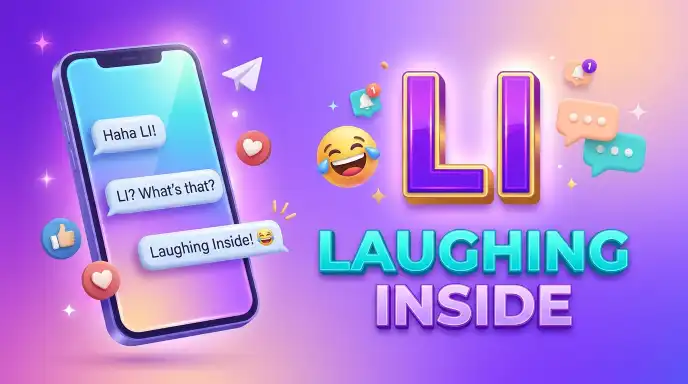
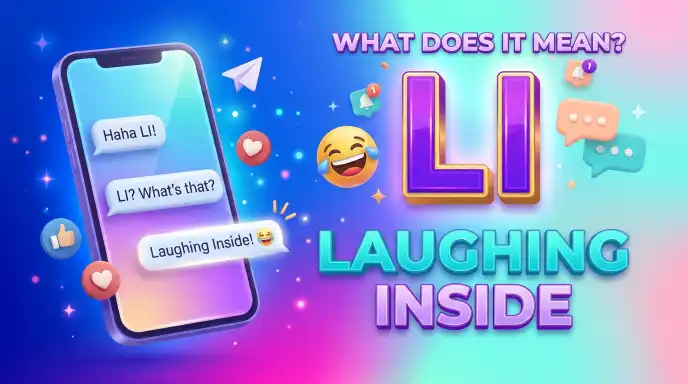
LI in text slang can mean “Laughing Inside.” It describes finding something funny without laughing out loud. People may use it in casual conversations when a message, joke, or awkward situation makes them smile.
You might see LI in text messages, Snapchat chats, Instagram comments, or TikTok discussions. However, it is not as widely recognized as popular abbreviations like LOL, LMAO, and IDK.
If someone sends you LI, they may be expressing amusement without showing an obvious reaction. The exact meaning depends on the conversation because these two letters can have other interpretations too.
Let’s look at what LI means, how it works in everyday conversations, and why someone might use it instead of a more familiar texting expression.
LI Meaning in Text
In casual texting, LI can stand for Laughing Inside. It describes the feeling of finding something funny while keeping your reaction to yourself.
For example, imagine your friend sends you a hilarious message while you are sitting in a quiet classroom. You want to laugh, but you cannot make any noise because your teacher is nearby. You might use LI to describe that reaction.
It communicates amusement without necessarily showing it openly.
Unlike LOL, which commonly means Laughing Out Loud, LI suggests that the humor stays inside rather than becoming an actual laugh. It can be used when something is funny, embarrassing, unexpected, or simply too relatable.
However, LI is not a universally established texting abbreviation. Some people may understand it immediately, while others might need to ask what it means.
Is LI an Acronym or an Abbreviation?
LI is an initialism because its two letters represent the first letters of two separate words:
- L – Laughing
- I – Inside
People generally read the letters individually rather than pronouncing them as one word.
It belongs to the informal language used in digital communication. Like other texting shortcuts, it can help people express a reaction without typing a complete sentence.
Still, its usage is less established than common expressions such as LOL, BRB, and OMG.
What Does Laughing Inside Actually Mean?
Laughing inside means finding something amusing without openly laughing.
It does not necessarily mean that a person is trying to hide their happiness. Sometimes, they simply cannot laugh because of where they are or what they are doing.
For example, consider these situations:
- Your friend makes a funny comment during a serious conversation.
- Someone sends you an embarrassing picture that makes you smile.
- You remember a silly mistake but do not want to laugh in front of others.
- You watch a funny video while sitting somewhere quiet.
- A person tells a joke that makes you laugh internally.
In these situations, LI can describe your reaction.
It is a way of communicating that something is funny without suggesting that you are actually laughing loudly.
Does LI Always Mean Laughing Inside?
No. The letters LI can have different meanings depending on the conversation.
Although Laughing Inside is one possible interpretation in casual texting, it should not automatically be assumed every time someone uses these letters.
Here are some other possible meanings:
- LinkedIn: People discussing employment, professional networking, or job opportunities may use LI as a shortened reference to LinkedIn.
- Love Interest: In romantic conversations, LI can refer to someone a person likes or has romantic feelings for.
- Literally: In some online communities, /li is used as a tone indicator to show that a statement is meant literally.
For example, if someone says, “I need to update my LI profile before applying for jobs,” they are probably talking about LinkedIn, not laughing inside.
The surrounding message usually provides the best clue.
LI vs. LOL: What’s the Difference?
LI and LOL can both communicate amusement, but they do not express exactly the same reaction.
LI (Laughing Inside) suggests that something is funny, but the person is not openly laughing.
LOL (Laughing Out Loud) is a widely recognized texting expression used to react to something funny. People also use it casually to make messages sound friendly or playful.
For example:
A: I accidentally sent my shopping list to the class group.
B: LI, that’s embarrassing.
A: I noticed after everyone started replying.
B: LOL, how did that happen?
Both expressions communicate humor, but LI focuses on an internal reaction, whereas LOL is the more familiar general expression for laughter.
Where Do People Use LI?
Internet abbreviations appear across different platforms, but their popularity can vary.
LI may be used in private messages, comments, and casual online discussions. Its meaning is not necessarily the same on every platform.
Understanding where you see it can help you interpret the message correctly.
LI Meaning on TikTok
TikTok is popular for short videos, funny clips, relatable situations, and comment conversations. Users often rely on brief expressions to react to something entertaining.
If someone uses LI to mean Laughing Inside, they may be describing a funny video or an unexpected moment without suggesting that they are literally laughing out loud.
For example:
Someone uploads a video showing a person confidently entering the wrong classroom.
A viewer might comment:
“LI because I would do exactly the same thing.”
The comment suggests that the situation is funny and relatable.
However, LI is not a widely established TikTok abbreviation. Its intended meaning should be understood from the surrounding conversation rather than assumed.
LI Meaning on Snapchat
Snapchat is commonly used for personal conversations, pictures, short videos, and quick reactions.
Friends often share funny experiences and inside jokes through messages. In this setting, LI may be used to express amusement without openly laughing.
For example:
Friend: “Remember when you waved at someone who wasn’t waving at you?”
You: “LI, that was so embarrassing.”
The response shows that you find the memory funny, even though it was awkward at the time.
The meaning can also depend on how familiar the two people are with internet abbreviations.
Where Else Do People Use LI?
Apart from TikTok and Snapchat, LI may appear in other messaging apps and social media conversations. People use different abbreviations depending on their habits, relationships, and the type of conversation they are having.
Here is how the expression might be understood on other popular platforms.
LI Meaning on Instagram
Instagram is filled with funny Reels, memes, comments, and direct messages. People often use short expressions to react to posts without writing long responses.
If LI means Laughing Inside in an Instagram conversation, it can describe finding a picture, video, or comment amusing without actually laughing.
For example:
Friend: “This picture looks exactly like your Monday morning face.”
You: “LI, why is it so accurate?”
Friend: “I knew you would agree.”
Here, the response communicates quiet amusement. The person finds the comparison funny and relatable.
However, LI is not a standard Instagram,specific abbreviation. Its meaning may vary between different conversations.
LI Meaning on WhatsApp
WhatsApp is widely used for everyday conversations with friends, family members, classmates, and colleagues.
People often share jokes, funny pictures, voice notes, and personal stories in private chats and group conversations.
Someone might use LI when a message makes them laugh internally but they do not want to express a loud reaction.
For example:
Friend: “I spent ten minutes looking for my phone while holding it.”
You: “LI 😂”
Friend: “Don’t judge me. It happens.”
In this conversation, LI expresses amusement about a silly everyday mistake.
Because WhatsApp conversations are usually personal, the intended meaning may depend on the relationship between the people chatting.
LI Meaning in SMS and Regular Text Messages
LI can also appear in ordinary text messages sent between phones.
SMS conversations are often short, so people sometimes use abbreviations to communicate their reactions quickly.
If someone uses LI to mean Laughing Inside, they may be telling you that something was funny without openly expressing laughter.
For example:
A: “My little brother tried to teach the dog how to dance.”
B: “LI, I wish I could have seen that.”
A: “The dog just walked away.”
B: “That’s even funnier.”
The abbreviation helps communicate a reaction without needing a long explanation.
However, because LI is uncommon, using a clearer expression may be better when texting someone who is unfamiliar with it.
10 Real Chat Examples of LI in Text
Understanding an abbreviation becomes easier when you see how it might appear in everyday conversations.
These examples show different situations where someone could use LI to mean Laughing Inside. They include funny moments, embarrassing experiences, social media reactions, and friendly conversations.
Example 1: A Funny Mistake
A: I accidentally called my teacher Mom today.
B: LI 😭
A: She actually turned around too.
B: I would never recover from that.
Here, the person uses LI because the situation is funny but also embarrassing.
Example 2: An Awkward Moment
A: I walked into the wrong classroom and sat there for five minutes.
B: LI, how did you not notice?
A: Everyone was looking at me.
B: That’s even worse 😂
The abbreviation communicates amusement about an uncomfortable situation.
Example 3: A Funny Video
A: Did you watch the video I sent?
B: Yes, LI.
A: The ending was unexpected.
B: I wasn’t ready for that.
In this example, LI is a quick reaction to entertaining content.
Example 4: A Friend’s Bad Joke
A: Why did the computer go to the doctor?
B: Why?
A: Because it had a virus.
B: LI, that joke is terrible.
A: At least you understood it.
The response shows that the person finds the joke funny, even though it is not particularly clever.
Example 5: A Classroom Situation
A: My friend answered the question with complete confidence and got everything wrong.
B: LI 😭
A: The teacher just stared at him.
B: I wish I had seen that.
Here, LI describes an internal reaction to a funny classroom experience.
Example 6: An Embarrassing Memory
A: I said goodbye and then walked in the same direction as them.
B: LI 😂
A: We both noticed at the same time.
B: That’s painfully awkward.
The abbreviation makes the conversation playful rather than serious.
Example 7: A Family Moment
A: My dad tried using slang and called everything iconic.
B: LI, that’s actually adorable.
A: He says it every five minutes now.
B: Don’t correct him.
This example shows how the expression might be used when discussing a funny family moment.
Example 8: A Social Media Post
A: Look at the comment someone left under this picture.
B: LI, people are too creative.
A: I read it three times.
B: Same here.
The person uses LI to react to a humorous comment on social media.
Example 9: A Gaming Conversation
A: I fell off the map while trying to show everyone my skills.
B: LI 😭
A: Nobody is letting me forget it.
B: That’s going to become your gaming nickname.
The abbreviation communicates amusement about a funny gaming mistake.
Example 10: A Relatable Situation
A: I opened the fridge three times expecting new food to appear.
B: LI, we all do that.
A: I thought something might have changed.
B: Maybe one day 😂
Here, LI expresses amusement because the situation is relatable.
These conversations demonstrate how the expression can fit into different types of casual chats. However, not everyone will recognize LI, so the meaning should always be considered in context.
How to Reply When Someone Says LI
If someone sends you LI, you do not need to overthink your response.
When it means Laughing Inside, the person is generally reacting to something amusing. You can respond with another joke, a casual comment, or a friendly message.
Your reply should match the tone of the conversation.
Funny Replies to LI
If you are chatting with a close friend, a funny response can make the conversation more entertaining.
Here are some ideas:
- “Don’t laugh too hard 😂”
- “I knew you’d find that funny.”
- “At least someone appreciates my comedy.”
- “Wait until you hear the rest.”
- “I’m glad my embarrassment entertained you.”
- “That wasn’t even the funniest part.”
- “My comedy skills are improving.”
- “You haven’t seen anything yet.”
These replies work well when both people are comfortable joking with each other.
Casual Replies to LI
Sometimes a simple response is enough. You do not have to create another joke every time someone reacts to your message.
Try these casual replies:
- “Haha, I know.”
- “Right?”
- “I couldn’t help it.”
- “It was too funny.”
- “Exactly 😂”
- “I had the same reaction.”
- “That’s what I thought.”
- “Glad you get it.”
These expressions keep the conversation natural without making it feel forced.
Friendly Replies to LI
If someone responds positively to your story, you can use a friendly reply to continue the discussion.
For example:
- “Glad you enjoyed that.”
- “I knew you’d understand.”
- “You should have been there.”
- “I had to tell you.”
- “We always find something funny.”
- “I’ll tell you what happened next.”
- “You would have laughed even harder.”
- “That’s why I wanted to share it.”
These responses are suitable for conversations with friends, classmates, and people you know well.
Neutral Replies to LI
Not every conversation needs a humorous response. Sometimes you may want to acknowledge the other person’s reaction without adding much emotion.
You could say:
- “Haha, yeah.”
- “That’s right.”
- “I see.”
- “It was quite funny.”
- “True.”
- “Exactly.”
- “Fair enough.”
- “I understand.”
If you do not understand what LI means in a particular message, simply ask:
“What do you mean by LI?”
It is better to clarify an unfamiliar abbreviation than misunderstand the sender.
Is LI Rude or Offensive?
LI is generally not considered rude or offensive when someone uses it to mean Laughing Inside.
It describes a reaction to something amusing rather than an insult, inappropriate expression, or offensive comment.
However, the way someone uses an abbreviation can affect how another person interprets it.
For example, using a laughing expression during a serious conversation may make someone feel that you are not taking their situation seriously.
Is LI Safe to Use With Friends?
Yes, you can use LI in casual conversations with friends if they understand what you mean.
It can fit naturally into conversations about funny videos, embarrassing memories, silly mistakes, and jokes.
For example:
Friend: “I forgot why I entered the kitchen.”
You: “LI, that happens to me all the time.”
This is a harmless way to respond to a relatable situation.
Still, if your friend does not recognize the abbreviation, using a simple phrase like “That’s funny” may communicate your reaction more clearly.
Can You Use LI at School?
You can use informal abbreviations when chatting with classmates or friends.
However, LI is not suitable for formal school assignments, essays, examinations, or academic presentations.
Teachers generally expect clear and standard English in educational writing.
If you are communicating with a teacher about an important subject, it is better to write complete sentences instead of relying on unfamiliar internet expressions.
Is LI Appropriate at Work?
Its suitability depends on your workplace and the people you communicate with.
In a friendly team chat, informal expressions may be acceptable. Coworkers who regularly share jokes might understand casual abbreviations.
However, professional communication should be clear and respectful.
For example, if a colleague shares a funny office experience, you could respond with “That’s funny” instead of using LI.
This avoids confusion, especially when communicating with people who are unfamiliar with internet slang.
Can LI Sound Disrespectful?
The abbreviation itself is not usually disrespectful, but the situation matters.
Imagine someone shares a serious personal problem and receives a laughing reaction. They might feel hurt or believe the other person is making fun of them.
That is why it is important to understand the message before responding.
Use humorous expressions when the conversation is playful, and choose supportive language when someone needs understanding.
Who Uses LI in Text Conversations?
LI is an informal expression that may appear in online conversations, but it is not among the most widely recognized texting abbreviations.
People who enjoy using internet slang may understand it, especially when the conversation is about jokes, funny situations, or personal experiences.
Its use can vary between individuals and online communities. Some people may use it regularly with friends, while others may have never encountered it.
Do Gen Z Users Say LI?
Gen Z is familiar with internet expressions, shortened words, emojis, and creative ways of communicating online.
Younger users often come across abbreviations through social media, gaming communities, group chats, and short,form videos.
LI may be understood as Laughing Inside in some conversations, but it is not a standard expression used by all Gen Z users.
Many people in this age group are more familiar with LOL, LMAO, LMFAO, and other established reactions.
Do Teenagers Use LI?
Teenagers frequently use abbreviations to make conversations shorter and more relaxed.
They might use LI when reacting to a funny message or sharing an amusing experience with friends.
However, there is no reliable evidence showing that it is particularly popular among teenagers.
Some may understand the expression immediately, while others may prefer more familiar alternatives.
Do Adults Use LI?
Adults who regularly communicate through messaging apps may also encounter less familiar internet abbreviations.
However, their use of LI depends on personal texting habits and the people they communicate with.
For example, someone who frequently chats with younger family members might come across expressions they have not seen before.
Understanding the context helps people follow these conversations without needing to recognize every abbreviation.
Is LI Popular on Social Media?
LI is not as popular or recognizable as common expressions such as LOL, OMG, IDK, and BRB.
It may appear in private messages, comments, or smaller online communities, but its overall popularity is difficult to establish.
It is better to understand LI as an uncommon informal abbreviation rather than a major social media trend.
Origin of LI in Text Slang
The exact origin of LI meaning Laughing Inside is unclear. There is no widely documented historical record identifying the first person who used it or the precise year it entered online conversations.
It can be understood as an informal shortening of the phrase Laughing Inside, following a common pattern in digital communication.
People frequently turn longer expressions into initials to make messages quicker to type.
How Did LI Develop as an Internet Expression?
Internet communication has encouraged people to create shorter ways of expressing emotions and reactions.
Before social media became popular, online messaging communities were already using abbreviations to save time and communicate quickly.
Expressions such as LOL and BRB became familiar because they were short and easy to understand.
LI follows a similar abbreviation pattern. Its letters represent a complete expression, allowing someone to communicate a reaction without writing the entire phrase.
However, there is no confirmed evidence that LI developed directly from LOL or another specific internet abbreviation.
Did LI Originate on TikTok?
There is no reliable evidence confirming that TikTok created LI or introduced its Laughing Inside meaning.
TikTok helps spread internet language through videos, captions, and comment sections. Many expressions become more visible when creators and viewers start using them repeatedly.
However, an abbreviation appearing on TikTok does not necessarily mean it originated there.
LI could have been used in private messages or smaller online communities before appearing in public discussions.
Why Does LI Have Different Meanings?
Short abbreviations can sometimes represent multiple words.
LI is a good example because its interpretation depends heavily on the topic.
Consider these situations:
- A conversation about a funny story might suggest Laughing Inside.
- A discussion about job applications might suggest LinkedIn.
- A conversation about dating might suggest Love Interest.
The same two letters can communicate completely different ideas.
This is why reading the complete message is more useful than interpreting an abbreviation without context.
LI vs. IDK, IDC, IMO, and BRB
LI is one of many shortened expressions used in digital communication. However, it has a different purpose from common abbreviations such as IDK, IDC, IMO, and BRB.
Some expressions communicate emotions, while others explain opinions or tell someone what you are doing.
Here is a simple comparison.
| Term | Meaning | Type | Usage | Popularity |
| LI | Laughing Inside | Initialism | Expressing quiet amusement | Uncommon |
| IDK | I Don’t Know | Initialism | Showing uncertainty | Very common |
| IDC | I Don’t Care | Initialism | Expressing indifference | Very common |
| IMO | In My Opinion | Initialism | Sharing a personal opinion | Common |
| BRB | Be Right Back | Initialism | Saying you will return shortly | Common |
LI vs. IDK
LI and IDK have completely different meanings.
LI can express amusement, while IDK stands for I Don’t Know.
People use IDK when they are unsure about something or do not have an answer.
Example:
A: Did you see who uploaded that funny video?
B: IDK.
A: I think it was someone from our school.
B: Maybe!
LI vs. IDC
IDC means I Don’t Care. It expresses a lack of interest or concern about something.
LI, on the other hand, can describe finding something amusing.
IDC may sometimes sound dismissive, depending on how someone uses it.
Example:
A: Everyone is talking about that new trend.
B: IDC.
A: You don’t like it?
B: Not really.
LI vs. IMO
IMO stands for In My Opinion.
People use it when sharing their thoughts about a subject, person, activity, or situation.
LI expresses amusement, whereas IMO introduces a personal viewpoint.
Example:
A: What did you think about the movie?
B: IMO, the ending was the best part.
A: I actually agree.
LI vs. BRB
BRB means Be Right Back.
It is used when someone needs to leave a conversation temporarily but expects to return.
LI does not communicate that someone is leaving. Instead, it can express a humorous reaction.
Example:
A: I need to answer the door.
B: Okay, BRB when you’re back.
A: I’m back now.
B: Welcome back!
These comparisons make it easier to understand how different texting abbreviations serve different purposes.
Real,World Usage Example of LI
Imagine you are sitting in a classroom with your classmates during a quiet study session.
One of your friends sends a message in the group chat about accidentally entering the wrong classroom that morning. The story is funny, but you do not want to laugh loudly because the teacher is nearby.
You reply:
“LI, that’s actually hilarious.”
Your friend understands that you found the situation amusing even though you are not openly laughing.
Another situation could happen when you are travelling on a bus, sitting in a library, or working in a quiet office.
You might receive a funny message and find it entertaining without showing an obvious reaction.
In these situations, LI can describe your internal amusement.
However, not everyone will understand the abbreviation automatically. If you are chatting with someone unfamiliar with it, explaining what you mean can prevent confusion.
Frequently Asked Questions
Q1. What Does LI Mean in Text Messages?
LI can mean Laughing Inside in casual text conversations. It describes finding something funny without laughing openly. However, its meaning depends on the context.
Q2. What Does LI Mean on TikTok?
On TikTok, LI may express quiet amusement when someone finds a video, comment, or situation funny. It is not a widely established TikTok,specific abbreviation.
Q3. Is LI Slang?
Yes, LI can be considered informal internet slang when used to mean Laughing Inside. More specifically, it is an initialism made from the first letters of two words.
Q4. Is LI Rude or Offensive?
No, LI is generally harmless when used to express amusement. However, using it during a serious conversation may seem insensitive or inappropriate.
Q5. How Should You Reply to LI?
You can respond with something simple like “Haha, I know,” “Right?” or “Glad you found it funny.” Choose a reply that matches the conversation.
Q6. Does LI Mean Laughing Inside?
Yes, it can stand for Laughing Inside in informal conversations. It describes finding something amusing without showing an obvious outward reaction.
Q7. Is LI the Same as LOL?
No. LOL means Laughing Out Loud, while LI can mean Laughing Inside. Both can express amusement, but they describe different reactions.
Q8. What Does LI Mean From a Girl?
If a girl sends LI after a funny message, she may mean Laughing Inside. It does not have a special gender,specific meaning, so consider the conversation.
Q9. What Does LI Mean From a Guy?
A guy may use LI to communicate that something made him laugh internally. The intended meaning depends on the message and the relationship between the people chatting.
Q10. Can LI Have Other Meanings?
Yes. LI can also refer to LinkedIn in professional conversations or Love Interest in romantic discussions. The surrounding topic helps identify the intended meaning.
Conclusion
LI can mean Laughing Inside in casual text conversations. It describes finding something funny without necessarily laughing out loud.
People may use it when reacting to jokes, funny videos, embarrassing memories, or relatable situations. It can appear in private messages and online discussions, although it is less common than abbreviations such as LOL, IDK, and BRB.
Remember that LI can have other meanings, including LinkedIn and Love Interest. Always consider the surrounding conversation before deciding what someone means.
You can use it with friends who understand the expression, but clearer language is usually better for professional, academic, or serious conversations.
Understanding these small differences makes online communication easier and helps you avoid misunderstandings.
Read More About !

Michael Brooks is a language writer at SlangPath with 7+ years of experience creating simple, practical content on English slang and everyday expressions.