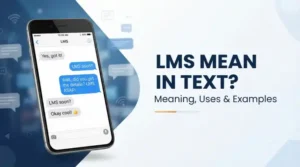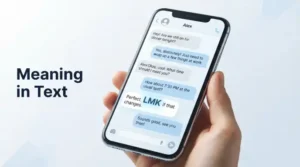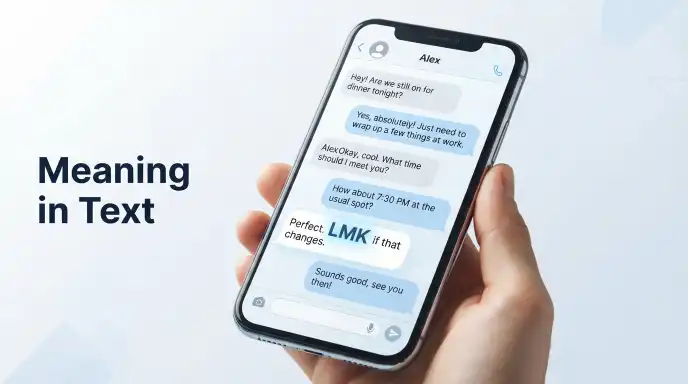
LMK mean in text is “let me know.” It is a common text abbreviation used when someone wants another person to share information, give an answer, or provide an update.
LMK comes from the first letters of “let me know.” For example, “LMK if you’re coming” means “Let me know if you’re coming.”
You can find LMK in text messages, social media chats, WhatsApp, Snapchat, TikTok, Instagram, and other online conversations. It usually has a casual and friendly tone and is often used when someone does not need an immediate answer.
LMK Meaning in Text
LMK stands for “let me know.” It is a common abbreviation used in casual digital communication.
When someone writes LMK, they are usually asking you to tell them something when you have the information. The request could be about a plan, opinion, decision, or update.
For example:
“LMK when you get home.”
This means:
“Let me know when you get home.”
The sender is asking for an update after you arrive.
Another example is:
“LMK what you think.”
Here, the person wants your opinion.
LMK can appear at different points in a sentence:
- “LMK when you’re free.”
- “I’ll send it later. LMK if you need anything.”
- “Can you LMK by tonight?”
- “LMK what you decide.”
The meaning remains the same: tell me or keep me informed.
Is LMK an Acronym or Abbreviation?
LMK is generally described as a text abbreviation or initialism.
It comes from the first letters of:
Let
Me
Know
People normally read it as individual letters: L-M-K, rather than pronouncing it as one word.
You may also see it written in lowercase as lmk. Both forms have the same meaning.
For example:
“lmk when you arrive”
means exactly the same thing as:
“LMK when you arrive.”
Lowercase is especially common in casual texting because people often type quickly without worrying about capitalization.
What Does LMK Mean in Everyday Chat?
In everyday conversation, LMK can mean “tell me,” “keep me updated,” or “give me the information when you know.”
The exact interpretation depends on the rest of the message.
For example:
“LMK if you need help.”
The person is offering assistance and asking you to tell them if help is needed.
“LMK your favorite.”
The person wants you to choose or share your favorite option.
“LMK when you arrive.”
The person wants an update after you reach your destination.
“LMK what happens.”
The person wants to hear about the result later.
So, LMK does not have a complicated hidden meaning. It is simply a shorter way to make a familiar request.
Where People Use LMK
LMK can appear on many social media and messaging platforms. The meaning does not change from one platform to another.
The main difference is the type of conversation where you might encounter it.
LMK on TikTok
TikTok users may use LMK in comments, direct messages, captions, or conversations about videos.
For example:
“LMK if you want part 2.”
This means the creator or commenter wants people to say whether they would like another part.
Another example is:
“LMK what you think about this.”
The person is asking others to share their opinion.
Because TikTok conversations are often short and informal, abbreviations such as LMK fit naturally into the platform.
LMK on Snapchat
Snapchat is another place where LMK is common.
Friends might use it when discussing plans or waiting for an answer.
For example:
“LMK when you’re ready.”
This could mean the person wants to know when you are ready to leave, call, meet, or start an activity.
Another message could be:
“LMK if you’re coming tonight.”
The sender wants confirmation about your plans.
LMK on Instagram
On Instagram, LMK can appear in DMs, comments, Stories, or group conversations.
Someone might write:
“LMK which one looks better.”
They are asking another person to choose between options.
You might also receive:
“LMK if you want the details.”
This means the sender is offering more information and wants you to ask for it if needed.
LMK on WhatsApp
WhatsApp conversations often involve quick messages between friends, family members, classmates, and coworkers.
For example:
“LMK when everyone gets there.”
The sender wants an update once everyone has arrived.
Another example:
“LMK who is joining us.”
The person wants people to confirm whether they will participate.
In a family or friend group, LMK can make a longer request much shorter.
Bilkul. Main keyword “lmk mean in text” ko natural way mein add kar deta hoon, bina keyword stuffing ke:
LMK in SMS
LMK has also been widely used in ordinary text messages. If you are wondering what lmk mean in text, it simply stands for “let me know.”
For example:
“LMK when you finish work.”
This simply means:
“Let me know when you finish work.”
The abbreviation can save typing time while keeping the message easy to understand. It is especially common when someone wants another person to share an update, answer, or decision.
It is not limited to newer social media slang. LMK in text belongs to a broader collection of abbreviations that became popular through texting and online communication.
Real Chat Examples of LMK
Seeing LMK in realistic conversations makes its meaning easier to understand.
Example 1: Making Plans
A: Are you free Saturday?
B: I think so. Why?
A: We’re going to the mall. LMK if you want to come.
B: Sure, I’ll let you know tomorrow.
Here, LMK asks the other person to confirm their plans later.
Example 2: Asking for an Opinion
A: I’m choosing between these two shoes.
B: Both look good.
A: Which one would you pick?
B: The black ones.
A: Nice. LMK if you change your mind.
The abbreviation is being used to request an update.
Example 3: Offering Help
A: I’m working on my presentation tonight.
B: Need any help?
A: Maybe with the slides.
B: No problem. LMK when you’re ready.
Here, the second person is telling their friend to ask for help when they are ready.
Example 4: Waiting for Information
A: Did you ask Sam about dinner?
B: Not yet.
A: Okay, LMK what he says.
B: I will.
The sender wants to hear the answer after the conversation with Sam.
Example 5: Choosing Between Options
A: I found two apartments near campus.
B: Send me the details.
A: Just sent them.
B: Got them.
A: LMK which one you like.
In this conversation, LMK asks for an opinion after the other person reviews the choices.
Example 6: Changing Plans
A: What time are you leaving tomorrow?
B: Probably around 8.
A: Okay. LMK if that changes.
B: Sure.
The sender wants to be informed if the original plan changes.
Example 7: Casual Conversation
A: Want to play later?
B: Maybe after dinner.
A: Cool, LMK.
B: I’ll message you.
Here, “LMK” is a very short way to say “let me know.”
Example 8: Event Plans
A: Are you going to the party?
B: I’m not sure yet.
A: LMK when you decide.
B: Okay.
The sender does not need an immediate answer. They simply want an update after the decision.
Example 9: Asking for Time
A: Can you check this file?
B: I’m busy right now.
A: No worries. LMK when you have time.
B: I’ll check it tonight.
LMK makes the request sound brief and conversational.
Example 10: Ordering Food
A: I’m ordering pizza.
B: Nice!
A: LMK what you want.
B: Pepperoni for me.
The sender is asking the other person to choose what they want.
How to Reply When Someone Says “LMK”
There is no special response you need to use when someone says LMK. Your reply depends on what information they want from you.
If someone writes:
“LMK when you get home.”
You can reply after arriving:
“I’m home now.”
If they say:
“LMK if you want to come.”
You could answer:
“Yeah, I’d love to come.”
Sometimes you already know the answer, so you can simply give it instead of saying that you will let them know later.
Funny Replies
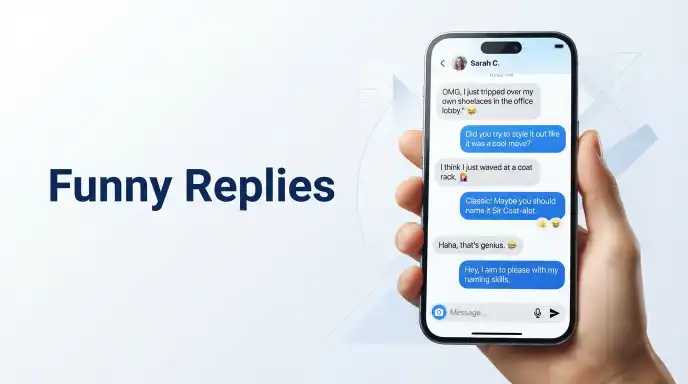
If you are talking with a close friend, you can make your response playful.
- “You’ll be the first to know.”
- “Breaking news: I’m coming.”
- “Consider yourself informed.”
- “Message received!”
- “I’ll keep you updated, boss.”
These responses work best when the conversation is already relaxed and humorous.
Casual Replies
For an ordinary conversation, you can keep things simple:
- “Sure, I will.”
- “Okay, I’ll let you know.”
- “Got it.”
- “Sounds good.”
- “I’ll keep you posted.”
- “No problem.”
You do not need to repeat “LMK” in your response.
Friendly Replies
When messaging a friend or someone you know well, a warmer response may feel more natural.
- “Of course, I’ll let you know!”
- “Yep, I’ll message you.”
- “Sure thing!”
- “I’ll tell you once I know.”
- “Absolutely, I’ll keep you updated.”
Neutral Replies
For a straightforward conversation, especially with someone you do not know well, use a simple response.
- “Okay, I’ll let you know.”
- “Understood.”
- “Sure, I’ll update you.”
- “I’ll confirm once I know.”
- “I’ll send you an update later.”
Is LMK Rude or Offensive?
LMK is generally not rude or offensive. It is a common abbreviation for “let me know” and normally has a neutral or casual tone.
The surrounding words matter more than the abbreviation itself.
For example:
“LMK when you’re free.”
This sounds like a normal request.
But:
“LMK. I’m not waiting forever.”
This can sound impatient because of the second sentence. The abbreviation itself is not what makes the message sound harsh.
Is LMK Safe to Use?
Yes, LMK is generally safe to use in casual digital communication.
It does not contain a swear word, insult, or offensive expression. Friends, classmates, and online users can use it when the situation is informal.
Still, abbreviations are not always the clearest choice. If you are unsure whether someone understands texting language, writing “let me know” is safer and clearer.
Is LMK Appropriate at School?
LMK can work in a casual message to a friend or classmate.
For example:
“LMK if you’re joining the study group.”
That is perfectly understandable in an informal chat.
However, avoid abbreviations such as LMK in formal assignments, essays, academic reports, or other schoolwork unless your teacher specifically allows informal language.
Instead of:
“LMK if you have questions.”
A formal version would be:
“Please let me know if you have any questions.”
Is LMK Appropriate at Work?
The answer depends on the workplace and the type of communication.
In a relaxed team chat, someone might write:
“LMK when the report is ready.”
In a formal email, it may be better to write the full phrase:
“Please let me know when the report is ready.”
Using the complete phrase makes the message more professional and removes any possibility of confusion.
Who Uses This Term?
LMK is used by people who communicate through texting, social media, and online messaging.
It is not restricted to one particular age group. Teenagers, young adults, and older adults who are familiar with digital communication may recognize or use it.
Age Groups
You can find LMK among different generations of internet and mobile-phone users.
Younger users may encounter it in social media conversations and group chats, while older users may have learned it through SMS, email, or instant messaging.
The important point is that LMK is not exclusive to teenagers or Gen Z.
Gen Z Usage
Gen Z users commonly use short expressions and abbreviations when communicating online, and LMK can appear naturally in their messages.
For example:
“LMK when you’re free.”
“LMK what you think.”
“LMK if you wanna go.”
However, LMK is older and more widely understood than many newer internet expressions. People outside Gen Z use it too.
Common Platforms
LMK can appear on almost any platform where people have casual conversations.
Common examples include:
- TikTok
- Snapchat
- Facebook Messenger
- Discord
- SMS
- Online chats
- Group messaging apps
The platform does not change the meaning.
How Often Does LMK Appear Online?
LMK is a familiar abbreviation in casual digital communication.
How often someone uses it depends on their writing style. Some people use abbreviations in almost every message, while others prefer to type complete sentences.
You may see LMK more often when people are:
- Making plans
- Asking questions
- Waiting for a decision
- Requesting an update
- Asking for an opinion
- Offering help
- Confirming arrangements
Origin of the Term
LMK comes directly from the phrase “let me know.”
Its exact first appearance as an online abbreviation is difficult to identify because shortened expressions developed gradually across texting, chat rooms, instant messaging, and other forms of digital communication.
The basic idea is simple: people began shortening familiar phrases to make messages faster to type.
The rise of mobile phones and SMS helped make abbreviations especially useful. Instead of typing all three words, users could write LMK and still communicate the same idea.
As online messaging expanded, the abbreviation continued into social media platforms and modern chat apps.
Unlike some slang terms with complicated histories, LMK has a very straightforward structure:
L = Let
M = Me
K = Know
Its meaning has stayed relatively stable over time.
LMK vs. IDK, IDC, IMO, and BRB
LMK is part of a larger group of common text abbreviations. These expressions can look similar because they shorten everyday phrases, but each one has its own meaning.
| Term | Meaning | Type | Usage | Popularity |
| LMK | Let me know | Text abbreviation | Asking someone for information or an update | Common |
| IDK | I don’t know | Text abbreviation | Saying you do not know something | Common |
| IDC | I don’t care | Text abbreviation | Showing that something does not matter to you | Common |
| IMO | In my opinion | Text abbreviation | Introducing a personal opinion | Common |
| BRB | Be right back | Text abbreviation | Saying you will temporarily leave a conversation | Common |
These abbreviations can sometimes appear in the same conversation.
For example:
A: Which restaurant should we choose?
B: IDK.
A: IMO, the new one looks good.
B: IDC which one we pick.
A: Okay, LMK when you decide.
Each abbreviation communicates a different idea.
LMK vs. IDK
LMK means “let me know.”
IDK means “I don’t know.”
They can even appear together:
“IDK what time I’ll arrive. LMK if you’re still there.”
The first abbreviation gives an answer about knowledge, while the second asks for information.
LMK vs. IDC
IDC means “I don’t care.”
It expresses a lack of concern or preference.
For example:
“IDC where we eat.”
LMK has a different function:
“LMK where you want to eat.”
The first person does not have a preference. The second person wants the other person to make a choice.
LMK vs. IMO
IMO means “in my opinion.”
It is used when someone is sharing their personal view.
For example:
“IMO, the blue one looks better.”
LMK, on the other hand, asks another person to provide information:
“LMK which one you prefer.”
LMK vs. BRB
BRB means “be right back.”
It tells someone that you are temporarily leaving the conversation.
For example:
“BRB, I need to answer the door.”
LMK does not mean that someone is leaving. It asks another person to provide an answer or update.
How LMK Changes the Tone of a Message
LMK mean in text can make a message sound shorter and more casual.
Compare these two sentences:
“Let me know when you arrive.”
“LMK when you arrive.”
The meaning is the same, but the second version feels more like a quick text. This is why LMK mean in text is often searched by people who see the abbreviation in casual digital conversations.
This does not automatically make the message rude or careless. It simply reflects the informal style commonly used in digital conversations.
You can also make the message more polite by adding words around LMK.
For example:
“Please LMK when you get a chance.”
This sounds more considerate than a very short:
“LMK.”
The surrounding language helps determine the overall tone.
Common Sentences With LMK
LMK can be used in many everyday situations.
Here are some natural examples:
“LMK when you’re available.”
You want the person to tell you when they have free time.
“LMK if you need anything.”
You are offering help.
“LMK what you decide.”
You want to hear their final decision.
“LMK if the plan changes.”
You want to be informed about a change.
“LMK what you think.”
You are asking for an opinion.
“LMK when you get there.”
You want confirmation that they have arrived.
“LMK if you want to join us.”
You are inviting someone and asking them to confirm.
“LMK when you have time.”
You want them to contact you when they are available.
“LMK which one you prefer.”
You want them to choose between options.
“LMK if that works for you.”
You are asking whether a plan or suggestion is acceptable.
Real-World Usage Example
Imagine two friends are planning to meet for coffee after work. One friend already knows the time and place, but the other has not finished their work yet.
The first friend might send:
“I’ll be at the café around 6. LMK if you can make it.”
The second friend may not know immediately, so they could reply:
“I’m not sure yet. LMK if you’re still there later.”
Once they finish work, they can send:
“I’m free now. I’ll be there at 6:15.”
In this situation, LMK helps both people communicate without writing long messages. It tells the other person that an update or confirmation is expected.
Another everyday situation could happen in a group chat. A group of friends is deciding what to do on the weekend.
A: “We’re thinking about going bowling Saturday.”
B: “Sounds fun.”
C: “I might be busy.”
A: “No problem. LMK by Friday.”
Here, LMK means “let me know.” The person is asking for a final answer by Friday.
The abbreviation works naturally because the conversation is informal. Everyone understands that the person wants confirmation before making the final plan.
Why People Use LMK Instead of “Let Me Know”
People often choose LMK because it is quick, familiar, and easy to type.
Text conversations usually move faster than formal writing. Short abbreviations allow people to communicate without typing every word.
For example:
“Let me know when you’re ready.”
can become:
“LMK when you’re ready.”
Nothing important is removed from the meaning. The shorter version simply fits the style of casual messaging better.
LMK can also make a message feel less formal. That can be useful when talking to friends, classmates, or people you regularly chat with.
However, there is no need to use the abbreviation everywhere. The full phrase is often the better choice when the situation requires a professional or formal tone.
When to Use LMK
LMK works best when the conversation is relaxed and the other person is likely to understand common texting abbreviations.
You can use it when:
- Asking someone to confirm a plan
- Requesting an update
- Waiting for a decision
- Asking for someone’s opinion
- Offering help
- Checking someone’s availability
- Asking someone to tell you about a change
- Making casual arrangements
For example:
“LMK if you’re free tonight.”
“LMK what you think about the idea.”
“LMK when you get home.”
These are all natural uses.
When to Avoid LMK
Although LMK is harmless, it may not fit every situation.
Avoid it when you are writing something highly formal, such as:
- Academic assignments
- Formal business letters
- Official applications
- Professional reports
- Formal complaints
- Important legal or administrative documents
In these situations, writing the complete phrase is clearer.
Instead of:
“LMK if you require more information.”
you could write:
“Please let me know if you require more information.”
The second version is more suitable for formal communication.
Frequently Asked Questions
Q1: What does LMK mean in text messages?
LMK means “let me know.” It is used when someone wants you to provide information, an answer, or an update.
Q2: What does LMK mean on TikTok?
On TikTok, LMK means “let me know.” People use it in comments, captions, and messages when asking for an opinion or response.
Q3: Is LMK slang?
LMK is commonly used in casual online communication, but it is more accurately called a text abbreviation or initialism for “let me know.”
Q4: Is LMK rude or offensive?
No. LMK is generally not rude or offensive. It is a normal abbreviation used in casual conversations.
Q5: How should you reply to LMK?
You can answer the question directly or say “Sure, I’ll let you know,” depending on what the person is asking.
Q6: What does LMK mean on Snapchat?
LMK means “let me know” on Snapchat. Friends may use it when discussing plans, asking questions, or waiting for an update.
Q7: Can I use LMK at work?
Yes, LMK can work in casual workplace chats. For formal emails and professional documents, writing “let me know” is usually more appropriate.
Q8: What does LMK mean on Instagram?
On Instagram, LMK means “let me know.” It can appear in DMs, comments, Stories, or group conversations.
Q9: What is the difference between LMK and IDK?
LMK means “let me know,” while IDK means “I don’t know.” LMK asks for information, whereas IDK expresses uncertainty or a lack of knowledge.
Q10: What does LMK stand for?
LMK stands for “Let Me Know.” The abbreviation uses the first letter of each word: L, M, and K.
Conclusion
LMK means “let me know,” and its purpose is simple: it asks someone to share information, an opinion, a decision, or an update.
You may see it in text messages, TikTok comments, Snapchat chats, Instagram DMs, WhatsApp groups, and other online conversations. It can be used when making plans, asking questions, offering help, or waiting for confirmation.
The abbreviation is generally friendly and harmless. It is a good fit for casual conversations, but the full phrase “let me know” is usually a better choice for formal school or professional writing.
Once you know that L = Let, M = Me, and K = Know, LMK becomes easy to recognize whenever you see it online.
Read More About !

My name is Olivia Bennett.I am a language enthusiast and educational writer with a strong interest in contemporary English and digital communication. I enjoys making language learning engaging and accessible.